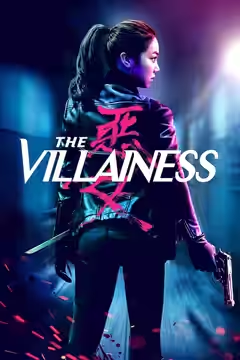
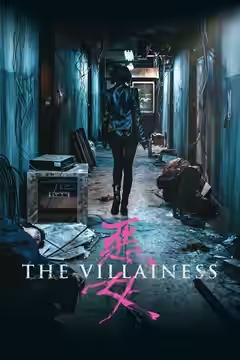
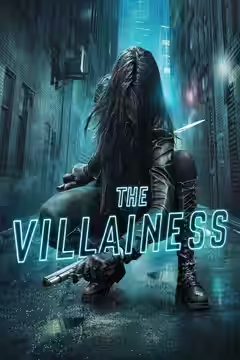
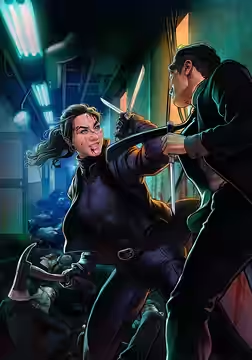
Jung Byung-gil’s assassin thriller contains three or four of the most inventive action sequences we have seen in years, and spends the hour between them on a slow, borrowed melodrama. See it for the fights; forgive the rest if you can.
The Villainess is the Nikita story told in Korea with the volume up: a killer is taken off the street by a secret state agency, remade, and promised her freedom after ten years’ service. Jung Byung-gil, who wrote it with Jung Byeong-sik, is plainly less interested in that story than in what he can do with a camera while people are trying to kill each other, and on that score the film is remarkable. In between, it asks us to care about a love triangle and a small child, and it does so in the manner of a daytime serial. The fights are among the best we have seen in years. The rest is a long wait for the next one.
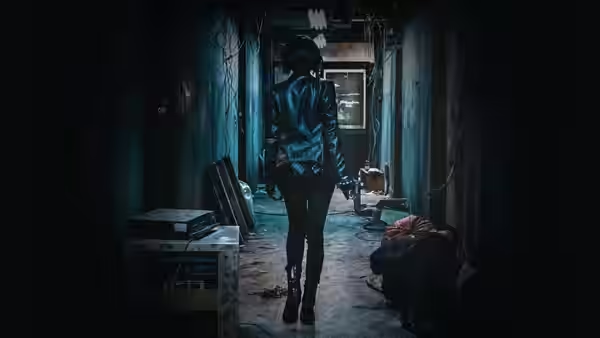
The opening is the reason to go. For several minutes we see only what Sook-hee sees: a corridor, a door, a man with a knife, her own hands and the blade in them, bodies piling up along the walls while the lens lunges and tilts with her. Park Jung-hoon’s camera is strapped to the action rather than watching it, and when it finally swings round to show us her face the effect is a jolt, as if someone had switched on a light. We were exhilarated and a little sick, in that order, and we suspect the second feeling was intended. Nothing in the film quite matches it, though two later sequences come close.
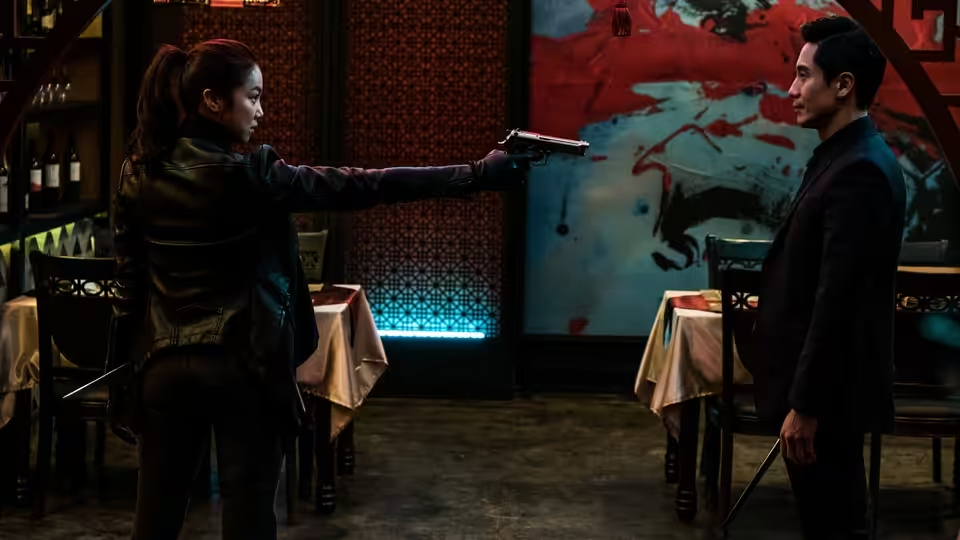
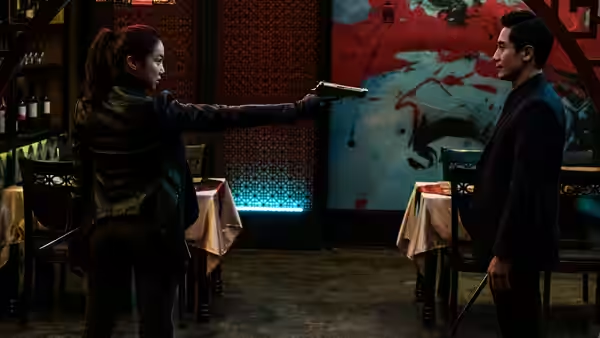
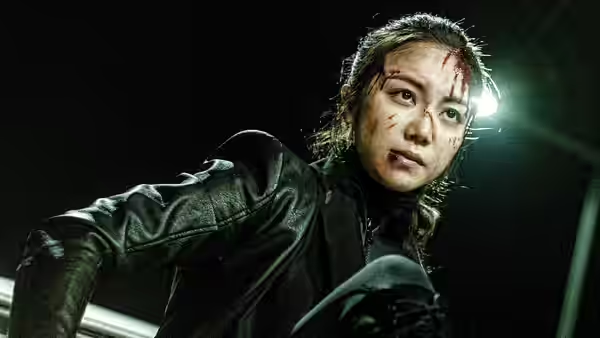
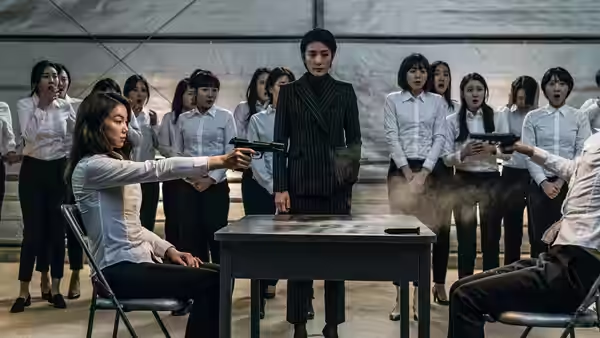
Kim Hee-jin’s design for the agency is the film’s best joke: a clean, bright institution with a dance studio, a stage and an operating theatre, where young women are taught to act and to kill with the same brisk efficiency. Kim Seo-hyung runs it as Kwon-sook, in tailored jackets and a voice that never rises, and it is the one adult performance in the film. Kim Ok-vin has a face that can go blank in an instant, and the film uses it well: a woman whose features have been changed and whose name has been taken, checking mirrors to see who is left. Jo Eun-ji, as the fellow recruit Kim Sun, gives her a friend, and the two of them get the only scenes of ordinary warmth in 129 minutes.
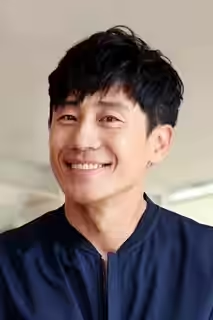
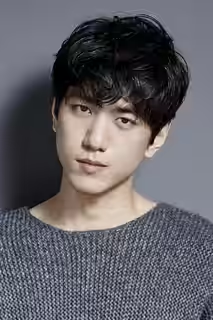
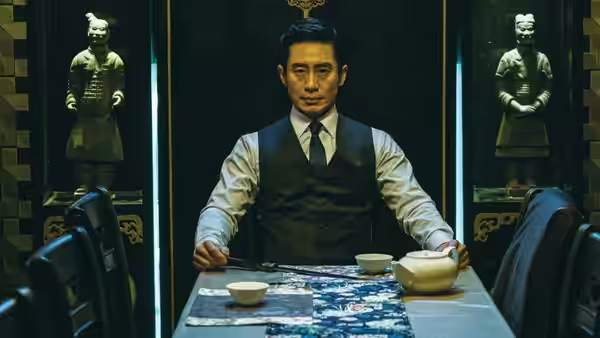
Then the film sits down to tell its story, and the story is the trouble. Sook-hee’s past arrives in pieces: a childhood murder, a gangster called Joong-sang (Shin Ha-kyun) who takes the orphan in and trains her, a wedding. Her present is a flat, a daughter and a new neighbour, Hyun-soo (Sung Joon), who has been assigned to watch her and promptly falls for her. Heo Sun-mi cuts between past and present so freely that for long stretches we could not have said which decade we were in or why it mattered, and the script does not help, handing people lines that announce their feelings rather than show them. Koo Ja-wan lays strings under every one of these scenes as if apologising for them. Somewhere in the second hour we looked at our watch, and then felt bad about it, because the film had been so generous half an hour earlier.
Then it is generous again. A motorbike chase along a night road, swords drawn at speed, puts the camera in among the bikes rather than alongside them, and we stopped wondering how it was done and simply held on. The finale, aboard a bus in heavy rain with an axe in play, takes everything the film has learned about moving a lens through a confined space and shakes it hard. We will not say how it comes out. We will say that we made a noise in the cinema we had not made for some time.
Luc Besson’s Nikita (1990) had the same bones and knew that the state’s cruelty to the woman was the story. Park Chan-wook’s revenge films understood that a plot this tangled needs one clear line of hurt to hang on. Jung has borrowed the suits, the agency, the vengeance and the sorrow, and kept only the surfaces. Sook-hee is handed so much grief, so quickly, that none of it has time to land, and by the end we had stopped keeping count of what she had lost.
See it, knowing that it is two films stitched together. One is forty minutes of action of real daring that deserves a big screen. The other is a ninety-minute melodrama you can skip through at home with a clear conscience. The certificate is 18, and the opening alone would earn it.