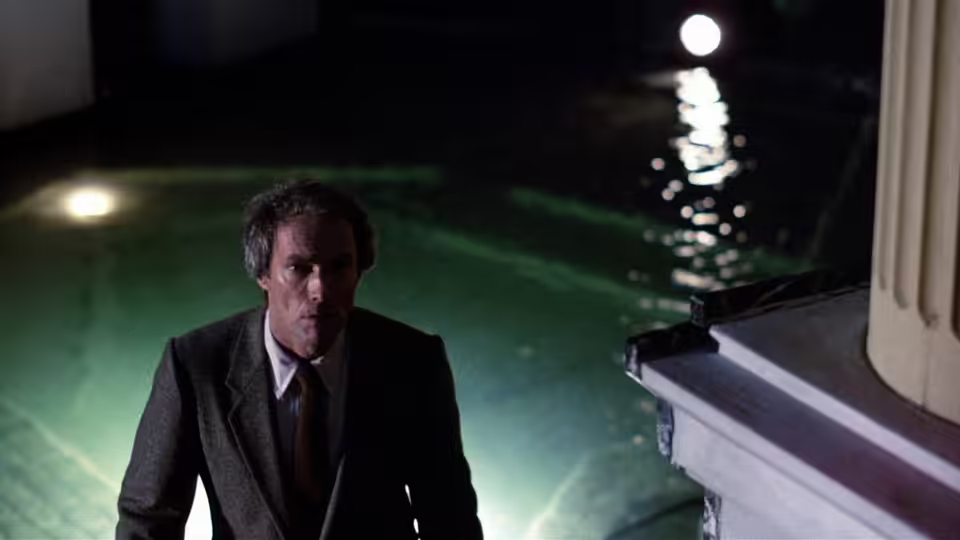
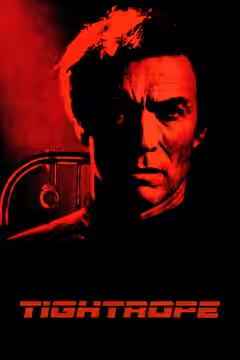
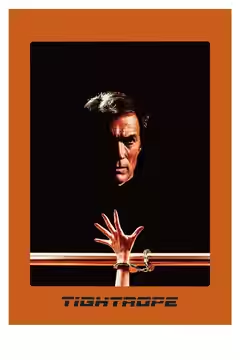
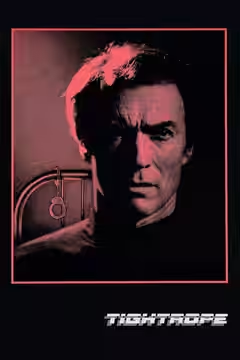
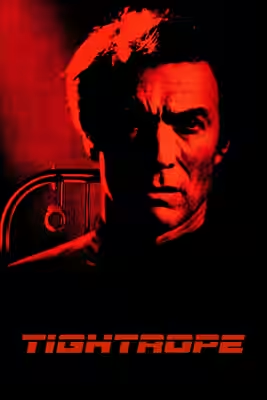
Clint Eastwood and Geneviève Bujold give Tightrope more interest than its familiar thriller machinery deserves. Richard Tuggle handles the actors well, but the film stops short of developing its most troubling possibilities.
Tightrope is a decent thriller with enough unease in its central performance to suggest a better film was possible. Richard Tuggle, who writes and directs, gives Clint Eastwood something more demanding than simply holding our attention until the next piece of police business. The disappointment is how often the familiar business takes precedence. We recommend it to those interested in the performances, with rather less confidence in the mystery surrounding them.
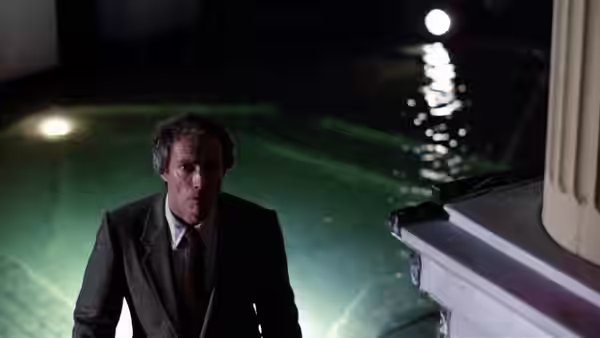
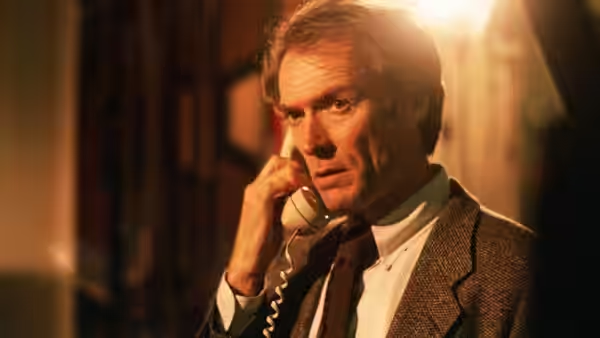
Clint Eastwood plays Wes Block, and the performance gives us reasons to watch beyond the question of what happens next. His discomfort is more interesting than his authority, because it makes the central character harder to settle into and accept. We found that uncertainty absorbing; the performance invites scrutiny rather than letting a recognisable leading man do all the reassuring. It is frustrating when the thriller seems content to proceed along more familiar lines instead of examining him further.
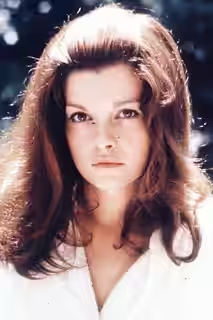
Geneviève Bujold, as Beryl Thibodeaux, gives the film another substantial reason to exist. There is force in the performance without the sense that every scene must become a demonstration of it. She makes the human exchanges matter in a film whose mystery does not always command equivalent attention. Richard Tuggle deserves credit for allowing the cast enough scope to suggest more than the mechanics require, even when his screenplay does not pursue those suggestions far enough.
The craft is assured enough to keep the film watchable through its less persuasive stretches. Bruce Surtees’s cinematography and Edward Carfagno’s production design give it a stronger visual identity than the plotting provides, although neither can supply the missing dramatic development. Joel Cox’s editing keeps the storytelling serviceable without making its familiar movements surprising. Lennie Niehaus’s music contributes to the tension, but the film’s most persuasive source of unease remains the acting; the technical finish supports that strength rather than replacing it.
The central weakness belongs to Richard Tuggle’s screenplay. It raises uncomfortable possibilities, then gives too much space to the ordinary obligations of a crime thriller, leaving its more searching material insufficiently developed. Familiarity is not itself a fault: a well-told investigation can justify an evening without reinventing anything. Here, though, the performances encourage expectations that the writing does not consistently meet, and competent progression begins to feel like an inadequate reward for paying attention.
Against the demands of the genre, Tightrope does enough to avoid becoming a chore. Richard Tuggle handles the story clearly, and the actors supply nuances that prevent the characters from feeling entirely subordinate to it. What it lacks is the confidence to spend longer on the disturbing implications it has already introduced. Allowing those implications to remain unresolved might have worked, but leaving them underexamined makes the film feel cautious.
There is still pleasure in watching a thriller carried by actors who give familiar material some resistance. Clint Eastwood and Geneviève Bujold make that a reasonable proposition, provided expectations remain modest. Choose it for the people, and allow the mystery to come second.