Wings Hauser supplies the menace and John Alcott gives the neon some bite. Gary Sherman’s crime thriller is unsettling enough to interest genre devotees, but its stretches of talk make a short film feel longer than it should.
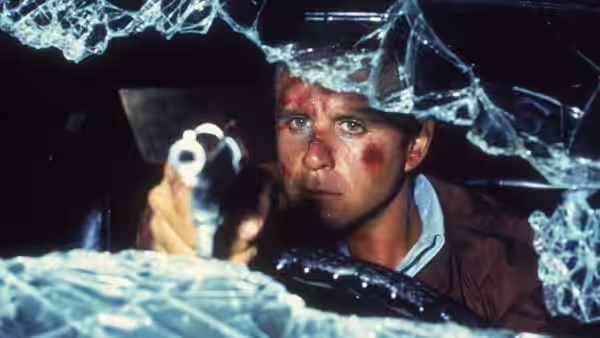
Vice Squad is a serviceable, unpleasant crime thriller with one compelling reason to endure its company: Wings Hauser. Gary Sherman puts an intimidating performer at the centre of the threat, and the film benefits whenever that threat feels close. The difficulty is sustaining the pressure around him. At 97 minutes, this ought to feel concentrated; too often, the conversation gives us time to notice how much we are waiting for the danger to resume.
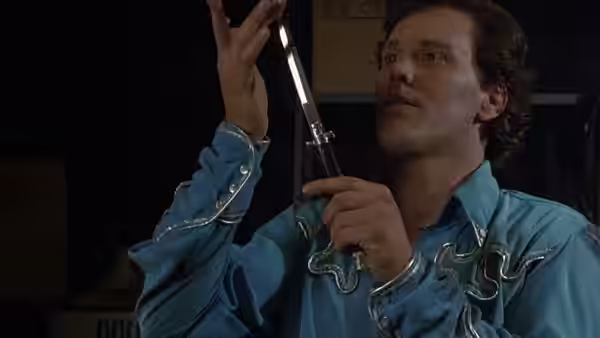
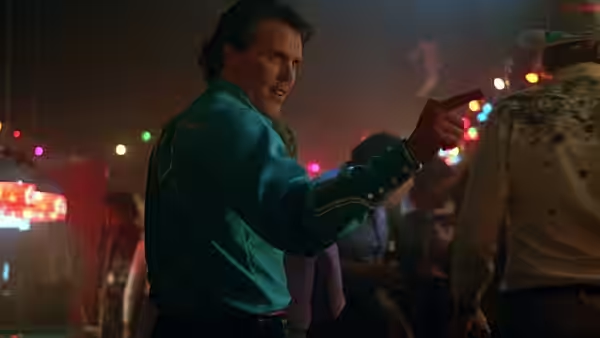
Hauser plays Ramrod, a pimp whose temper provides the film with its most persuasive suspense. His performance makes aggression feel liable to break out before anyone has finished speaking, which is useful in a thriller with this much speaking. We were unsettled by him: the temper feels ugly enough that anticipating an outburst becomes uncomfortable in itself. There is pleasure in watching a performer command attention, though here that pleasure comes with a fairly strong wish to get away from the character.
Season Hubley receives top billing as Princess, with Gary Swanson playing Tom Walsh, but Hauser is the presence around which our response settles. That creates a problem for the film’s treatment of prostitution. When the violent pimp becomes the chief attraction, any concern for the people exposed to him has to work harder to hold our attention. Sherman gets considerable force from the casting, but the fascination with Ramrod can make the surrounding drama feel secondary, and the nastiness is sometimes more developed than the concern.
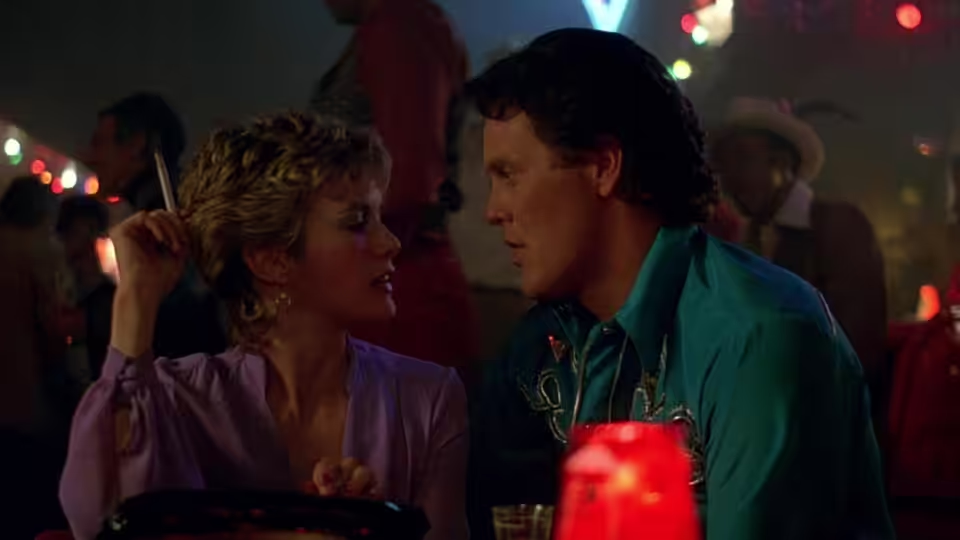
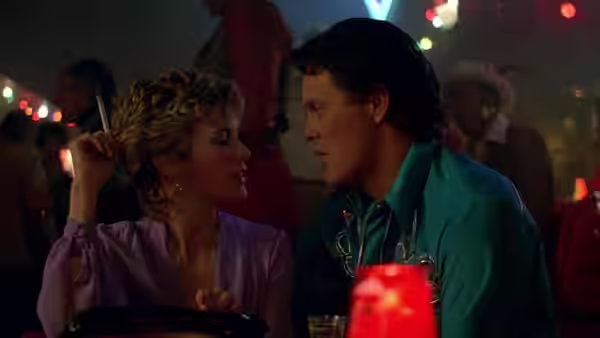
John Alcott’s neon-lit cinematography gives the film a visual interest that survives those reservations. The colour makes the threatening atmosphere more insistent, and the images offer something to attend to when the dialogue is not earning its time. Lee Fischer is the production designer; the strongest impression of the surroundings, however, comes through Alcott’s lighting rather than any individual decorative detail. The result is effective without making this a place we particularly want to spend an evening.
Roy Watts handles the editing, and the recurring wait for action is the clearest weakness in the film’s rhythm. The screenplay credits belong to Robert Vincent O’Neil, Kenneth Peters and Sandy Howard, and their stretches of talk do not consistently deepen the unease. Dialogue can be the most frightening part of a crime film when it changes what we think someone might do next. Here, too much of it occupies the interval between threats, leaving Watts with a pacing problem that quicker cutting would not necessarily cure.
Joe Renzetti supplies the music, though Hauser’s performance remains the more persuasive source of tension. That is where Vice Squad earns its modest recommendation within the crime-thriller genre: it has a threatening presence strong enough to make its roughness intermittently worthwhile. We would have preferred less waiting and more attention to the drama beyond Ramrod’s temper. Try it for Hauser and Alcott if abrasive crime films are your territory; anyone seeking a tightly sustained pursuit would be better served elsewhere.