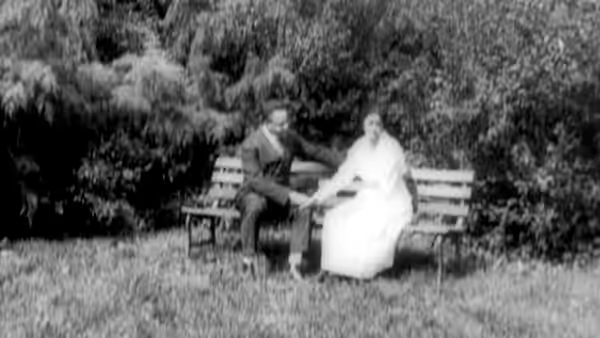
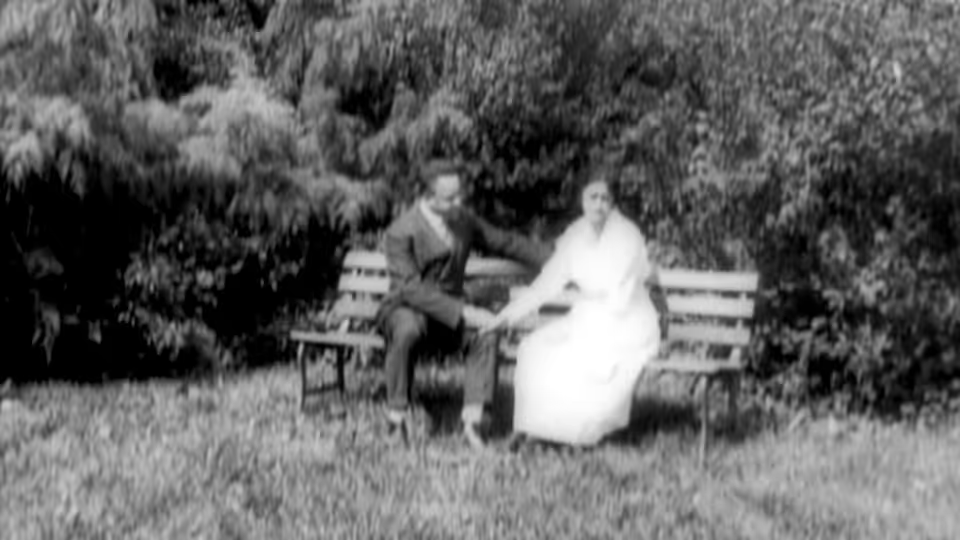
A man and woman sit together on a park bench
Film review

Within Our Gates

1920 · Directed by Oscar Micheaux · 1h 14m

In a sentenceOscar Micheaux has 74 minutes and no intention of making them comfortable

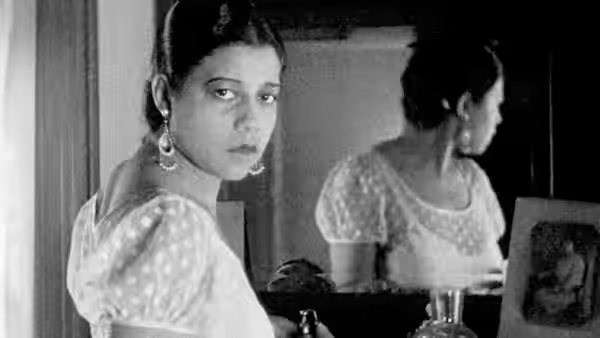
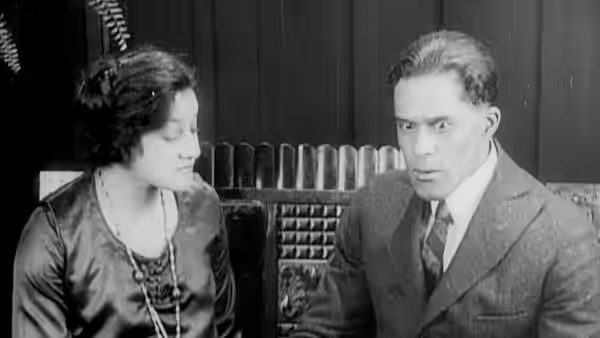
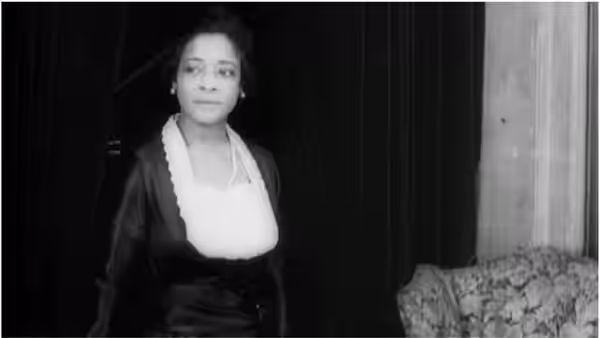
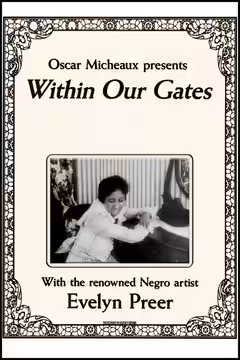
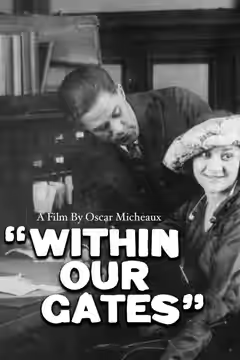
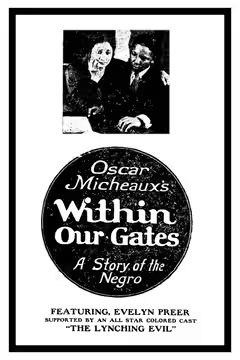
Engaged to Conrad Drebert (James D. Ruffin), Sylvia Landry (Evelyn Preer) stands at the centre of a drama of romance and crime. Alma Prichard (Flo Clements) and her stepbrother, Larry Prichard (Jack Chenault), are among the people around her, alongside Dr. V. Vivian (Charles D. Lucas). Oscar Micheaux follows Sylvia within a broader portrait of Black society. The cast of characters also includes Mrs. Geraldine Stratton (Bernice Ladd), Mrs. Elena Warwick (Mrs. Evelyn) and Jasper Landry (William Starks).

Plays from YouTube when you press play; nothing loads from them until then.

Fi1m review

Oscar Micheaux’s drama is untidy and sometimes awkwardly acted, but its images of suffering are hard to forget. We recommend it with a warning: the storytelling takes a roundabout route towards its most affecting scenes.

Within Our Gates is a forceful, uneven drama, worth seeing with some patience for its wandering story. Oscar Micheaux writes and directs as though romance, crime and a broad account of Black society all need to fit into the same film. They do not always sit comfortably together, and the joins can be distracting. Yet the images have a force that makes us forgive a good deal of the fuss required to get to them.

The breadth matters. Sylvia Landry, played by Evelyn Preer, gives the film a central figure, but Micheaux keeps widening his attention beyond her. That can be frustrating when we want him to stay with the person whose troubles have caught our interest. It also gives the drama something worth the occasional loss of concentration: a sense that the people surrounding Sylvia deserve attention beyond their usefulness to her story.

Evelyn Preer has the difficult task of keeping Sylvia important amid those competing demands, and her presence gives us a reason to follow the diversions. The surrounding acting is less dependable. Some performances press their emotions harder than they need to, making us notice the effort at precisely the point when we should be caught up in the trouble. The stiffness is a real obstacle in a film that needs us to care about its people.

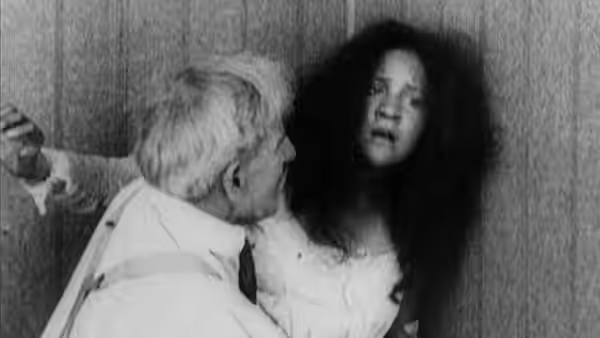
We were shaken by the images of Sylvia’s trauma. Their force comes from how directly the suffering is presented, without allowing the surrounding plot to make it feel merely like another complication. We will not describe what happens. Micheaux makes us stay with the hurt, and those passages are the reason to see the film even if the route towards them has tested our patience.

The chief weakness belongs to Micheaux the writer, whose approach to the central subject is unnecessarily roundabout. At 74 minutes, this is a short film that can still feel as though it is taking its time getting somewhere. The complications sometimes demand attention that would be better spent on Sylvia. We can respect the wish to include a broad social picture and still wish that several stretches had been brought into a tighter sequence.

Micheaux asks a great deal of melodrama here. The romance and the crime must hold our interest while making space for suffering that cannot comfortably be treated as entertainment. That helps explain the crowded telling, although it does not excuse every diversion. The strongest passages justify the emotional pressure he applies; elsewhere, the awkward acting makes the same approach feel laboured, and we become too conscious of being urged to feel something.

The ending is awkward too, though we will leave its particulars alone. It does not erase the force of the images that precede it, or the seriousness with which Micheaux treats Sylvia’s suffering. The reservations are worth taking seriously, especially for anyone who needs a story to move cleanly. Give it an evening without distractions, and do not expect a reassuring romance.
Critical consensus AI synthesised

3 of 6
Positive
3
Mixed
0
Negative
0
Evening Standard
25 June 2020 · Charlotte O'Sullivan
85*

O'Sullivan gives the film a strongly positive verdict, despite noting some gauche performances and an awkward ending. She particularly praises its visually searing sequences that reveal Sylvia’s trauma.

Read the full review →
The New Yorker
85*

The review regards Micheaux’s melodrama as bold and daring in both style and subject. It especially praises the film’s expansive portrayal of Black society and its striking narrative twists.

Read the full review →
Los Angeles Times
29 October 1998 · festival review · KEVIN THOMAS
70*

Thomas regards the film as an important, impassioned work, though its storytelling rambles and takes a roundabout route to its central subject. He praises the haunting images and the discreetly presented lynching scenes.

Read the full review →

Straight answers AI written, from our review

Is Within Our Gates worth watching?
Within Our Gates is worth watching for its forceful treatment of suffering and broad portrait of Black society; we score it 78 out of 100. We recommend it to viewers willing to accept wandering storytelling and uneven acting for images of Sylvia’s trauma that we find hard to forget.
How long is Within Our Gates, and what is it rated?
Within Our Gates runs 1h 14m. It is a drama and romance film.
Where can I watch Within Our Gates in Denmark?
Within Our Gates is streaming on MUBI in Denmark. Availability is checked daily; the links above go straight to each service.
How violent or frightening is Within Our Gates, and is it suitable for children?
Within Our Gates has no UK certificate and is unrated in the US; its direct presentation of Sylvia’s trauma makes us cautious about recommending it for children. We find the images of suffering upsetting, and would steer sensitive viewers away from treating its romance as a promise of gentle viewing.
How does Within Our Gates compare to Imitation of Life?
Within Our Gates offers a broader, rougher portrait of Black society than the glossy melodrama of Imitation of Life, with racial prejudice making private happiness difficult in both. We favour Imitation of Life for the strength of its housekeeper-and-daughter story, though Lana Turner’s half is thin; Micheaux’s film suits viewers prepared for more narrative wandering and awkward acting.
What should I watch after Within Our Gates?
After Within Our Gates, try Imitation of Life (1959, Fi1m 86): Another melodrama in which racial prejudice makes private happiness painfully difficult. Then Sounder (1972, Fi1m 83): A Black family’s struggle, told with patience and close attention to performance.

Cast

If you liked this, try…

  1. Imitation of Life (1959, Fi1m 86)Another melodrama in which racial prejudice makes private happiness painfully difficult.

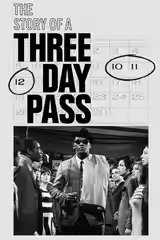
  2. The Story of a Three-Day Pass (1968) · not on Fi1m yetA romance whose brief pleasures cannot keep racial prejudice outside.

  3. Sambizanga (1972) · not on Fi1m yetPolitical violence becomes personal through a woman’s search for her husband.

  4. Sounder (1972, Fi1m 83)A Black family’s struggle, told with patience and close attention to performance.

  5. Daughters of the Dust (1991) · not on Fi1m yetA broader family portrait that rewards attention to faces, history and place.