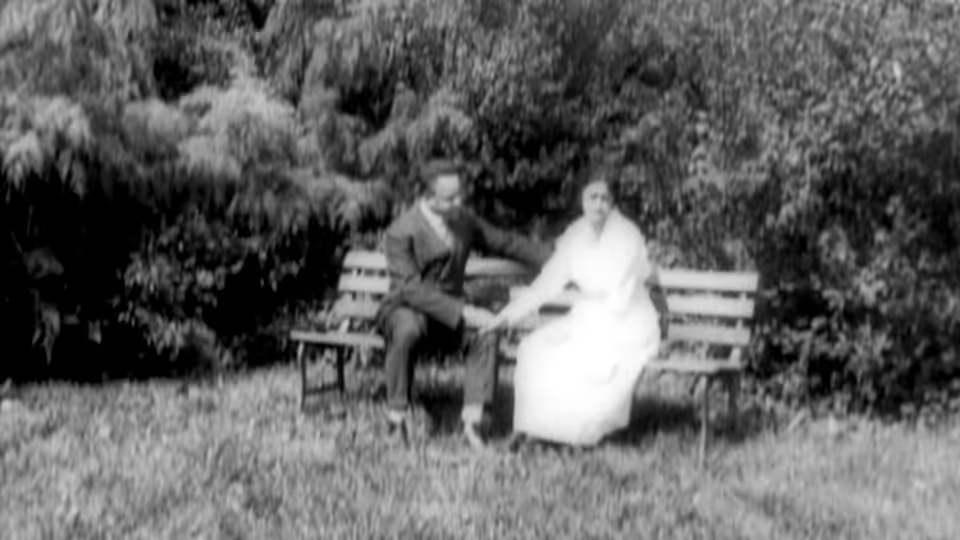
Oscar Micheaux’s drama is untidy and sometimes awkwardly acted, but its images of suffering are hard to forget. We recommend it with a warning: the storytelling takes a roundabout route towards its most affecting scenes.
Within Our Gates is a forceful, uneven drama, worth seeing with some patience for its wandering story. Oscar Micheaux writes and directs as though romance, crime and a broad account of Black society all need to fit into the same film. They do not always sit comfortably together, and the joins can be distracting. Yet the images have a force that makes us forgive a good deal of the fuss required to get to them.
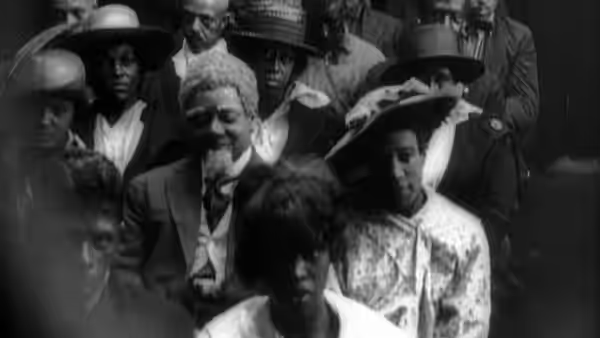
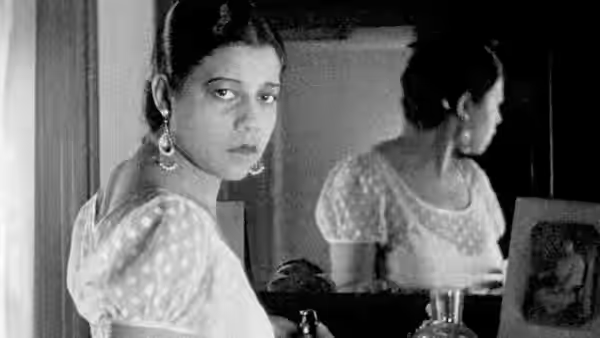
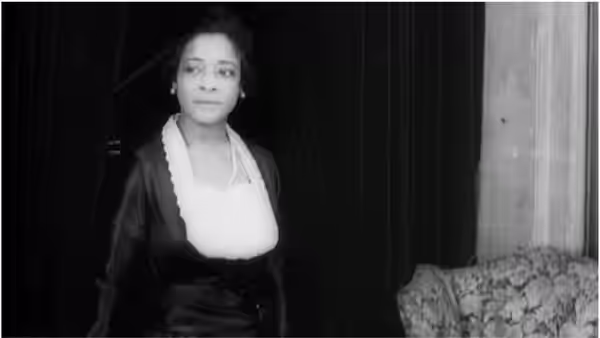
The breadth matters. Sylvia Landry, played by Evelyn Preer, gives the film a central figure, but Micheaux keeps widening his attention beyond her. That can be frustrating when we want him to stay with the person whose troubles have caught our interest. It also gives the drama something worth the occasional loss of concentration: a sense that the people surrounding Sylvia deserve attention beyond their usefulness to her story.
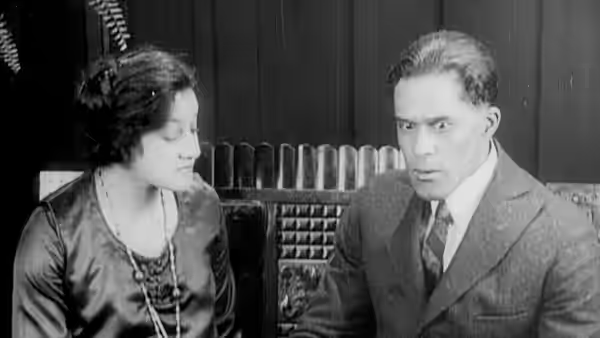
Evelyn Preer has the difficult task of keeping Sylvia important amid those competing demands, and her presence gives us a reason to follow the diversions. The surrounding acting is less dependable. Some performances press their emotions harder than they need to, making us notice the effort at precisely the point when we should be caught up in the trouble. The stiffness is a real obstacle in a film that needs us to care about its people.
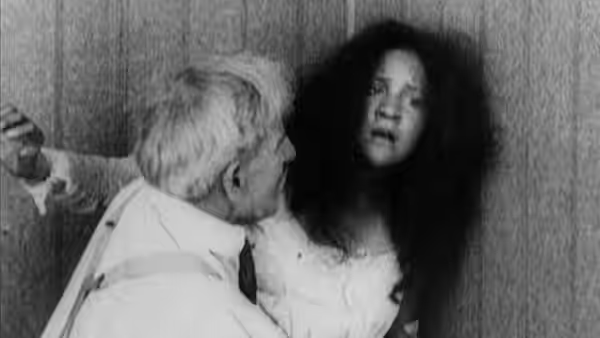
We were shaken by the images of Sylvia’s trauma. Their force comes from how directly the suffering is presented, without allowing the surrounding plot to make it feel merely like another complication. We will not describe what happens. Micheaux makes us stay with the hurt, and those passages are the reason to see the film even if the route towards them has tested our patience.
The chief weakness belongs to Micheaux the writer, whose approach to the central subject is unnecessarily roundabout. At 74 minutes, this is a short film that can still feel as though it is taking its time getting somewhere. The complications sometimes demand attention that would be better spent on Sylvia. We can respect the wish to include a broad social picture and still wish that several stretches had been brought into a tighter sequence.
Micheaux asks a great deal of melodrama here. The romance and the crime must hold our interest while making space for suffering that cannot comfortably be treated as entertainment. That helps explain the crowded telling, although it does not excuse every diversion. The strongest passages justify the emotional pressure he applies; elsewhere, the awkward acting makes the same approach feel laboured, and we become too conscious of being urged to feel something.
The ending is awkward too, though we will leave its particulars alone. It does not erase the force of the images that precede it, or the seriousness with which Micheaux treats Sylvia’s suffering. The reservations are worth taking seriously, especially for anyone who needs a story to move cleanly. Give it an evening without distractions, and do not expect a reassuring romance.