Mike Nichols turns a publishing-house power struggle into a werewolf picture, and for an hour it is sly and funny. Then it remembers it is a horror film, and the last stretch is the dullest thing in it. Better than its reputation.
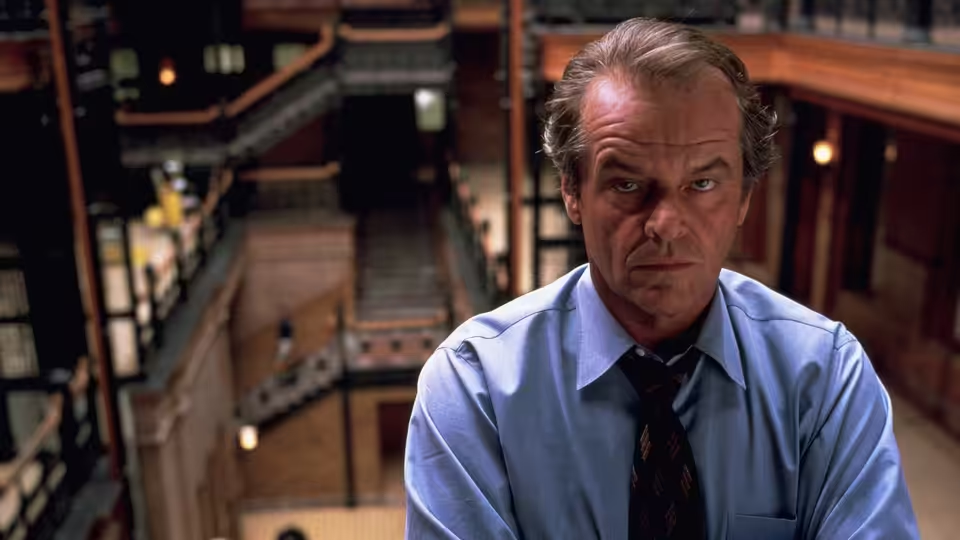
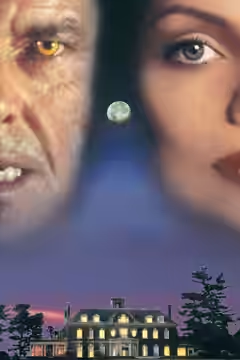
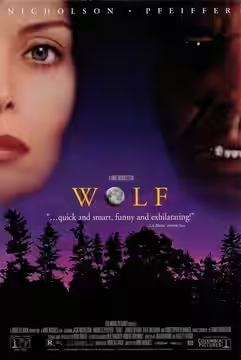
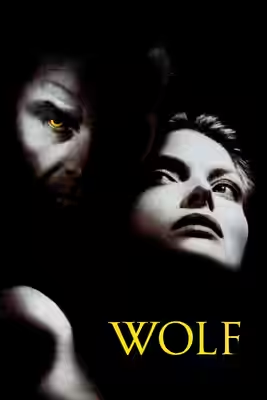
Mike Nichols is not a director anyone would have sent to make a werewolf film, and Wolf behaves for most of its length as though nobody did. Will Randall (Jack Nicholson) is a book editor of the old kind, loyal to his authors and bad at lunch, and the film’s first interest is in watching him lose his job to a younger man who smiles more. After a bite on a Vermont road his eyesight comes back, his hearing reaches down corridors and his nose tells him what everyone in the building had for breakfast and who they had it with. Jim Harrison and Wesley Strick’s script uses the curse as a tonic for middle age, and for about an hour the joke holds. Then the film has to be a horror film as well, and it is much less good at that. It is a decent, odd picture, flawed where it matters, and we liked it more than the reviews so far allow.
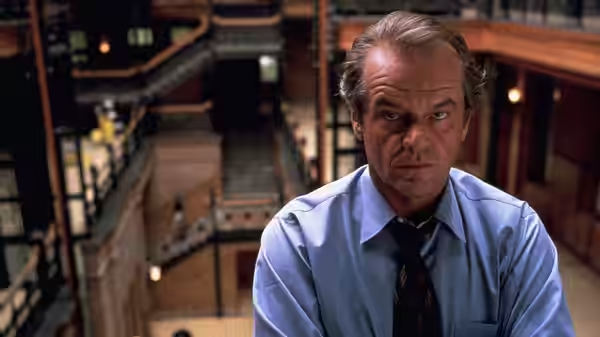
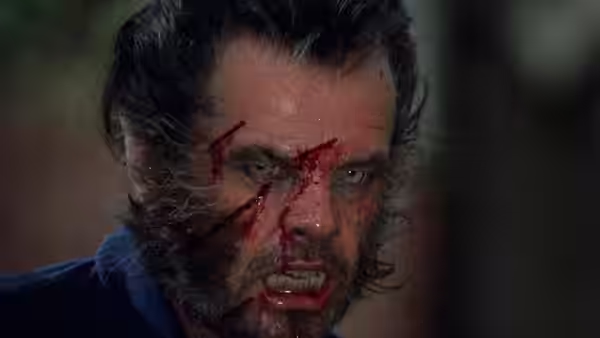
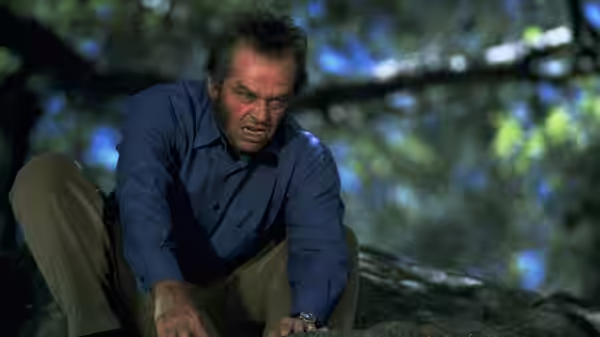
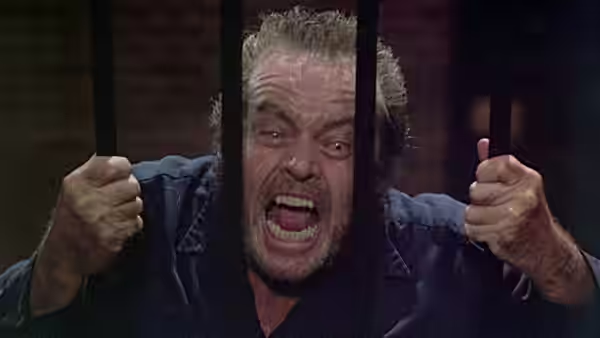
Nicholson is the reason. He plays the first half small, which is not what he is known for. He does not snarl; he notices. He reads a manuscript without his glasses and looks at the page as though it has done something to him. When the appetite comes, it arrives as good humour: he eats more, sleeps better and starts to enjoy meetings. The make-up, when it finally appears, is modest, and the film is right to keep it modest, because the performance has already done the work.
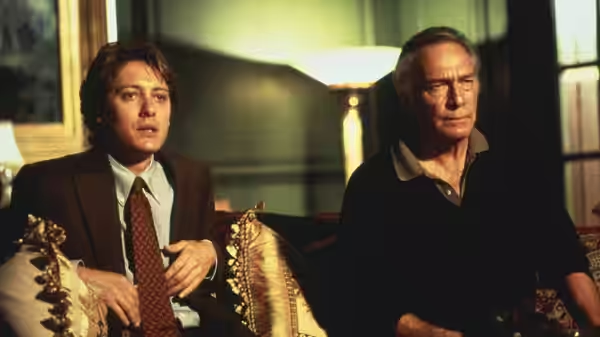
The office is where the film is happiest. Bo Welch builds the publishing house as panelled rooms with too many books and not enough light, and Ann Roth dresses Nicholson in overcoats a size too comfortable and James Spader in suits that fit precisely. Spader’s Stewart Swinton is the best of the supporting cast, an apologetic young man who is sorry about everything he is about to do to you. Christopher Plummer’s Raymond Alden fires people with a courtesy that is its own insult. We laughed, loudly, at the scene in the men’s room where Will marks his territory on Stewart’s shoes, and then felt a little ashamed, because the film is so pleased with itself about it.
Giuseppe Rotunno lights the city in brass and shadow, lamps on dark wood, and the countryside in blue, under a moon that is always conveniently full. Ennio Morricone’s score keeps to a low, prowling theme, strings over a slow pulse, and only lets it off the lead late. Sam O’Steen cuts the hearing and the smelling as short, clean inserts, an ear, a glass, a breath, and these are more frightening than any of the running about later because they are so ordinary.
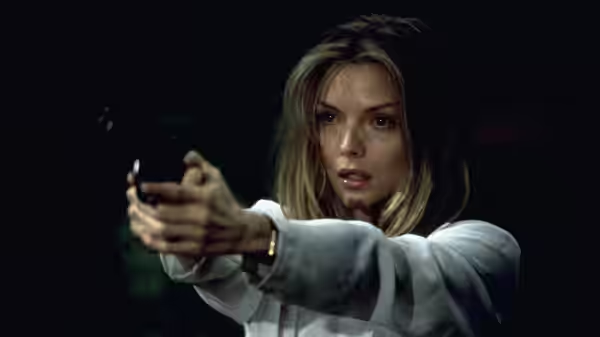
What does not work is the romance. Michelle Pfeiffer’s Laura Alden is written as a cigarette and a bad attitude, and Pfeiffer does what she can with a woman who exists to stand in a stable and be interesting. The two of them have less heat than Nicholson has with Spader, and the film seems to know it, because it keeps cutting back to the office. Kate Nelligan is given a wife and little else. Richard Jenkins arrives as a detective about halfway through, and his arrival announces that the film is going to become a procedural with fur. The last of the 125 minutes are spent at the Alden estate in a chase we will not describe, except to say that it is dim and long, and we were bored by it in a way we had not been all evening.
Most critics have been dismissive, and we think they have weighed the ending too heavily against the rest. A film that gives you an hour this good has done more than most, even if it cannot finish. Against Nichols’s own standard it is minor; The Graduate (1967) knew exactly how to end, and this does not. Against the werewolf film it is unusual for caring more about what a man does at his desk than what he does under the moon.
See it for Nicholson and Spader, and for an idea about middle age that is sharper than the fangs. Step out when the detective arrives and you will have seen the better film.