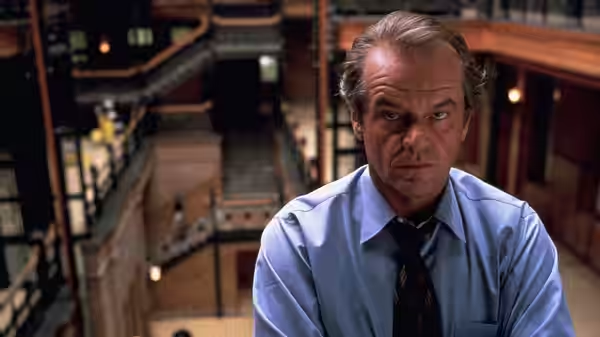
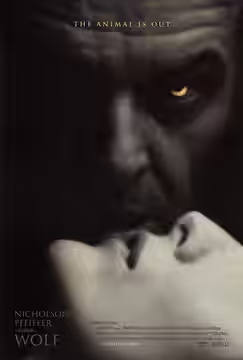
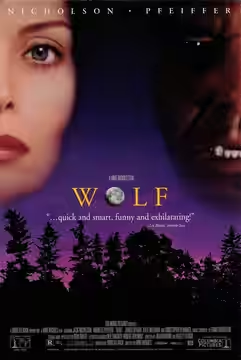
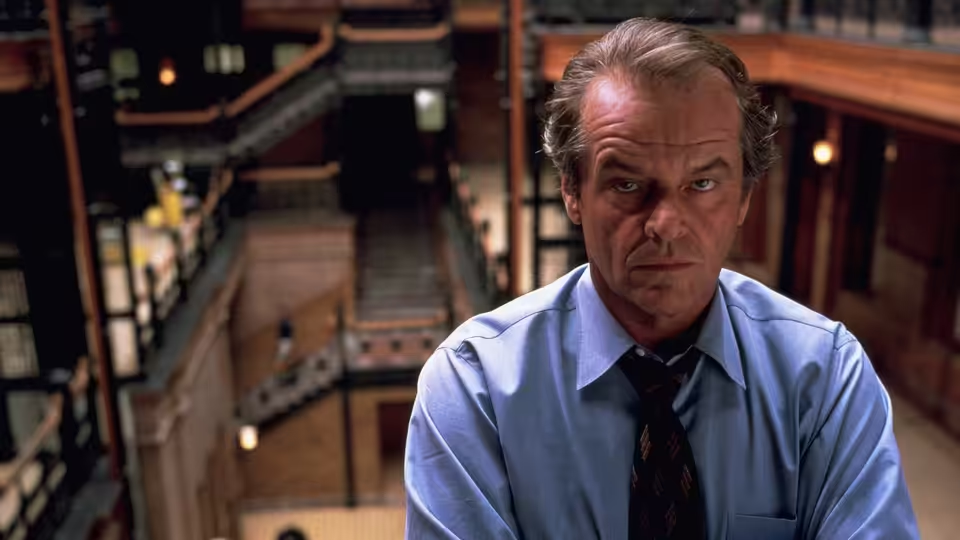
Will Randall (Jack Nicholson) sits in his office wearing a blue shirt and tie
Film review

Wolf

1994 · Directed by Mike Nichols · 2h 05m

In a sentenceA werewolf film in which the most frightening creature is a smiling junior colleague who wants your job

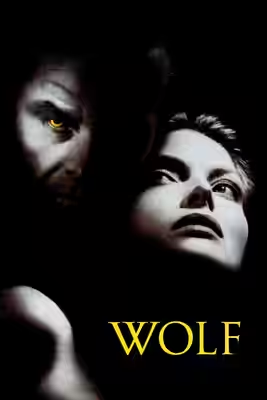
Will Randall (Jack Nicholson), a senior editor at a Manhattan publishing house, hits a wolf on a snowy Vermont road and is bitten before it limps away. Back in the city, the house’s new owner, the billionaire Raymond Alden (Christopher Plummer), tells him he is being replaced by his own protégé, Stewart Swinton (James Spader). His wife Charlotte (Kate Nelligan) is distracted. Then Will’s senses sharpen. He reads without his glasses, hears conversations through office walls and smells tequila on a colleague before lunch. At a party at Alden’s estate he meets the owner’s daughter, Laura (Michelle Pfeiffer), who dislikes the company as much as he does. He goes back to the office to fight for his job, and finds he is no longer inclined to lose politely.

Fi1m review

Mike Nichols turns a publishing-house power struggle into a werewolf picture, and for an hour it is sly and funny. Then it remembers it is a horror film, and the last stretch is the dullest thing in it. Better than its reputation.

Mike Nichols is not a director anyone would have sent to make a werewolf film, and Wolf behaves for most of its length as though nobody did. Will Randall (Jack Nicholson) is a book editor of the old kind, loyal to his authors and bad at lunch, and the film’s first interest is in watching him lose his job to a younger man who smiles more. After a bite on a Vermont road his eyesight comes back, his hearing reaches down corridors and his nose tells him what everyone in the building had for breakfast and who they had it with. Jim Harrison and Wesley Strick’s script uses the curse as a tonic for middle age, and for about an hour the joke holds. Then the film has to be a horror film as well, and it is much less good at that. It is a decent, odd picture, flawed where it matters, and we liked it more than the reviews so far allow.

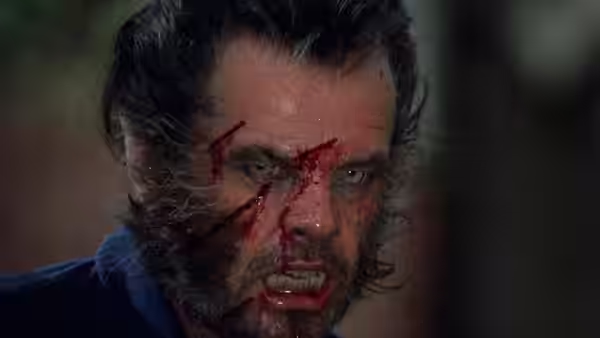
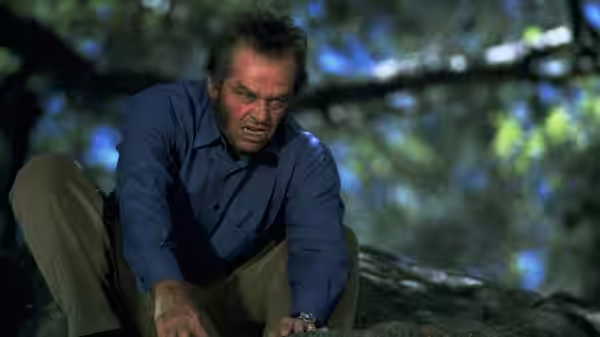
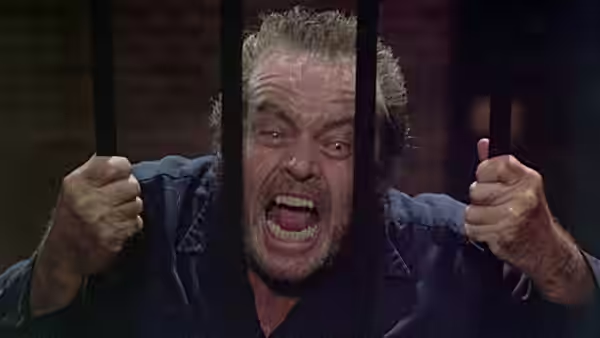
Nicholson is the reason. He plays the first half small, which is not what he is known for. He does not snarl; he notices. He reads a manuscript without his glasses and looks at the page as though it has done something to him. When the appetite comes, it arrives as good humour: he eats more, sleeps better and starts to enjoy meetings. The make-up, when it finally appears, is modest, and the film is right to keep it modest, because the performance has already done the work.

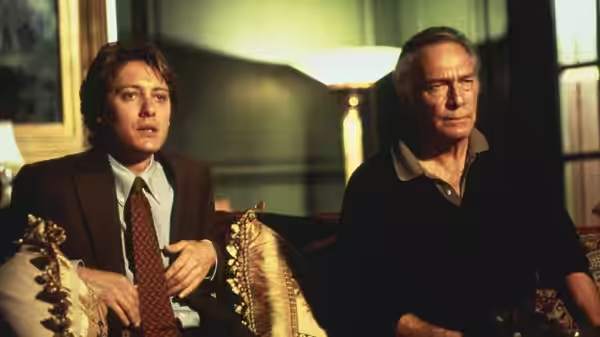
The office is where the film is happiest. Bo Welch builds the publishing house as panelled rooms with too many books and not enough light, and Ann Roth dresses Nicholson in overcoats a size too comfortable and James Spader in suits that fit precisely. Spader’s Stewart Swinton is the best of the supporting cast, an apologetic young man who is sorry about everything he is about to do to you. Christopher Plummer’s Raymond Alden fires people with a courtesy that is its own insult. We laughed, loudly, at the scene in the men’s room where Will marks his territory on Stewart’s shoes, and then felt a little ashamed, because the film is so pleased with itself about it.

Giuseppe Rotunno lights the city in brass and shadow, lamps on dark wood, and the countryside in blue, under a moon that is always conveniently full. Ennio Morricone’s score keeps to a low, prowling theme, strings over a slow pulse, and only lets it off the lead late. Sam O’Steen cuts the hearing and the smelling as short, clean inserts, an ear, a glass, a breath, and these are more frightening than any of the running about later because they are so ordinary.

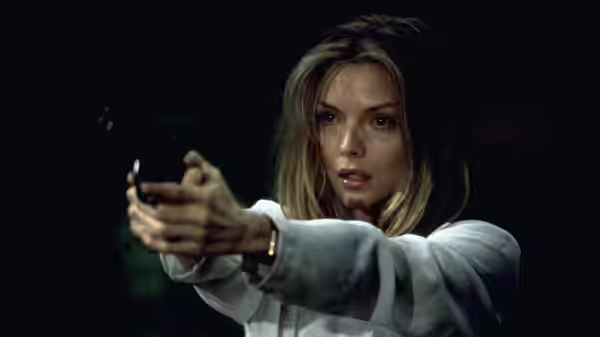
What does not work is the romance. Michelle Pfeiffer’s Laura Alden is written as a cigarette and a bad attitude, and Pfeiffer does what she can with a woman who exists to stand in a stable and be interesting. The two of them have less heat than Nicholson has with Spader, and the film seems to know it, because it keeps cutting back to the office. Kate Nelligan is given a wife and little else. Richard Jenkins arrives as a detective about halfway through, and his arrival announces that the film is going to become a procedural with fur. The last of the 125 minutes are spent at the Alden estate in a chase we will not describe, except to say that it is dim and long, and we were bored by it in a way we had not been all evening.

Most critics have been dismissive, and we think they have weighed the ending too heavily against the rest. A film that gives you an hour this good has done more than most, even if it cannot finish. Against Nichols’s own standard it is minor; The Graduate (1967) knew exactly how to end, and this does not. Against the werewolf film it is unusual for caring more about what a man does at his desk than what he does under the moon.

See it for Nicholson and Spader, and for an idea about middle age that is sharper than the fangs. Step out when the detective arrives and you will have seen the better film.

Critical consensus AI synthesised

37
Positive
0
Mixed
1
Negative
3
The New York Times
17 June 1994
64*

The page is inaccessible, so the critic’s verdict cannot be established. No specific praise or complaint is available in the supplied text.

Read the full review →
Empire
3 February 2006 · Kim Newman
35*

Newman finds the film caught between being too ridiculous for mainstream viewers and too familiar for horror fans. He praises the early satire and the scenes pairing Jack Nicholson with James Spader and Christopher Plummer, but criticizes the dull finish.

Read the full review →
Los Angeles Times
17 June 1994 · Kenneth Turan
30*

Turan finds the film muddled and only sporadically involving, with its competing genres undermining the story. He singles out Nicholson’s restrained, low-key portrayal of the character’s transformation as a strength.

Read the full review →
Time Out
· GA
20*

The critic dismisses the film as glossy but redundant. The review’s description suggests Nicholson is the possible exception, but the article text is unavailable.

Read the full review →

Straight answers AI written, from our review

Is Wolf worth watching?
Wolf is worth watching for anyone who wants to see Jack Nicholson play a werewolf as an office politician rather than a monster, and we scored it 60. The first hour, in which his bite becomes a tonic for middle age, is sly and funny; the final stretch at the Alden estate is dim, long and dull. We think most critics have weighed the ending too heavily.
How long is Wolf, and what is it rated?
Wolf runs 2h 05m. It is a horror and drama film.
Where can I watch Wolf in Norway?
Wolf is not on any streaming or rental service in Norway at the moment. It is available in 11 other countries; change your country at the top of the page to see where. Availability is checked daily.
How violent or frightening is Wolf, and is it suitable for children?
Wolf carries a UK 15 certificate, and its frights are mostly in sharpened senses rather than gore: an ear, a glass, a breath, cut as short inserts that unsettle because they are so ordinary. The make-up is modest and the running about comes late. It is not for younger children, but teenagers and the squeamish should manage it without trouble.
How does Wolf compare to An American Werewolf in London?
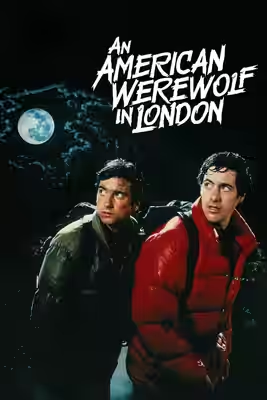
Wolf is the subtler of the two werewolf films and An American Werewolf in London is the one where the transformation is the whole show. Landis makes the curse hurt and keeps the effects hard to watch; Nichols keeps the fur to a minimum and cares more about what his man does at his desk than under the moon. Both lose interest in their romances. Choose Landis for the monster and Nichols for the office.
What should I watch after Wolf?
After Wolf, try An American Werewolf in London (1981, Fi1m 80): The other werewolf film with jokes, and a transformation that is the whole show. Then Cat People (1942, Fi1m 86): Val Lewton’s quiet shadows; the animal in a marriage, kept mostly off screen.

Cast

If you liked this, try…

  1. An American Werewolf in London (1981, Fi1m 80)The other werewolf film with jokes, and a transformation that is the whole show.

  2. Ginger Snaps (2000) · not reviewed yetLycanthropy as puberty in a suburban Canadian high school, bloodier and funnier than this.

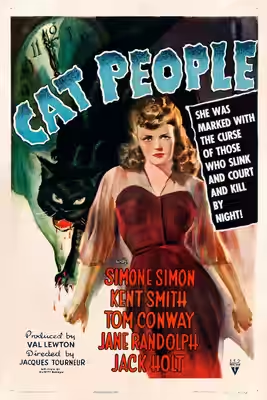
  3. Cat People (1942, Fi1m 86)Val Lewton’s quiet shadows; the animal in a marriage, kept mostly off screen.

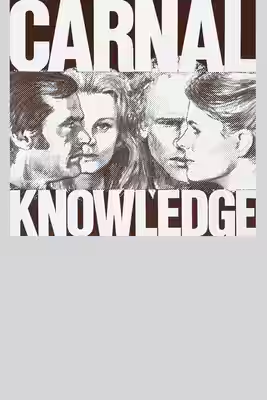
  4. Carnal Knowledge (1971) · not reviewed yetNichols and Nicholson on men behaving badly, with no fur to blame it on.

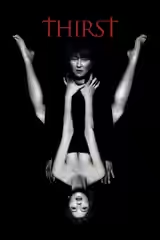
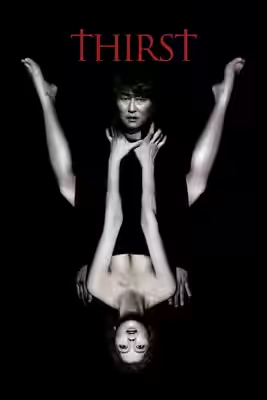
  5. Thirst (2009) · not reviewed yetPark Chan-wook’s priest given appetite by accident, and a good deal nastier about it.

Free account

Know what to watch tonight

Two lists that know where things are streaming, collections you can share, your own score beside ours, and Discover that remembers what you have seen.

  • Want to see, sorted by what is streaming now
  • Seen, with your score out of ten
  • No adverts, ever