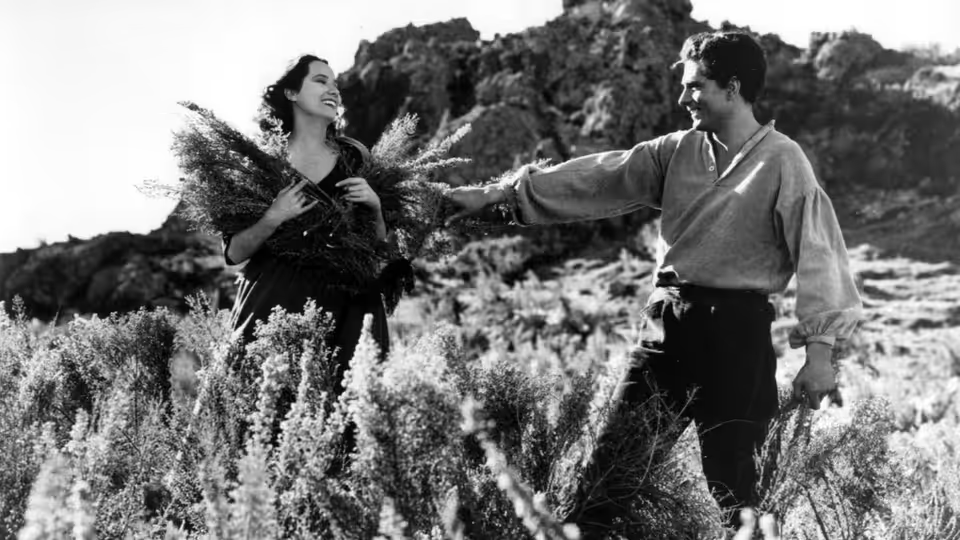
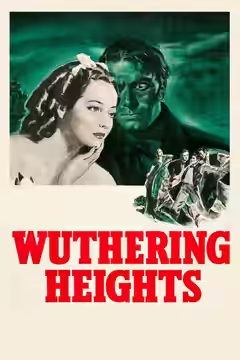
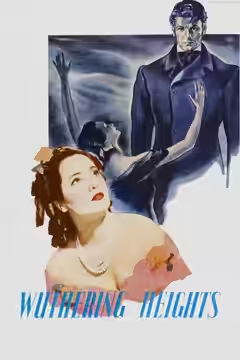
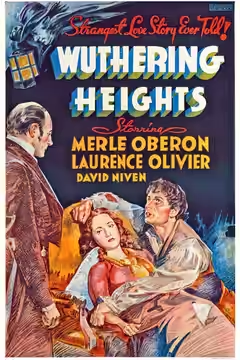
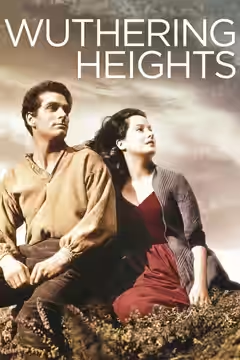
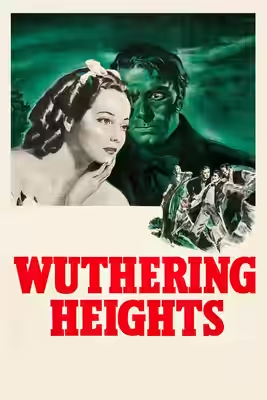
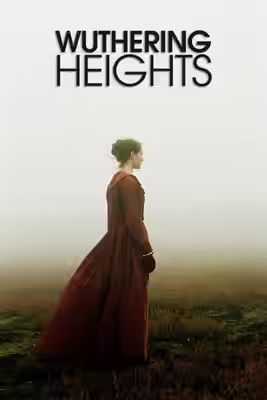
Wyler and Gregg Toland make a handsome, shadowed version of Brontë, and Olivier’s Heathcliff still has heat in him. But Hecht and MacArthur have cut the book in half, and Merle Oberon’s Cathy is more gown than storm.
A traveller called Lockwood (Miles Mander) loses his way in a snowstorm on the Yorkshire moors and knocks at the nearest door. The house is Wuthering Heights, its master is Heathcliff (Laurence Olivier), and neither wants him. Lockwood is given a bed in a shut-up room, hears a woman calling from the moor in the night, and in the morning the housekeeper, Ellen Dean (Flora Robson), sits him by the fire and tells him how the house came to be like this. William Wyler’s film, produced by Samuel Goldwyn and written by Ben Hecht and Charles MacArthur from Emily Brontë’s novel of 1847, tells her story of Cathy and Heathcliff to the end of its first half and no further.
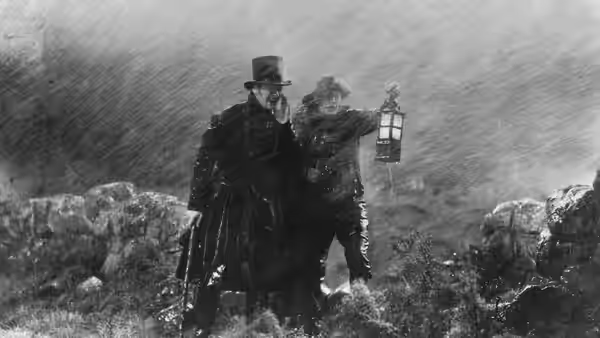
It is good, and worth your evening, for its rooms, for faces coming out of the dark, and for Olivier. It is less good at the moor, at Cathy, and at the half of the book it has decided is not there. The first ten minutes frightened us, and nothing later in the film moved us as much. Gregg Toland lights the Heights as a low black box where a single candle finds one face at a time; the snow comes through the door in a sheet; and when the voice calls from outside, Olivier goes to the window as if he has been waiting years for it.
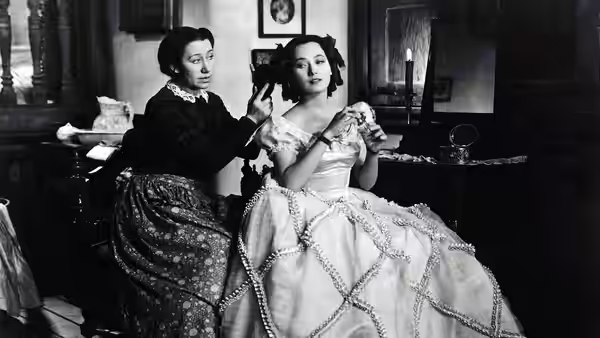
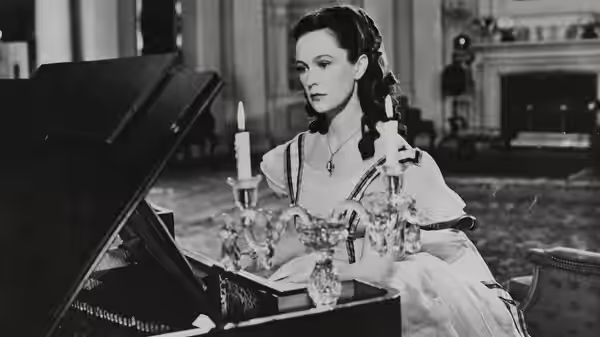
Toland gives the two houses two kinds of light. The Heights is all shadow and a fire that never seems to warm anyone. Thrushcross Grange, where the Lintons live, is white walls, tall windows and daylight, and Omar Kiam dresses Cathy there in wide pale gowns from a smarter decade than the one Brontë wrote about. Daniel Mandell cuts between the two with slow dissolves, so that years pass and nobody seems to have moved. Alfred Newman’s score is the one department that does not know when to stop; the strings arrive a bar before the feeling does, every time.
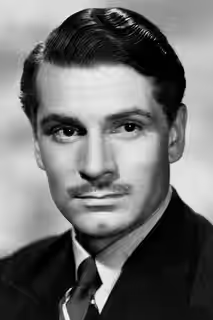
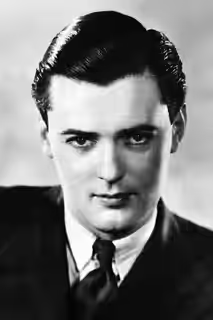
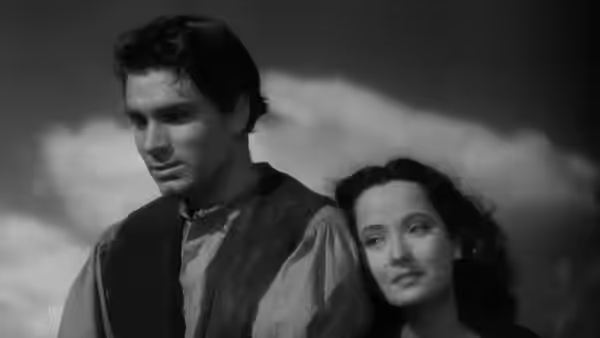
Olivier plays Heathcliff angry from the first frame to the last. As the stable boy he has dirt on his face and watches Cathy ride off to the Grange with the look of a dog left in the rain. When he comes back years later in a good black coat he holds himself exactly the same way, and that is the point: money has not touched him. He barks some of his lines at the ceiling, and Wyler lets him, but when he stands still and looks at Oberon the film has heat in it.
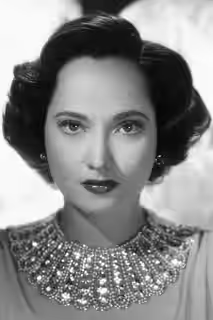
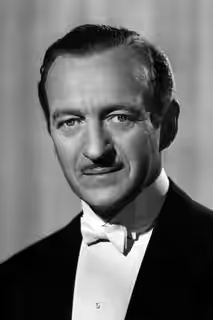
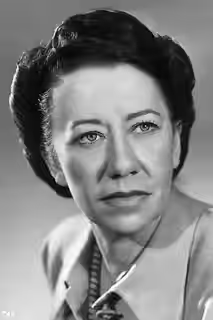
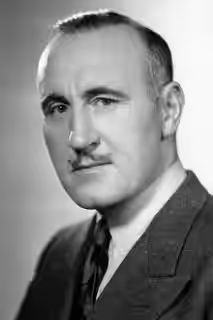
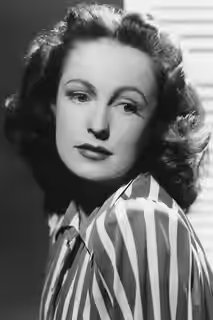
Merle Oberon is lovely, pleasant and composed, and Cathy Earnshaw should be none of those things. Sarita Wooton, who plays her as a child, has more of the wild in her in ten minutes on Penistone Crag than Oberon finds in the following ninety. David Niven does something useful with Edgar Linton, who is usually a mistake in a cravat; here he is a decent man who knows he is second and marries her anyway. Flora Robson is the spine of the film, telling the story without once telling us how to feel about it. Geraldine Fitzgerald’s Isabella wants Heathcliff with a clarity nobody else in the film manages, and what happens to her belongs to the second half.
Hecht and MacArthur have cut the book in two and kept the half with the love story in it. The second generation, the children and the long revenge, are gone entirely, and the film is neater and smaller for it. Brontë’s Heathcliff is something closer to weather; theirs is a jilted man. If you have never read the novel you will not miss what is missing.
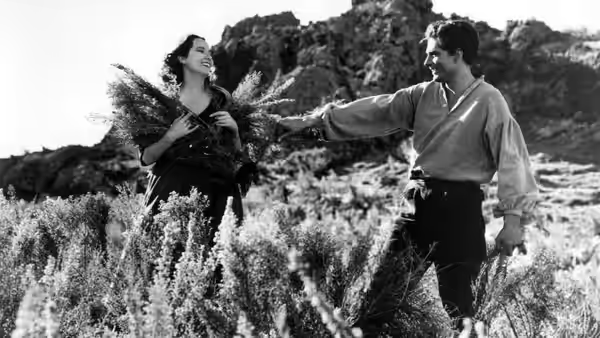
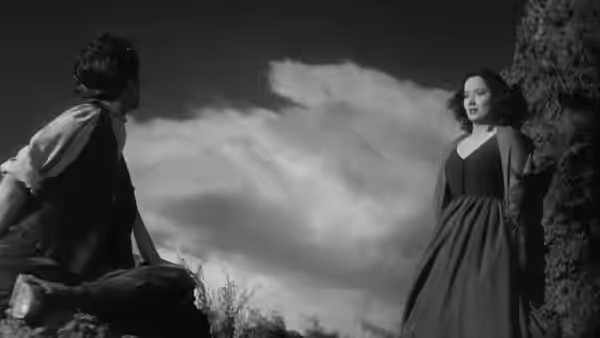
Wyler is a director of doorways and staircases rather than horizons, and this is a story that wants a horizon. The moor scenes look like a hill somebody has dressed with heather, and the wind is doing most of the acting. Indoors, where he can put one person in the foreground and another at the far end of a dark hall, he is as sure as he ever was.
Watch it for the houses, not the moors. If you know the book, make your peace with losing half of it before the lights go down; if you do not, this is a fair place to meet Heathcliff, and Olivier will see to it that you remember him.