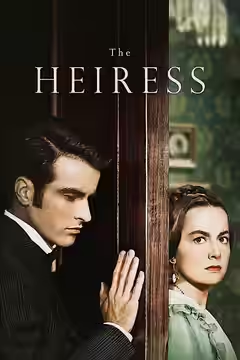
William Wyler’s Henry James adaptation is cold, exact and never sentimental, which is why it hurts. Olivia de Havilland and Ralph Richardson play a daughter and father who ruin each other by telling the truth, and we would put it in front of anyone.
Ruth and Augustus Goetz adapted Henry James’s Washington Square for the stage before William Wyler filmed it, and the theatre is still in it: one house, four people and a staircase. That is not a complaint. Wyler has made a film about a family that does its damage indoors, in daylight, over tea, and The Heiress is one of the films we would put in front of anyone who thinks Hollywood in the forties was soft.
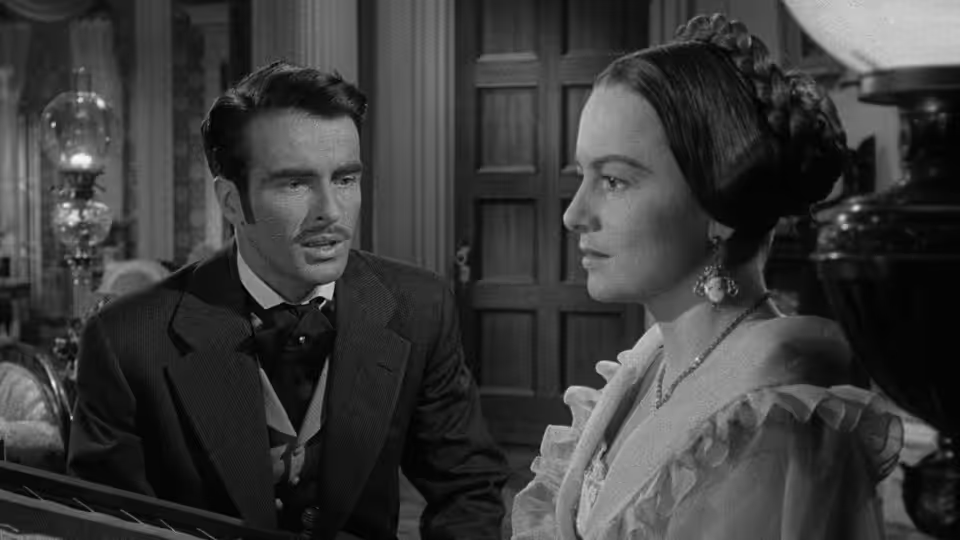
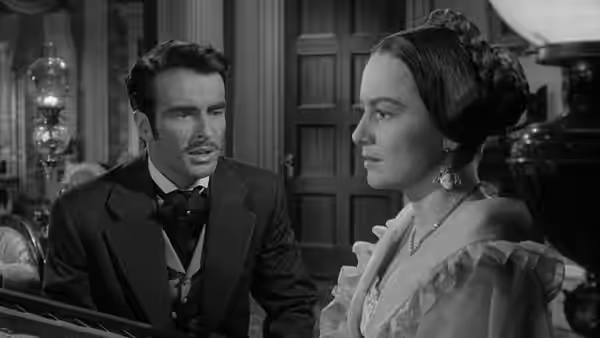
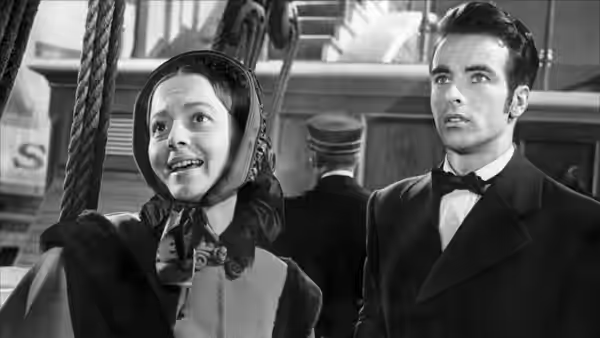
Catherine Sloper is not a beauty, and Olivia de Havilland does not play her as a beauty in disguise. She stands wrong. Her hands do not know where to go. When she speaks she says too much too fast and then stops. The scene that told us the film would hurt comes early, at a party at her aunt Elizabeth Almond’s (Selena Royle), where Catherine appears in a cherry-red dress with too much trimming on it and her father, Dr Austin Sloper (Ralph Richardson), looks her over and remarks that her mother used to wear that colour and could carry it. We winced, and Wyler held the shot, and Catherine kept smiling. Then Morris Townsend (Montgomery Clift) comes over, asks her to dance, is told she does not dance well, and takes her onto the floor anyway.
Richardson gives the best performance in the film and the quietest. Sloper is the cleverest man in every room he enters, and he never raises his voice; the cruelty is in how reasonable he sounds. Watch him call on Morris’s sister, Mme. Montgomery (Betty Linley), in her small parlour, and take her apart with questions a polite man could ask. He has decided Morris is after Catherine’s money, and the film is careful not to tell us whether he is right, so we will be careful too. Clift plays Morris warm, easy and modern against a household of stage-trained actors, and the effect is a man who either does not fit or has worked out how to seem so.
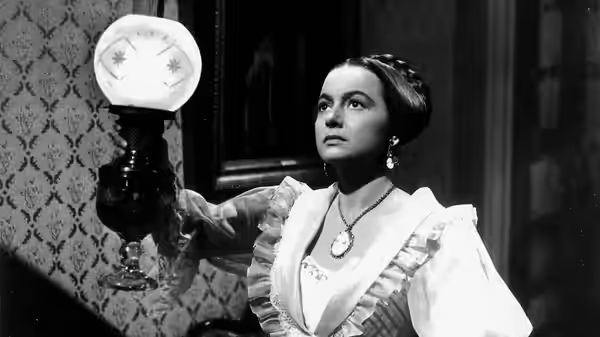
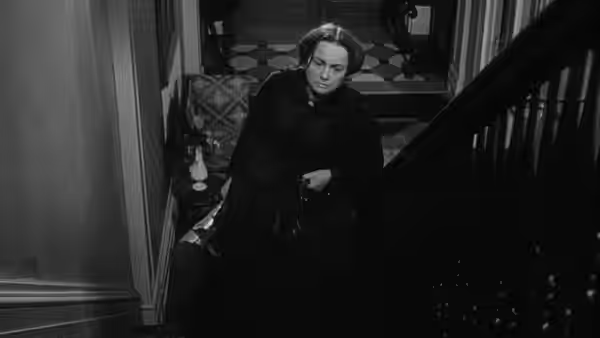
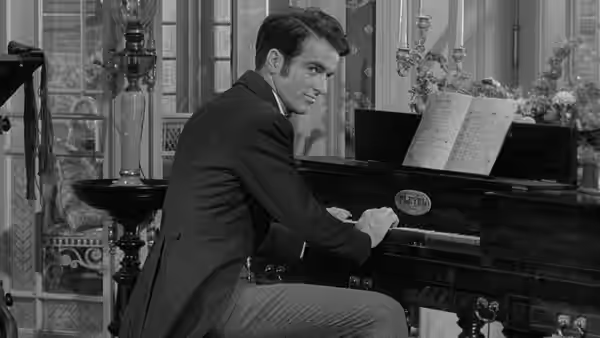
The house is the other lead. Harry Horner’s production design gives the Slopers a hall, a front parlour and a staircase, and Wyler brings Catherine back to those stairs at every point where the story turns. Leo Tover shoots in deep focus, so Sloper can read his paper sharp in the foreground while Catherine and Morris talk sharp at the back of the frame. Edith Head and Gile Steele put Catherine in plainer and darker dresses as the film goes on; the red one is the exception. Aaron Copland builds his score around the French song Morris sings at the piano, Plaisir d’amour, and each time it comes back it is a little colder. William Hornbeck cuts sparingly. Scenes run long and the actors are made to hold.
Miriam Hopkins is the comedy, and then she is not. Her Aunt Lavinia has read too many novels and believes she is in one; she carries notes, arranges meetings and calls it romance. Hopkins plays her as silly rather than stupid, which is the right call, because the film needs us to see how much harm a silly woman can do when she is the only person in the house on Catherine’s side.
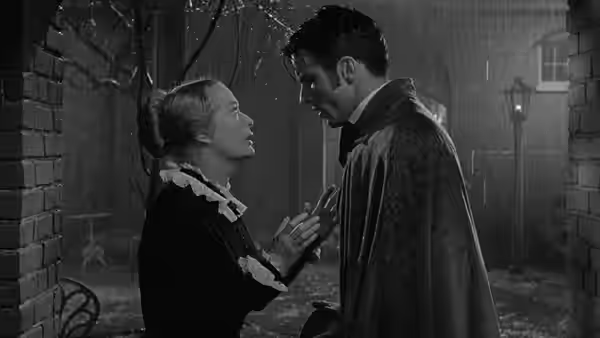
The second half takes a turn we will not describe. What we can say is that some critics have found it cold. Time Out thought the film heartless and did not like what Catherine becomes; Variety, in 1948, called it a museum piece. We think the coldness is the point. Nobody in this house is allowed to say what they feel, and when someone finally does, it cannot be taken back. There is a stretch after the first hour where the plot marks time while everyone waits for everyone else, and the Goetzes cannot always resist giving Sloper the last word in an exchange, so that once or twice he sounds written rather than spoken.
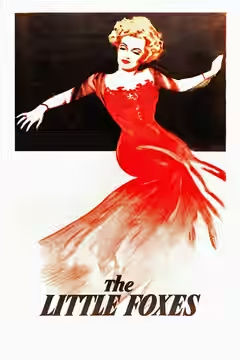
Wyler had done a staircase and a poisonous parent before, in The Little Foxes with Bette Davis. This is the better film, because here the person at the bottom of the stairs is allowed to grow up, and de Havilland shows every stage of it in her spine. It runs 115 minutes, nearly all of them indoors. See it, and then try to go up to bed without thinking about her.