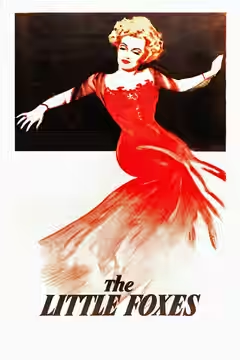
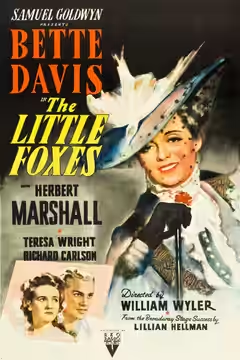
William Wyler’s film of Lillian Hellman’s play is a cold, exact account of a Southern family dividing up what is left of their town, photographed by Gregg Toland so that nobody can leave the frame. Bette Davis is formidable. The young romance bolted onto the side is not.
The Hubbards of Lillian Hellman’s play are the new money of a small Southern town, and in 1900 they want to become bigger money. Ben and his brother have a man from Chicago, William Marshall, ready to build a cotton mill with them. Their sister Regina wants a third of the deal, but the cash is her husband’s, and Horace is away in Baltimore being treated for his heart and has not written back. Hellman adapted her own play, and William Wyler films it as a house you cannot get out of: a hall, a staircase, a dining room, and a family that never stops calculating.
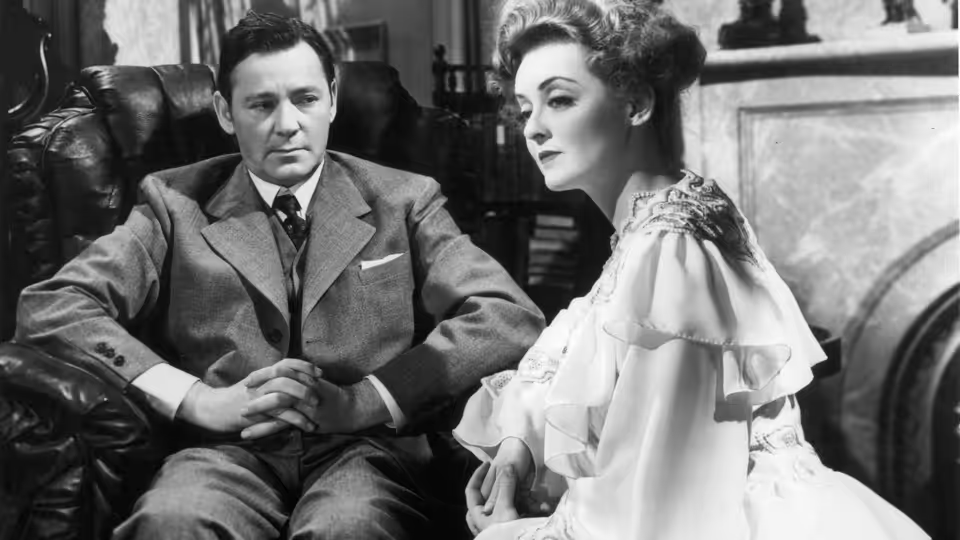
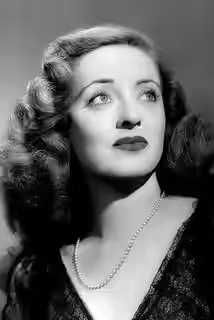
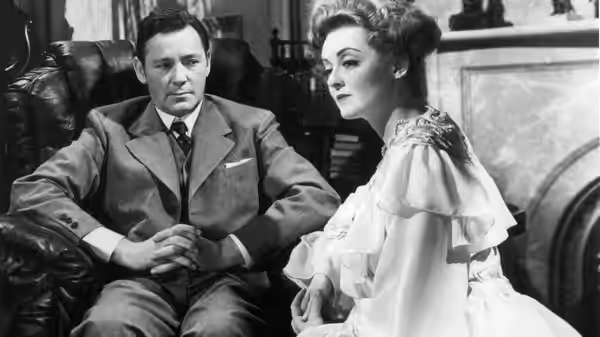
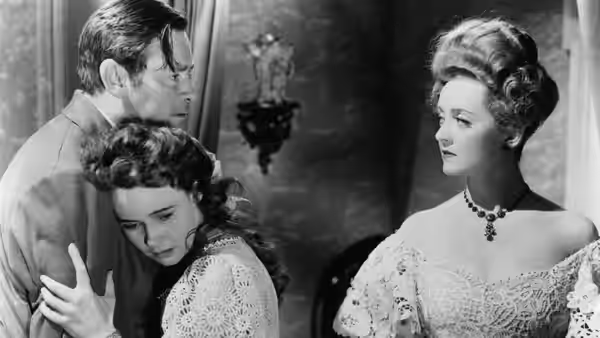
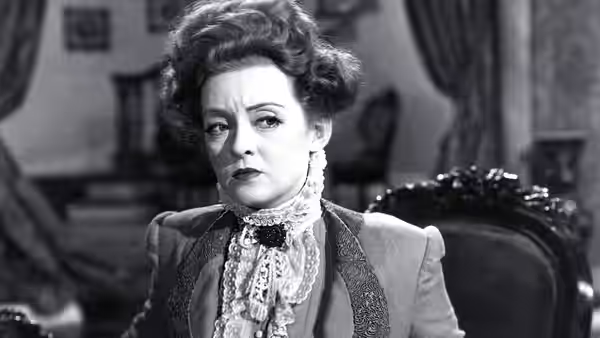
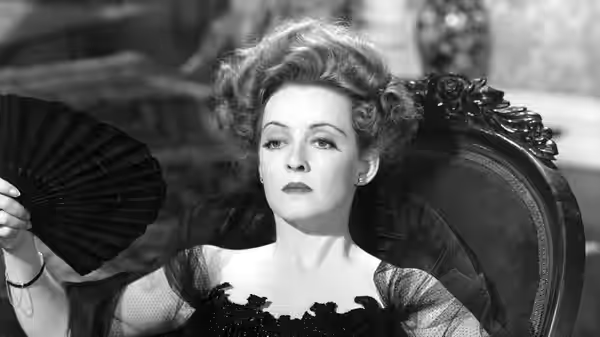
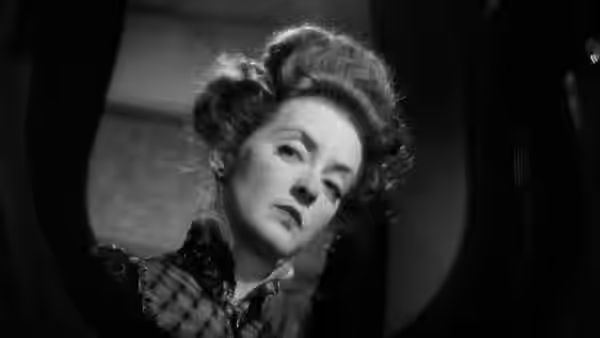
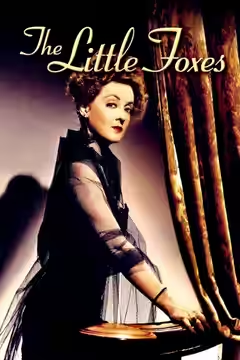
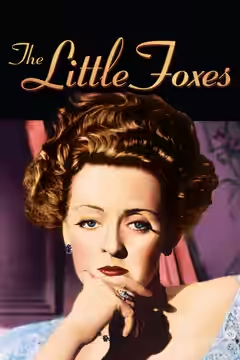
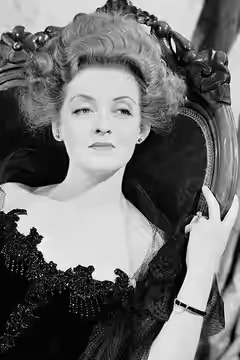
Bette Davis plays Regina with her face powdered nearly white and her body held still. Wyler had directed her twice before, in Jezebel and The Letter, and both times he let her move. Here he barely does. She sits, she watches, and she speaks in a low, even voice that sounds like someone reading terms. Orry-Kelly puts her in dark, high-necked gowns that look built rather than sewn. It is a chilly performance, deliberately, and some viewers will find it too much of a design. We did not. Regina is a woman who has worked out exactly what she is worth to every person in the house, and Davis lets us see the sums.
Gregg Toland photographed Citizen Kane the same year, and the same deep focus is at work here, to a different end. Whole rooms stay sharp from the foreground to the back wall, so while Regina talks to Marshall at the table we can also see Ben and his brother conferring by the door behind her. Nobody is ever alone in a shot for long, and nobody is ever out of earshot. Daniel Mandell cuts sparingly and lets scenes run in long takes, which suits a play built on people waiting for one another to slip. Meredith Willson’s score comes in rarely and mostly at the edges of scenes, and the film is better for the silence.
Several of the supporting cast came from the Broadway production, and it shows in how settled they are. Charles Dingle’s Ben is the frightening one, because he is cheerful about everything. Carl Benton Reid, as the other brother, is the stupid one, and the scene in which he hits his wife on the porch is over so fast that the ugliness lands after the blow does. Dan Duryea’s Leo is a weak young man who knows he is weak and hopes nobody else has noticed. And Patricia Collinge, as Birdie, gave us the one scene that got past our guard. She sits with Zan and Addie late in the evening and tells them, gently and without self-pity, what her marriage has been and why she takes a drink. Collinge plays it almost smiling. We were not ready to be moved by this film and we were.
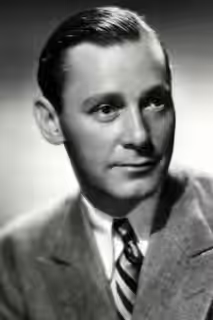
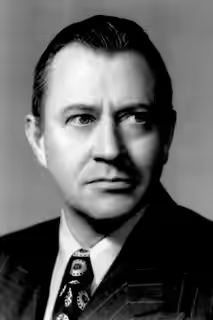
Herbert Marshall arrives as Horace about a third of the way in, grey and breathless, and the temperature of the house changes. He is the only person in it who has stopped wanting anything, and Marshall plays that as a kind of tired kindness. There is a scene between him and Regina near the end, shot in a single held frame, that we will not describe. It is among the cruellest things we have seen in a film of this period, and Toland’s camera does it without a cut.
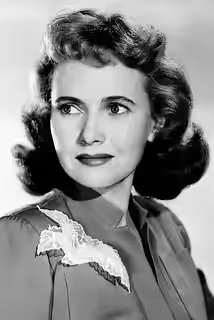
The flaws are the play’s and one is the film’s. Hellman writes speeches, and every so often someone stands up and delivers the theme, with Addie and Cal, the black servants, handed the job of saying what the audience already knows. That device has aged badly. The film’s own addition is David Hewitt, a newspaperman played by Richard Carlson who is not in Hellman’s play and courts Zan between scenes. Carlson and Teresa Wright are perfectly pleasant, and every minute they spend together is a minute away from the people we came to watch.
At 117 minutes it is a shade long and never dull. Watch it with someone you are related to, and see who looks away first.