Bette Davis and William Wyler build one of the great set pieces of the 1930s around a dress the wrong colour, and the rest of the film never quite recovers from having peaked at the ball. We would not miss it for that.
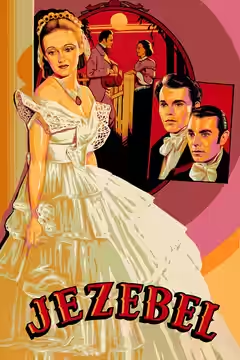
New Orleans, 1852, and a young woman has ordered the wrong dress. That is the part of Jezebel that matters, and William Wyler knows it: the first half of his 103 minutes walks us towards one ballroom and the second half deals with what happened there. It is a fine film with a soft ending, and the ballroom is among the best things put on a screen in the 1930s. The reviews we have read are more divided than the film deserves. The notices of 1938 found it slow and its last act unearned; they are half right about the last act and wrong about the rest.
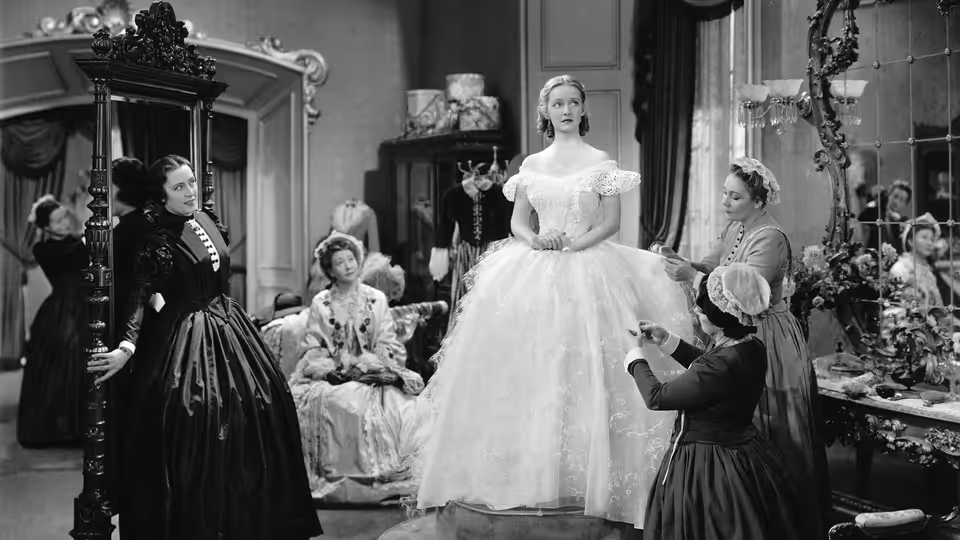
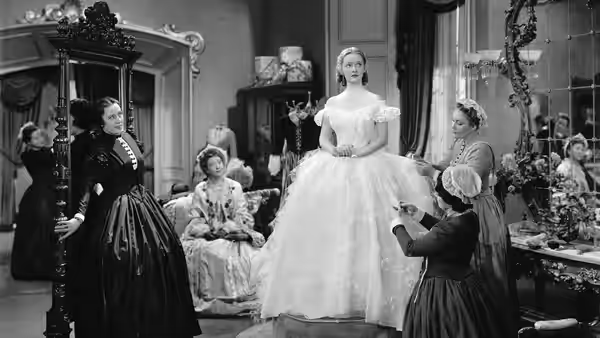
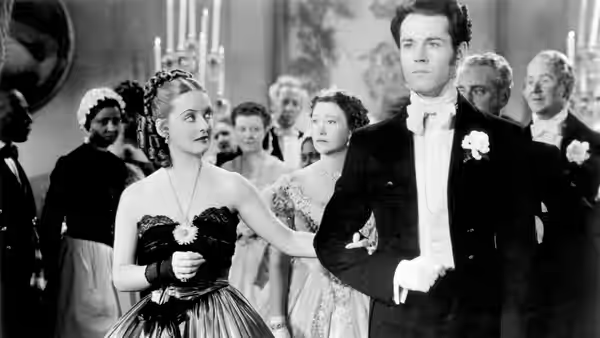
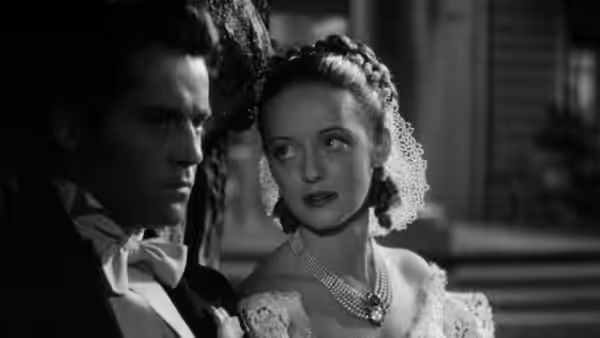
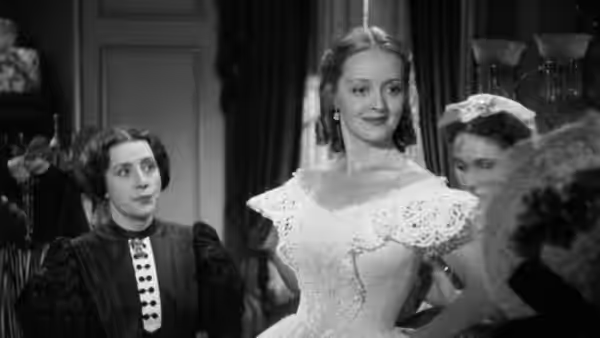
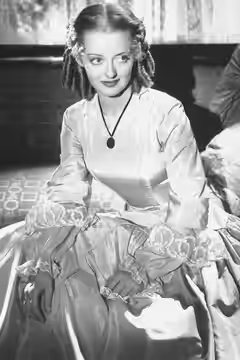
The ball first, because everything else is measured against it. Unmarried women wear white to the Olympus Ball, and Julie Marsden (Bette Davis) has a red dress made to punish a fiancé who kept her waiting. The film is in black and white, so we never see the red; we take the crowd’s word for it. Ernest Haller lights the white gowns so they seem to glow on their own and sets Davis among them like a hole cut in the picture. Wyler empties the floor a couple at a time, mothers steering daughters away, until two people are waltzing alone in a large room with every eye on them, and Warren Low keeps returning to Davis’s face as she understands what she has done. Max Steiner’s waltz goes on because Preston Dillard (Henry Fonda) has told the orchestra to keep playing. We held our breath. It is a dance, in a film from 1938, and we held our breath.
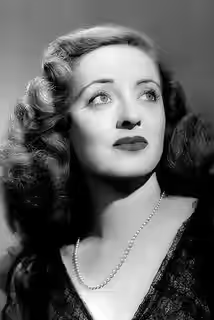
Davis is the reason the scene works and the reason the film does. She arrives late to her own party in a riding habit and hitches the skirt with her crop, and in that one gesture she has told us Julie thinks the rules are for other people. What she does not do is play a villain. Her Julie wants things and takes them, and Davis lets us see her checking Fonda’s face for the effect, so that every outrage is aimed at him and the film becomes a question of whether he will notice. It is a performance built on watching, and Wyler gives her the close-ups to do it in.
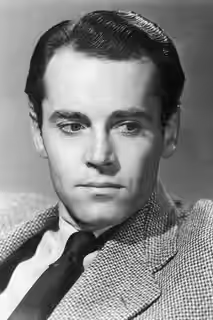
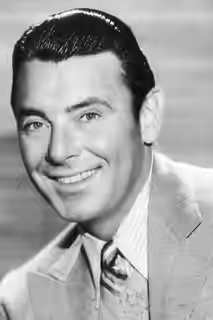
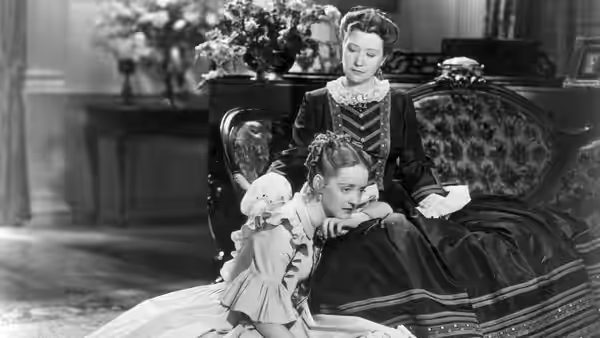
Fonda has the harder part. Pres is a banker who wants New Orleans to dig drains before the fever comes, and the script by Clements Ripley, Abem Finkel, Robert Buckner, Louis F. Edelman and John Huston gives him speeches about sanitation and little else. George Brent has more fun as Buck Cantrell, the duelling gentleman who adores Julie and knows he is second choice, and plays him as a man who has decided to be amused by it. Fay Bainter’s Aunt Belle is the film’s conscience, and Bainter plays every disappointment as tenderness; she is the one to watch when Davis is off screen. Donald Crisp’s Dr Livingstone delivers the fever warnings like a man who knows nobody is listening.
Then there is the household. Theresa Harris has warmth and quickness as Zette, Julie’s maid, and the film gives her nothing to do with either. The enslaved servants and the plantation children are photographed as charming furniture, and there is a sequence of singing on the steps that the film means as local colour and that we found hard to sit through. Orry-Kelly dresses the white characters in crinolines that fill a doorway, and the people who dressed them are in the background of the shot.
The second half takes the story out to the plantation and brings the yellow fever with it, and we will not say more than that. What we can say is that the script asks Davis, in the final reel, to turn Julie inside out in about ten minutes of screen time, and that we did not believe it. Davis plays the change with everything she has, and it is still a change the film has announced rather than earned. This is the one place where the critics of 1938 had it right.
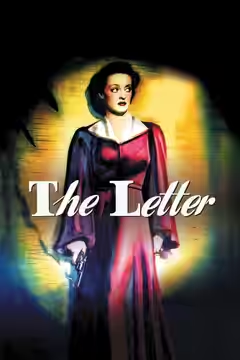
Two years later Wyler and Davis made The Letter, which opens on one long shot that tells you the whole story. Jezebel puts the same trust in one scene, and the scene repays it. Watch it for the ball, stay for Bainter, and be lenient with the last ten minutes. At 103 minutes it does not ask much of your evening, and the dance alone would pay for it.