Orson Welles’s second film was taken from him and cut by a third, and what is left is still one of the finest American films we know. The ball is a marvel, Agnes Moorehead is unbearable to watch in the best sense, and the last reel is somebody else’s.
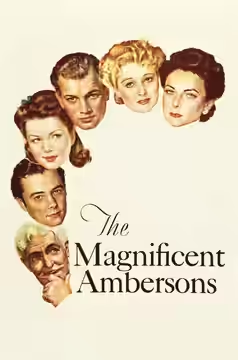
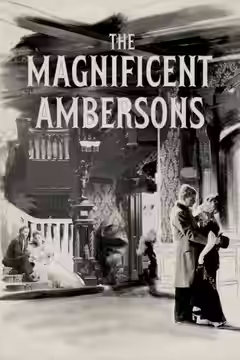
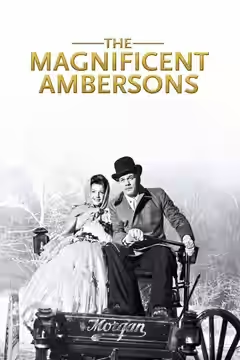
Orson Welles narrates the opening of The Magnificent Ambersons himself, over a run of hats, streetcars and men changing their coats for dinner, and the voice tells you at once what sort of film this is: fond, amused, and already in mourning for what it is showing you. He made it the year after Citizen Kane, from Booth Tarkington’s novel, and RKO took it away from him, cut around forty minutes and shot a new ending. What survives runs 88 minutes. We think it is among the best American films ever made, and we say so with the damage in full view.
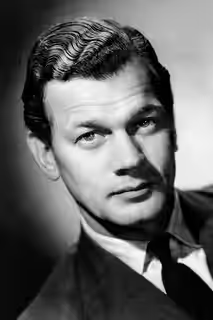
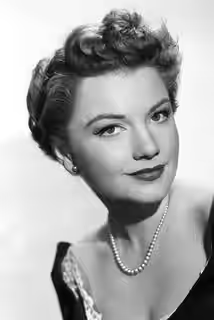
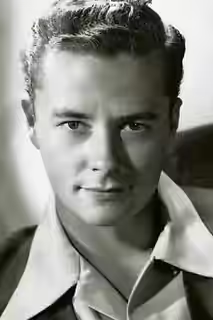
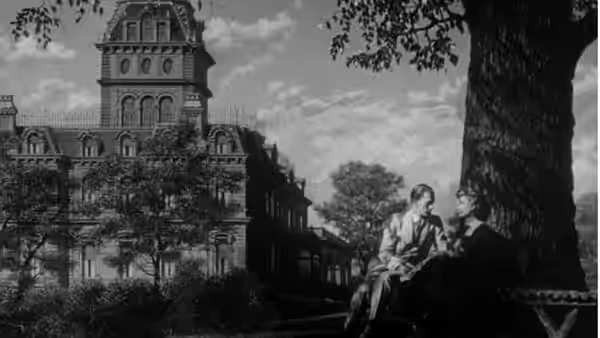
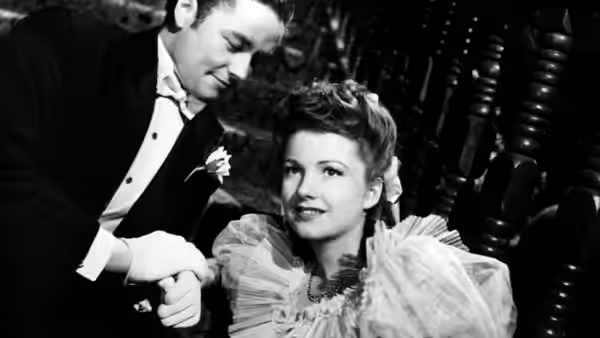
The story is a small one. Isabel Amberson Minafer (Dolores Costello) turns down Eugene Morgan (Joseph Cotten) after he embarrasses her with a serenade, and marries a duller man. Their son George (Tim Holt) is raised to believe the town exists for him, and the town waits, with some pleasure, for his comeuppance. Twenty years later Eugene comes back a widower with a daughter, Lucy Morgan (Anne Baxter), and a factory that makes motor cars. George wants Lucy and cannot stand her father. Isabel, we suspect from her first look at Eugene, has never stopped wanting him.
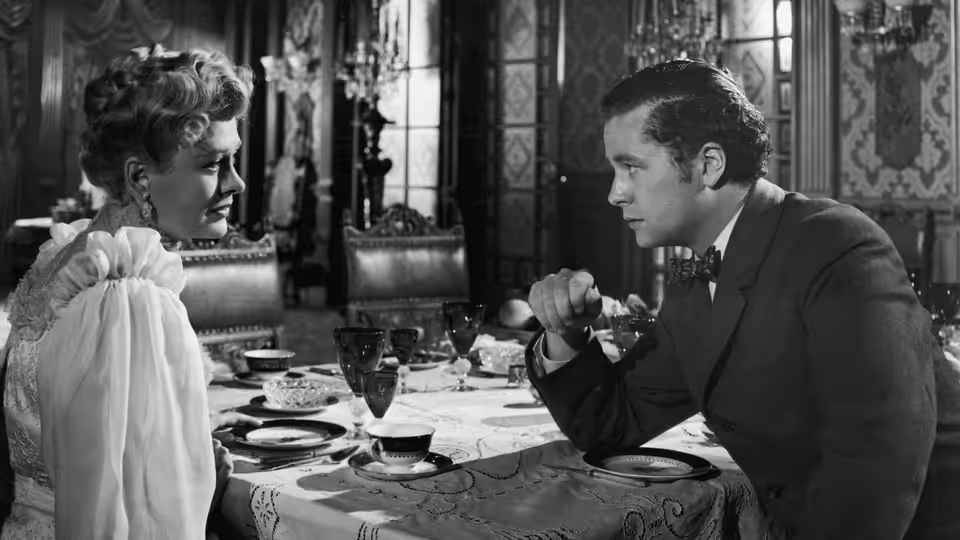
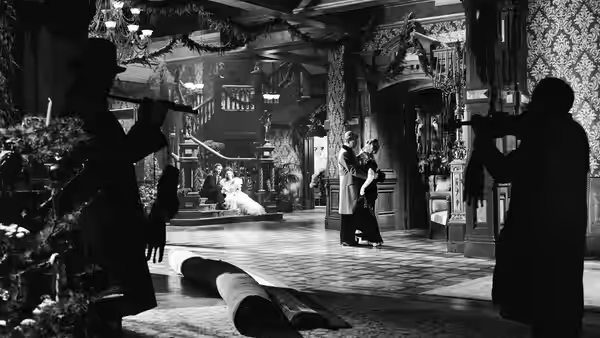
The ball is where the film declares itself. Stanley Cortez takes his camera up the staircase and through the rooms of Albert S. D’Agostino’s mansion in movements that go on far longer than anyone in 1942 expected a camera to move, picking up conversations, leaving them, finding them again a floor higher. Edward Stevenson dresses the women in white and pale silk so that Tim Holt’s black evening coat cuts through the frame like a complaint. The house is so large that people stand at either end of a room and are both in focus, and Welles uses that to let two conversations happen at once. It is showing off, and it is also exactly how a party feels when you are young and certain of yourself.
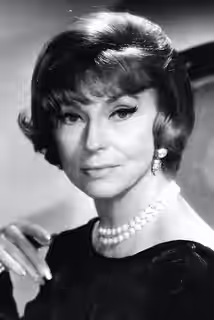
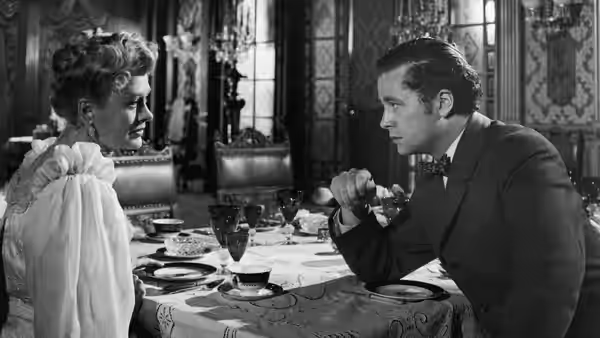
Agnes Moorehead plays Fanny Minafer, George’s aunt, a spinster who has spent twenty years in love with Eugene and has no way of saying so. Her great scene is in the kitchen, at night, feeding George strawberry shortcake and fishing for news of who Eugene danced with. Cortez holds the two of them in one shot for what feels like minutes; George eats, Fanny hovers, and every question she asks is about something else. We watched it with a lump in the throat we had not planned on. Nothing happens except that a woman gives herself away to a boy who does not notice, and Moorehead does it with her hands and the pitch of her voice.
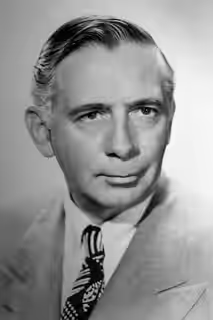
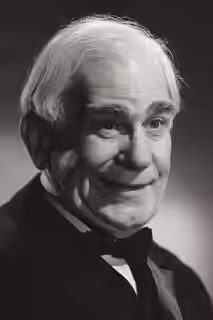
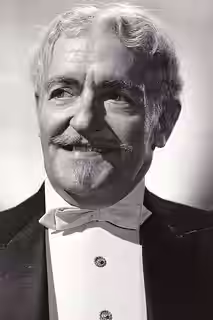
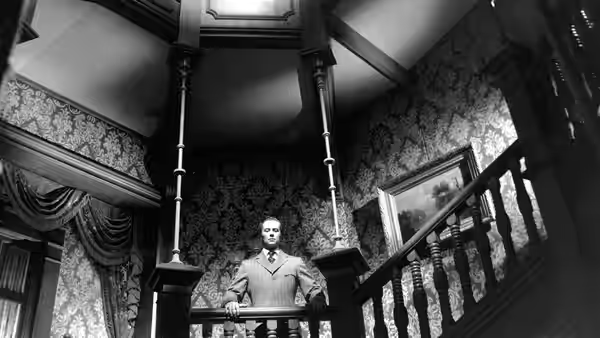
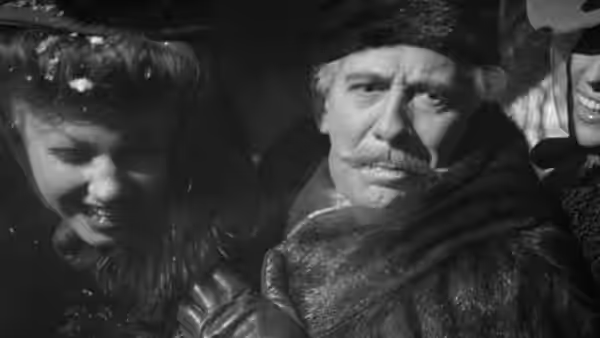
Holt is braver than he is often given credit for. George is a prig, and Holt refuses to make him charming, which is why the film’s argument about privilege lands. Ray Collins, as Uncle Jack, is the only Amberson who can see what is coming and is too comfortable to do anything about it. Richard Bennett’s Major, the old man who built the fortune, has a scene by the fire near the end that we will not describe, except to say Bennett barely speaks and we thought about it for days. Bernard Herrmann’s music is best in the snow, where a sleigh, a stalled car and a sung chorus turn a country outing into something like a hymn for a way of life that is finishing.
Then the seams show. The middle stretch skips through years in a few minutes, characters drop out of the story without a scene to explain why, and the final reel is plainly not Welles’s. Robert Wise’s cutting in the first hour is patient and confident; after that it starts to hurry, and the ending arrives with a brightness the rest of the film has spent 80 minutes earning the right to refuse. Costello, too, is a little faint next to everyone else, though we can see why Welles wanted a woman who seems already half gone.
Most critics rank it just behind Kane, and we would put it just ahead. Kane is a film about a man; this is a film about a house, and about the people who mistook the house for themselves. Watch it at night, in one sitting, and forgive the last ten minutes. They were not his fault.