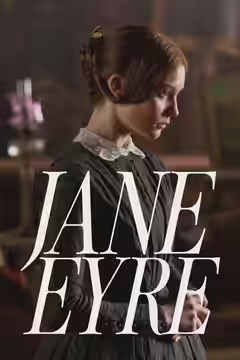
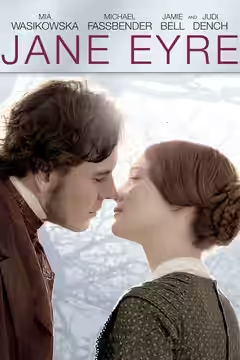
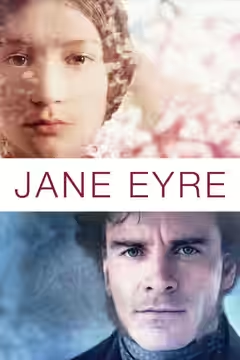
Mia Wasikowska and Michael Fassbender make this quiet Jane Eyre an involving romance. Its compressed storytelling leaves some of Jane’s thinking unexplored, but the wary conversations between its leads are worth settling down for.
Cary Joji Fukunaga’s Jane Eyre is worth seeing for the attention it gives to two people sizing each other up. It makes a persuasive romance out of guarded looks and difficult conversation, even when the wider story feels hurried. This adaptation of Charlotte Brontë’s novel puts considerable trust in its actors. They repay it, although they cannot supply every part of Jane’s life that the screenplay has had to shorten.
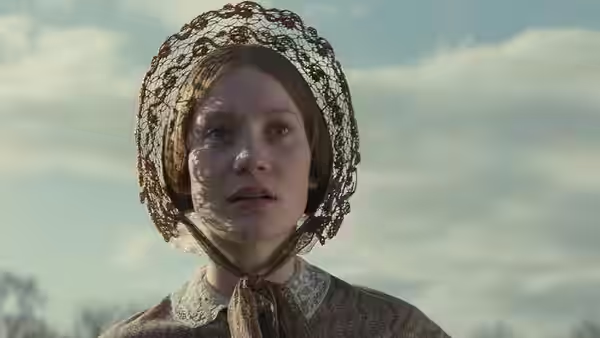
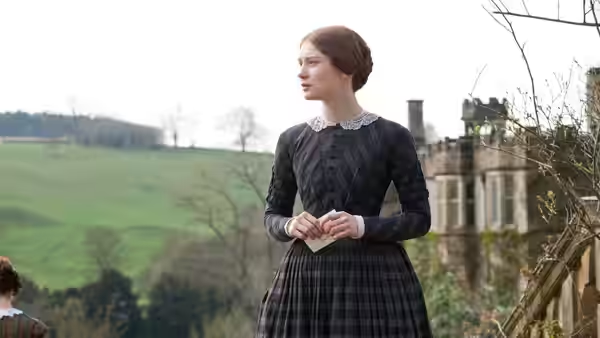
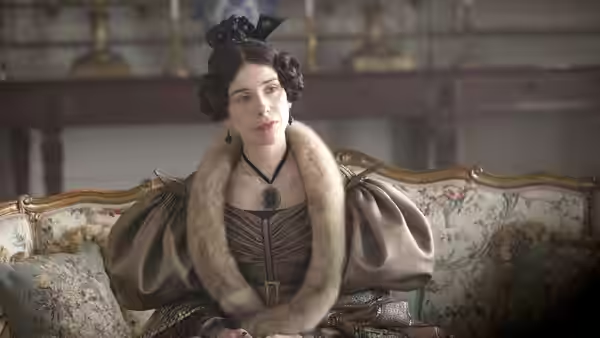
Mia Wasikowska gives Jane a composure that never looks comfortable. We can sense the effort involved in holding her ground, and the performance allows pride and uncertainty to remain visible together. The childhood material gives that self-protection a cause, with Sally Hawkins making Mrs. Reed infuriating without needing much time. Those early passages do feel brief, however, and Jane’s attempts to live with that childhood need more room.
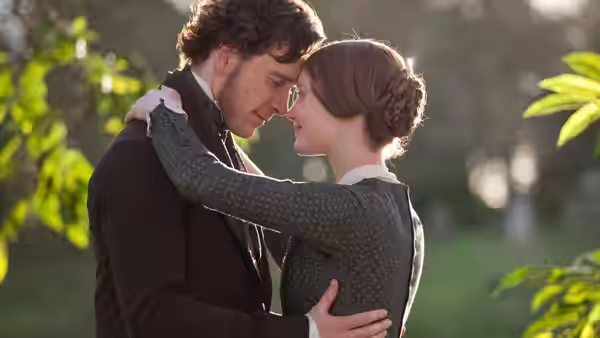
Michael Fassbender makes Edward Rochester’s attention both flattering and wearing. His charm does not excuse his manner, and the exchanges work because Jane is never simply grateful to have been noticed. We laughed at Rochester’s backhanded compliment, then bristled at the presumption behind it. The actors make that small change of feeling easy to follow. Their attraction becomes convincing through the adjustments each makes in conversation, which is a sound basis for a romance asked to carry so much.
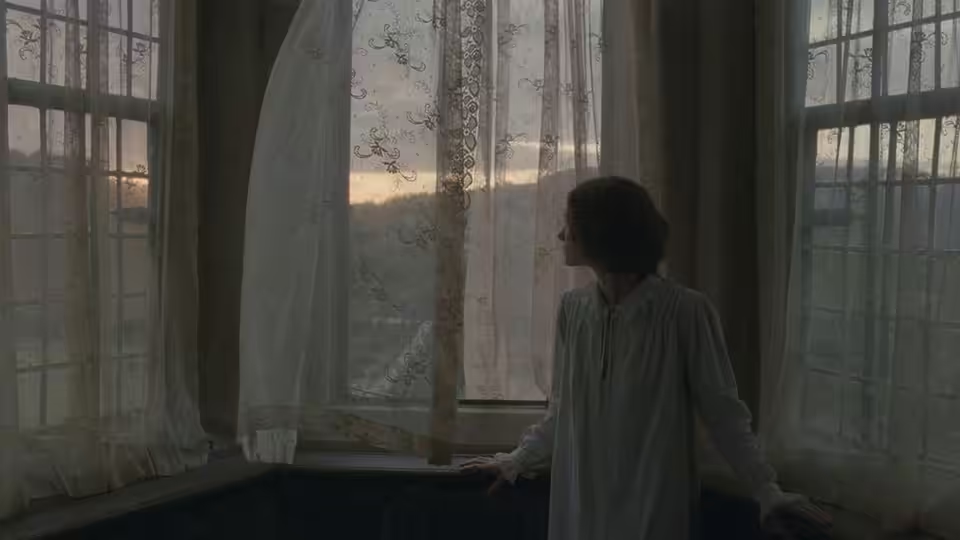
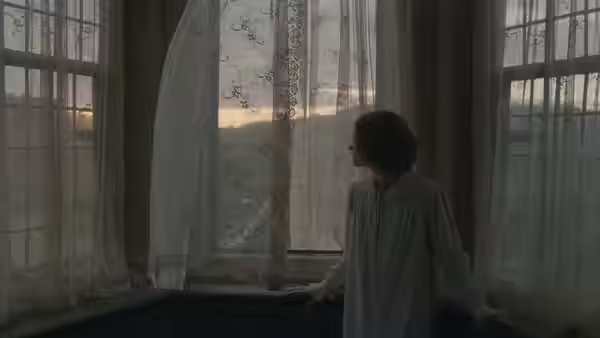
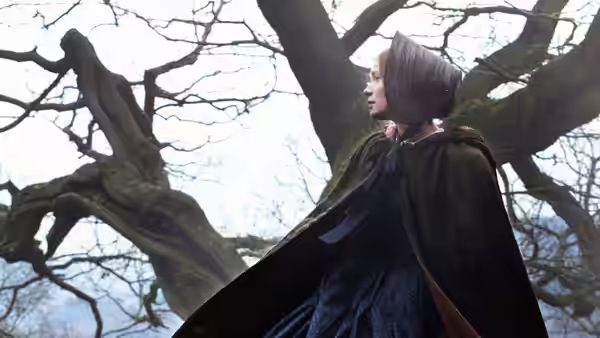
Adriano Goldman’s subdued lighting helps: faces require attention, and the darkness gives a civil exchange an edge of unease. Will Hughes-Jones’s production design makes the surroundings feel forbidding enough that we notice any moment of ease between the people in them. The subdued setting helps make an unguarded expression worth waiting for. Dario Marianelli’s score adds warmth, though we occasionally wanted it to leave the actors alone; their pauses are already doing useful work.
Moira Buffini’s screenplay is less successful at giving Jane’s thoughts the space that her conversations receive. Too little of her private reasoning reaches us, and the actors have to make sense of changes that the writing barely prepares. Melanie Oliver’s editing gives the early encounters time to develop, but the joins between episodes remain conspicuous. A scene can work beautifully on its own and still leave us wanting the stretch of life that ought to connect it to the next.
As a Gothic romance, the film needs a sense of danger that its good-looking gloom does not consistently provide. The restraint that makes the early exchanges so absorbing becomes a limitation when the drama needs greater force. We do not need everyone to shout, but we do need the pressure to increase. Some of the later passages remain decorous when they ought to be unsettling, and the low light cannot do all that work. Come for the wary conversations, and allow for a film that occasionally hurries past the reasons for them.