Jane Campion’s account of Fanny Brawne’s years beside John Keats is quiet, exact and sadder than we were braced for. Paul Schneider’s Mr Brown is a loud problem in a soft film, but Abbie Cornish is reason enough on her own.
Jane Campion’s film is about Fanny Brawne first and John Keats second, and every other decision follows from that one. Fanny (Abbie Cornish) is a young woman in Hampstead who makes her own clothes, is proud of them, and has no use for poetry until a thin, shabby poet moves in next door. Keats (Ben Whishaw) is lodging with his friend Mr Brown (Paul Schneider), has had a book torn apart by the reviewers, and has a brother who is ill. Campion, working from a story by Andrew Motion, follows the two of them for 119 minutes of walks, lessons, letters and waiting. We think it is one of the best things she has made, and we would recommend it to anyone who can sit still.
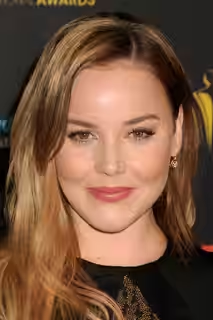
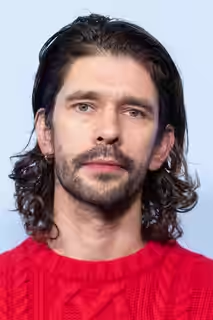
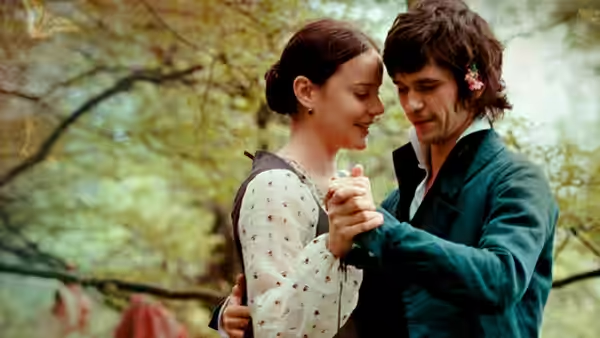
Cornish is the reason to see it. She plays Fanny as clever, vain, quick to take offence and quicker to forgive, and she lets us watch her become serious about something over two hours without ever announcing it. The early lessons, which Fanny requests mainly to annoy Brown, are funny; she sits with a volume on her knee like a dog with a newspaper. Whishaw does less, and it suits him. He is slight, often unwell, and he lets Keats be amused by Fanny rather than dazzled by her, which we found more persuasive.
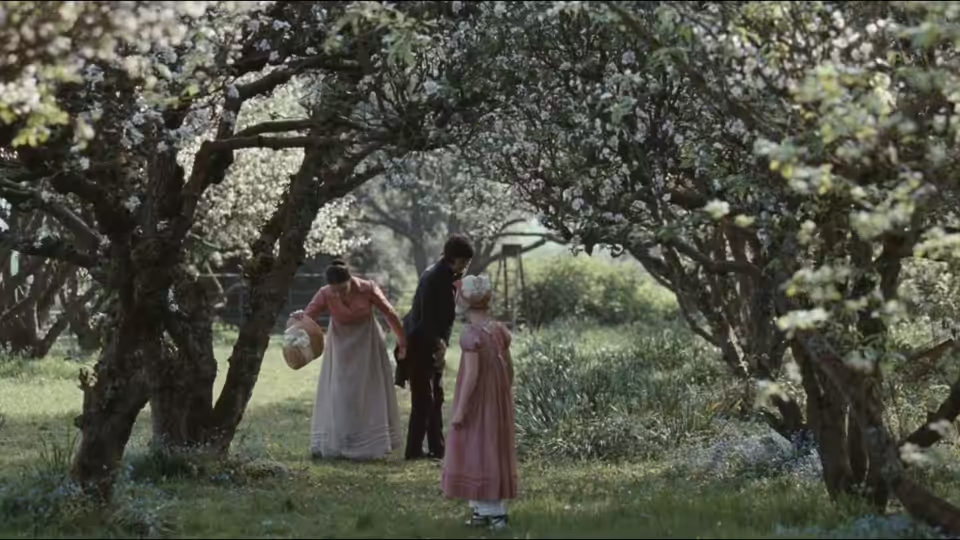
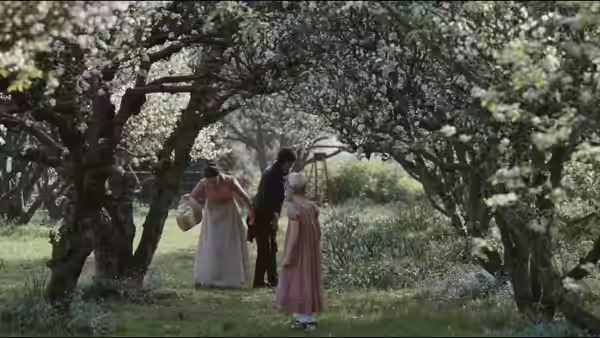
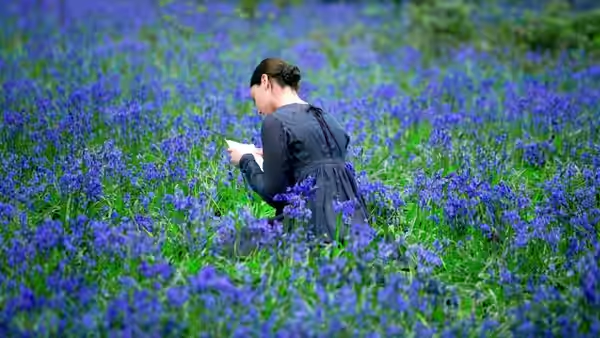
Greig Fraser shoots almost everything by daylight from windows, so the rooms are grey-white and the faces are soft, and he lets the summer fields go so bright that the lovers look overexposed. Janet Patterson did both the costumes and the production design, and here the two jobs are the same job. Fanny’s dresses, with their collars like sails and their rows of stitched pleats, are the strongest colour in any room she enters, and the Brawne house is kept plain enough that you notice. There is a scene in a wood full of bluebells where the blue is so heavy it looks like a mistake. It is not.
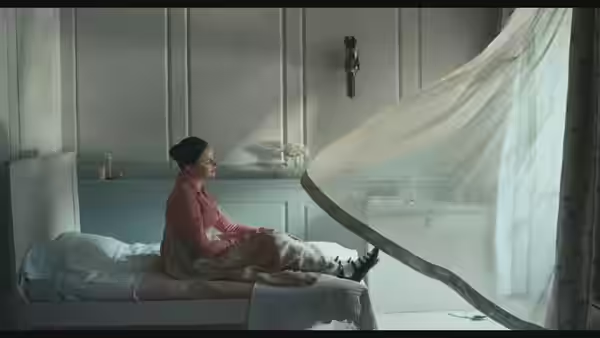
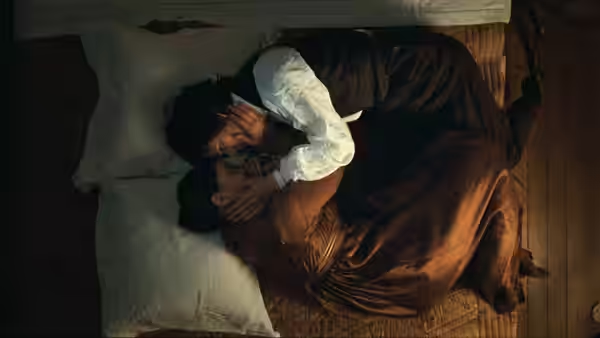
The scene that got at us is smaller. Fanny lies on her bed in the afternoon with the window open, and the curtain lifts and falls over her in the breeze for the best part of a minute. Nothing happens. Fraser holds the shot, Alexandre de Franceschi does not cut, and Mark Bradshaw’s score, which is so sparse it barely exists, stays out. We understood exactly what it is to be young and in love with someone who is not there, and it moved us more than any of the letters did, good as the letters are. Later she fills that bedroom with butterflies, and we will leave you to see what she does with them.
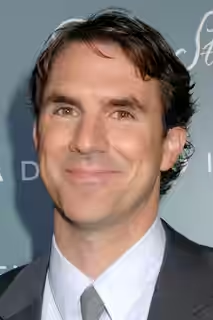
Not all of it is at this pitch. Schneider’s Brown is too loud for the film he is in. Brown is written as the possessive friend who thinks Fanny is a distraction and never misses a chance to say so, which is fair; the trouble is that Schneider plays every line as a sneer, and next to Cornish and Whishaw, who are working in whispers, he sounds as if he has wandered in from a comedy. The middle hour also slackens. Keats goes away for the summer, letters are waited for, Fanny sulks, and Campion’s refusal to hurry starts to feel like a habit. The children help. Edie Martin’s Toots trails the lovers everywhere as a chaperone who does not know she is one, and Thomas Brodie-Sangster’s Samuel barely says a word. Kerry Fox’s Mrs Brawne, a widow doing sums in her head, is the film’s conscience and never raises her voice.
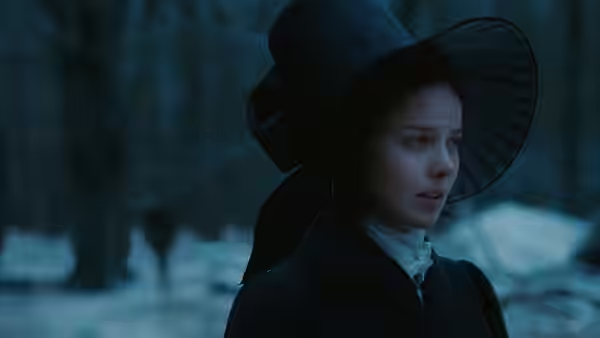
Campion has made films before about women shut in with men who want to own them, and The Piano is the one everyone remembers. This is gentler, and we think it is better judged. The second half takes the turn that anyone made to learn Keats at school will see coming, and Campion plays it from Fanny’s side of the wall, with the sound turned down. Whishaw reads ‘Ode to a Nightingale’ over the end credits, and we sat through the whole of it.
It is a PG, and it earns the certificate; the most explicit thing in it is two people lying on either side of a wall. Watch it on a dull afternoon rather than at night. The light in it will look like the light in your room.