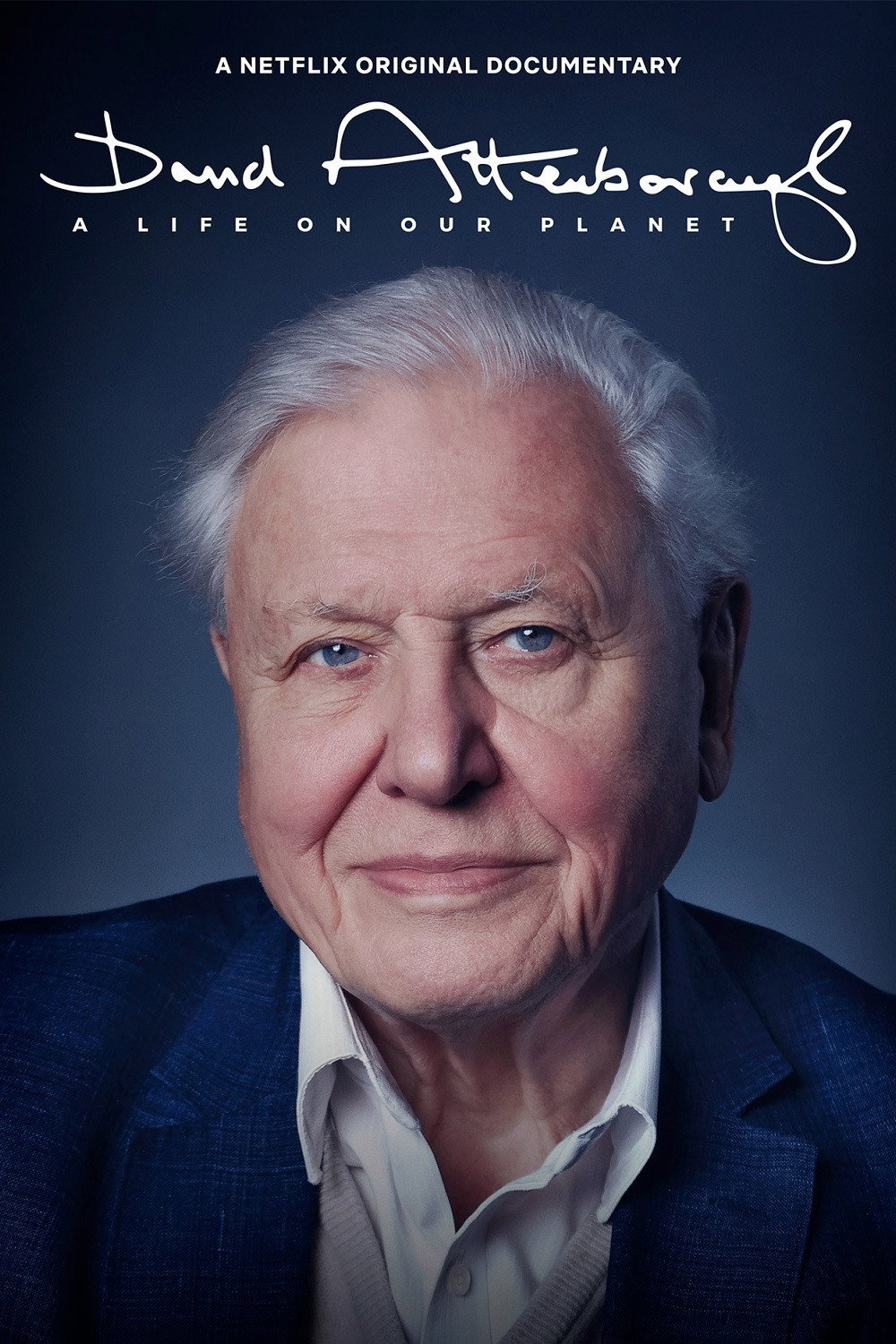
Alastair Fothergill's natural history work increasingly asks us to face environmental loss. David Attenborough: A Life on Our Planet makes that loss moving and understandable, though we want harder questions about how recovery is meant to happen.
Fi1m perspective
Attenborough speaks quietly in David Attenborough: A Life on Our Planet (2020), setting environmental damage against what he remembers of the natural world. Alastair Fothergill directs with Jonathan Hughes and Keith Scholey, and the three make the scale of the losses understandable through that personal account. We were upset by the losses Attenborough describes within the span of his own lifetime. The restrained delivery gives those recollections time to register. This is persuasive filmmaking, worth seeing despite the practical questions it passes over when it turns to putting things right.
Fothergill's earlier work was largely in ambitious natural history television, with a substantial contribution as a producer. He was series producer on The Blue Planet (2001) and Planet Earth (2006), and helped write and direct the latter's companion film, Earth (2007). Organising sustained filming across the world is a considerable part of his craft. The later work brings conservation more explicitly into the account of animal behaviour and ecosystems. Our Planet (2019), on which he was executive producer, makes that concern central.
Attenborough, a long-term creative partner, is crucial to the effectiveness of that change. His recollections give the directors a way to hold our attention without treating environmental damage as an inventory of disasters. They keep A Life on Our Planet to 83 minutes, trusting plain speech and wildlife images to make the case. The film asks for no specialist knowledge, and its accessibility is a considerable virtue.
The trouble is that the possible remedies receive less scrutiny than the damage. Fothergill, Hughes and Scholey move too quickly from a concern we can share to a responsibility that seems to fall equally on everyone. We wanted them to spend longer on who can make changes at scale, and what gets in the way; their confidence becomes harder to share when those questions are hurried past. That is a serious limitation in a film asking us to believe that action can work. Start with A Life on Our Planet, but leave time afterwards to question its reassurance.
Biography
Alastair Fothergill is a British producer and director of nature documentaries. Born in London in 1960, he studied zoology at Durham University and joined the BBC Natural History Unit in 1983. He worked on programmes including The Really Wild Show and David Attenborough’s The Trials of Life, and served as head of the Unit from 1992 to 1998.
Fothergill was series producer of The Blue Planet (2001) and Planet Earth (2006). He co-directed the associated feature films Deep Blue and Earth (2007). In 2012 he co-founded Silverback Films. His later credits include directing David Attenborough: A Life on Our Planet (2020) and producing series for Netflix such as Our Planet (2019). He was appointed OBE in 2019 for services to film.