Series review

Planet Earth II

2016 · Series · MPA TV-G

In a sentenceNineteen camera operators went to the ends of the earth and the best bit is a lizard running for its life

DocumentaryFamily

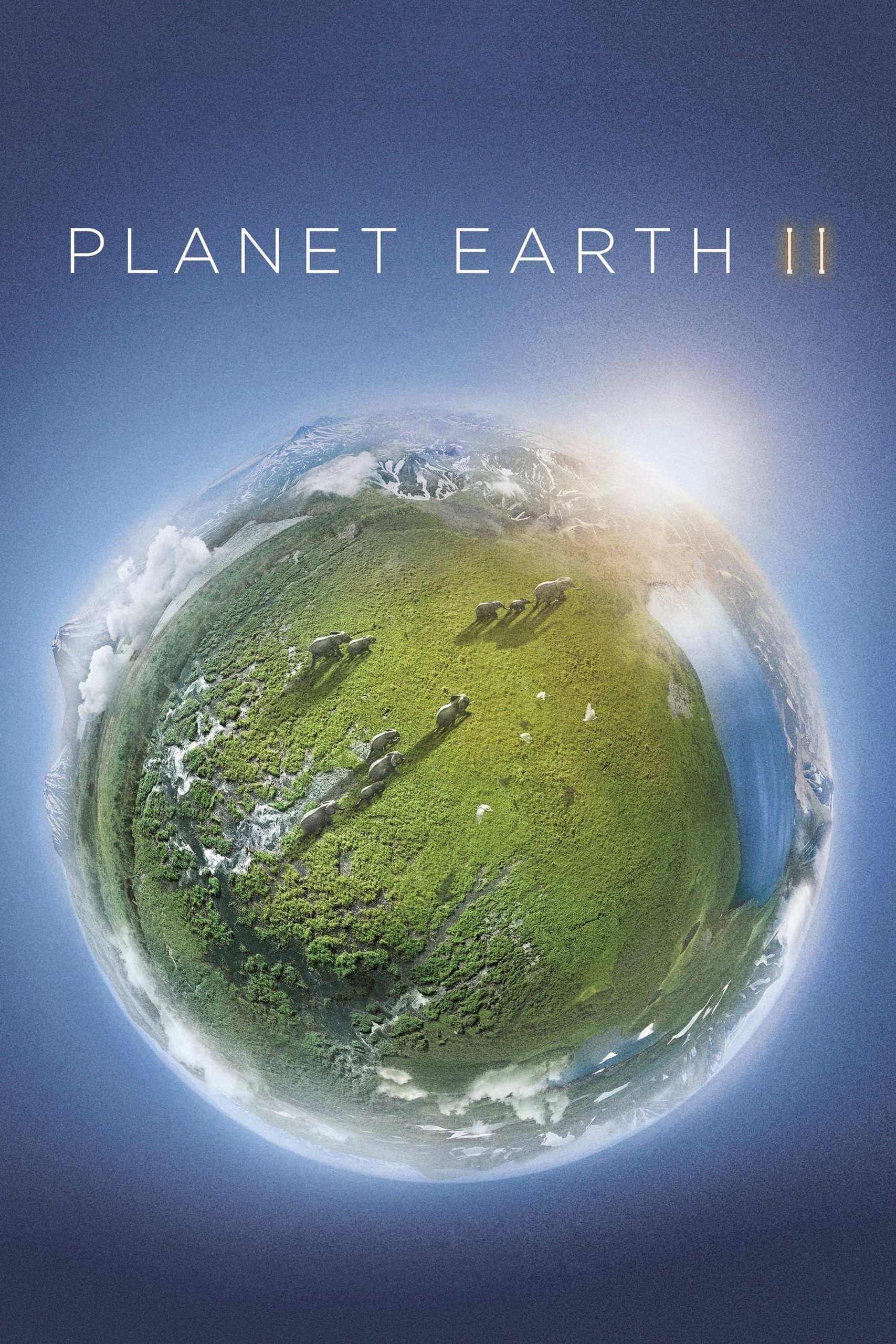
David Attenborough narrates six episodes, each given over to one kind of place: islands, mountains, jungles, deserts, grasslands and, last, cities. Vanessa Berlowitz and Jonathan Keeling produce; the music is by Hans Zimmer, Jacob Shea and Jasha Klebe. In the opener, Islands, a pygmy three-toed sloth swims between mangroves in search of a mate. In the Galápagos, marine iguana hatchlings dig out of the sand and run for the rocks while racer snakes close in. On Christmas Island, millions of red crabs march to the sea to spawn, and an invasive ant is killing them as they go. Drones, hidden cameras and rigs at animal height follow each creature, and Attenborough tells us what is at stake.

Plays from YouTube when you press play; nothing loads from them until then.

Fi1m review

Ten years on from the first series, this follow-up has cameras that can go where the animals go, and the result is the best-looking television we have seen. It is also scored as if we could not be trusted to feel anything unaided.

For a decade every wildlife programme on television was measured against the first Planet Earth. This is the follow-up, made with cameras the first crew did not have: drones, and rigs small enough to run alongside an animal. There are six episodes, one kind of place each, with David Attenborough narrating. The pictures are the reason to see it, and the reason is enough; we recommend it with one caveat, about the music, which we will come to.

Nineteen camera operators are credited, among them Sophie Darlington, Martyn Colbeck and Mark MacEwen, and what they were able to do is visible inside ten minutes. The old way was a hide, a long lens and a great deal of waiting, and the animal was something watched from across a valley. Here the camera is down at the animal’s height and moving with it. In Cities, langur monkeys fight across the rooftops of an Indian town and the camera follows them from roof to roof.

The sequence everyone talks about is in the first episode, and it works even if you have seen the clip. A marine iguana hatchling digs out of the sand and has to reach the rocks, and between it and the rocks are racer snakes, a great many of them. The editors (Matt Meech, Nick Carline, Nigel Buck and Dave Pearce share the credit across the series) cut it as a chase: snakes low in the frame, the hatchling in the open, a strike that misses by an inch and another that does not miss the hatchling behind. We watched with a hand over our mouth. We were frightened for a lizard, and felt foolish afterwards, but the fear was earned. The camera stays at ground level, so the snakes come in from the edges of the picture as they would for the iguana, and Attenborough says almost nothing until it is over.

That restraint is the best of Attenborough here. Once the animals appear he does what he has always done. He gives each one a plain want, a mate or a meal or a way across, and then gets out of the way. He does not scold and he rarely jokes. When the red crabs of Christmas Island are killed on their march to the sea by an ant that should not be there, he says so in two sentences and lets the pictures do the rest.

The music does not share his confidence. Hans Zimmer, with Jacob Shea and Jasha Klebe, has scored the series as an adventure film, and the strings swell for every chase, soften for every courtship and mourn for every death. The pygmy sloth swimming out to find a female is a lovely, absurd sight, and it is given a theme fit for a coronation. Nothing in six episodes is allowed to stay quiet for long. By the third episode we felt we were being told how to react to things that needed no telling, and we began to resent the strings on behalf of the pictures.

The series also has favourites. Big cats, monkeys, birds and anything with a face get the long sequences; insects and reptiles appear mostly when they can be made frightening. A series this well equipped could have afforded a stranger cast. Seven directors are credited, Alastair Fothergill and Chadden Hunter among them, and they know what an audience wants to see.

People are kept out of the frame until Cities, which is the episode most worth thinking about. It shows animals making a living in places built against them, the langurs among them, and it is the only hour that says plainly what the other five leave you to infer: that the places in them are getting smaller. The series is gentle about this, gentler than it might have been. It wants you to look before it asks you to worry.

Watch it on the largest television in the house with the lights off, and do not let anyone talk during the iguanas. Certificate PG; the hatchlings would dispute it.
Critical consensus AI synthesised

87
Positive
10
Mixed
0
Negative
0

The reviews are unanimous in their approval, and they praise the same things. Nearly every critic singles out the photography: the Ultra HD footage, the aerial and drone work, and the closeness the new cameras allow. The chase of marine iguana hatchlings by racer snakes is mentioned more often than any other sequence, usually as the moment a nature programme turns into a thriller. Attenborough’s narration and Hans Zimmer’s score are credited with shaping the footage into drama, and the Cities episode draws particular attention for its treatment of animals living alongside people.

The reservations are few and mild. The Times suggests the series plays favourites among its species. Paste sees the hand of the editors more clearly than most, calling the drama constructed around the footage, and Vulture finds the treatment of climate change understated. Nobody dissents on the pictures. The spread runs from four stars to five, which is about as narrow as a consensus gets.

The Telegraph
7 November 2016 · ★★★★★
100

The review calls the opener one of the most stunning natural history films seen, praising the vivid Ultra HD footage and standout sequences like the sloth and iguana hatchlings evading snakes.

Read the full review →
IndieWire
18 February 2017 · A · Ben Travers
95

The critic views the series as an ideal revival that unites viewers through awe at nature and subtle nods to environmental change, standing out from nostalgic reboots like Fuller House.

Read the full review →
The Hollywood Reporter
17 February 2017 · Tim Goodman
90*

The review deems the series a stunning, sublime visual accomplishment and must-watch television that mesmerizes with Ultra-HD intimacy and aerial photography. It singles out the breathtaking footage across episodes like the Langur monkey rooftop battle in 'Cities' and the making-of insights into the filming risks.

Read the full review →
Variety
17 February 2017 · Sonia Saraiya
90*

The review calls the series masterful and indispensable, an exquisitely rendered love letter to the natural world that surpasses the original with advanced visuals and a Hans Zimmer score. It singles out the 'Cities' episode for its humane optimism amid warnings about biodiversity loss.

Read the full review →
Vulture
20 February 2017
90*

The critic highlights the series' masterful use of scale in storytelling and cinematography to connect individual animal struggles with broader ecosystems and human impact, calling it visually stunning and emotionally resonant though understated on climate issues.

Read the full review →
The Guardian
7 November 2016
85*

The critic highlights the series' breathtaking new filming techniques and ultra-high-definition views of wildlife, singling out the tense chase of marine iguana hatchlings by racer snakes as a terrifying standout sequence.

Read the full review →

Cast

If you liked this, try…

Planet Earth poster

Planet Earth

2006 · The original, shot from further away and quieter for it; still the benchmark.

Blue Planet II poster

Blue Planet II

2017 · The same team goes underwater and finds even stranger things to be frightened for.

Microcosmos poster

Microcosmos

1996 · A French meadow filmed at insect height, with no narrator telling you what it means.

Grizzly Man poster85

Grizzly Man

2005 · Herzog on a man who loved bears too much; the corrective to every nature film.

Winged Migration poster

Winged Migration

2001 · Birds filmed from alongside, in the air, years before drones made it easy.