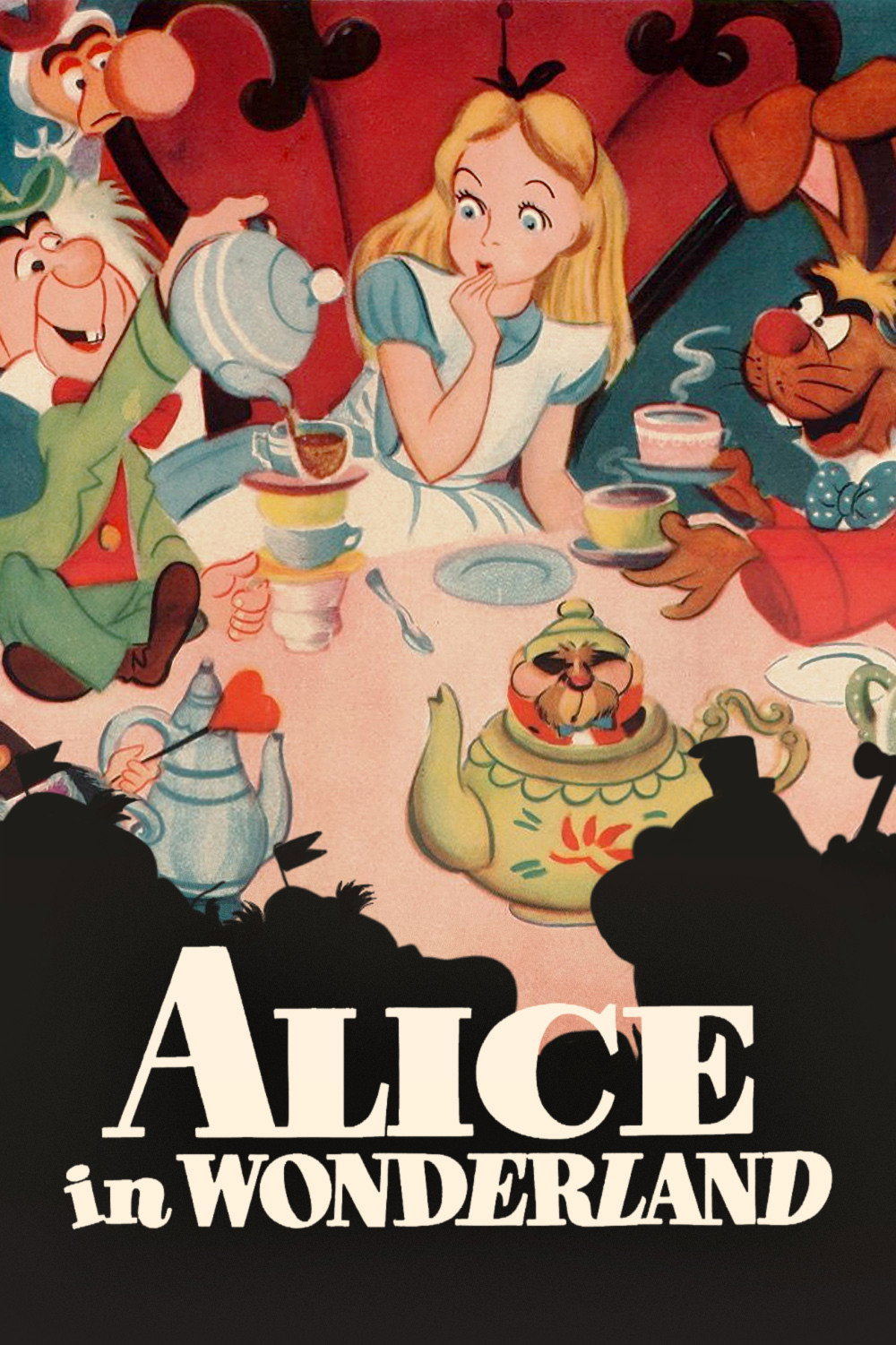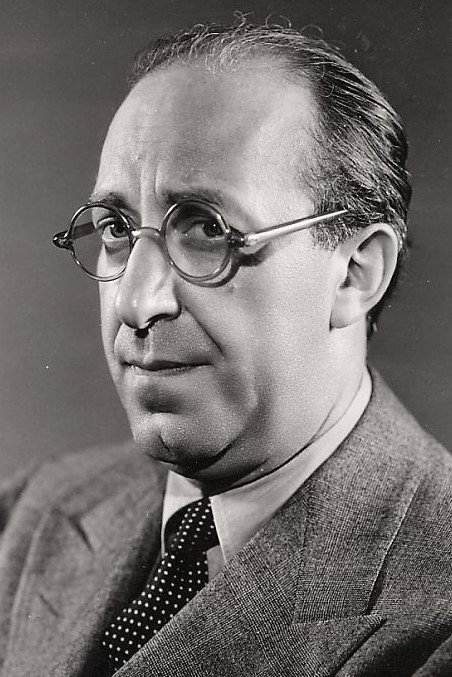
Ed Wynn's comedy was in the voice: a giggle that arrived before the joke and stayed on after it. Disney's Alice in Wonderland (1951) gives it a tea party to fill, and from the mid-1950s the same voice was put to straight drama.
Fi1m perspective
Ed Wynn's Mad Hatter laughs before the joke has arrived and is still laughing after it has gone. In Disney's Alice in Wonderland (1951) he mends the Rabbit's watch with butter, jam and tea, declares it the best butter, and Jerry Colonna's March Hare finishes the repair with a mallet. The bit is timed like a music-hall turn, and Wynn plays it as if he had been doing it for forty years, which he had. That giggling, high-pitched, wavering voice was built for the stage decades earlier, and it is what survived when the costumes and props were taken away.
Those costumes and props were most of the act. Wynn ran away to join vaudeville in 1903, was in the Ziegfeld Follies from 1914, and in 1921 wrote, directed, produced and starred in a Broadway revue called The Perfect Fool, which gave him the character he would play for the rest of his life. His comedy was visual: odd clothes, ridiculous gadgets, a manner that never settled. Radio, where he was the Texaco Fire Chief in the 1930s, took the pictures away and left the voice, and the voice turned out to be enough. Television followed with The Ed Wynn Show in 1949 and 1950, and then Disney, who used him from 1951 until his death in 1966.
What we did not expect from a man who had spent half a century being silly was the second career. From the mid-1950s Wynn alternated comedy with straight parts, beginning with Requiem for a Heavyweight (1956), where he is said to have found the change hard. His son Keenan Wynn acted with him three times. Rod Serling wrote the Twilight Zone episode "One for the Angels" (1959) for him. The Diary of Anne Frank (1959), in which he plays Albert Dussell, is the film most often named as proof that the fool could act; we have not reviewed it and will not judge it here. He did not give up the fool either. Mary Poppins (1964) has him as Uncle Albert, laughing his way through a song.
Wynn said a comedian is a man who "doesn't do funny things but who does things funny", and the Hatter is the proof. Nothing at that table is a joke on paper; the butter is only funny because of the confidence with which it goes into the watch. We laughed out loud at it, more than at anything else in a film we thought never quite added up to a story, and we laughed because Wynn was already laughing. The trick has a limit. A giggle that outlasts every line is a delight for the length of a tea party and would be hard to take across a feature, and Disney gave Wynn the length of a tea party. Start there. Then, if you want to know what the same voice does when it stops laughing, find Serling.
Biography
Ed Wynn (1886–1966) was an American actor and comedian. Born Isaiah Edwin Leopold in Philadelphia, he began his career in vaudeville in 1902 and became known for his 'Perfect Fool' character in Broadway revues that he wrote, produced and starred in during the 1920s. He starred in a popular radio show in the 1930s and hosted one of the first network comedy-variety television programmes, The Ed Wynn Show, on CBS in 1949–50, winning an Emmy Award and a Peabody Award.
In the 1950s Wynn turned to dramatic roles, appearing in the television production Requiem for a Heavyweight (1956) and earning an Academy Award nomination for Best Supporting Actor as Mr Dussell in The Diary of Anne Frank (1959). He voiced the Mad Hatter in Disney’s Alice in Wonderland (1951) and played Uncle Albert in Mary Poppins (1964). His son, actor Keenan Wynn, appeared with him in several productions.