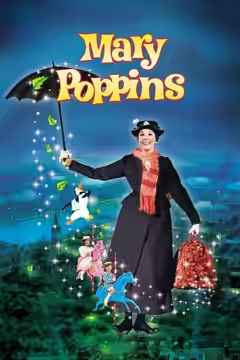
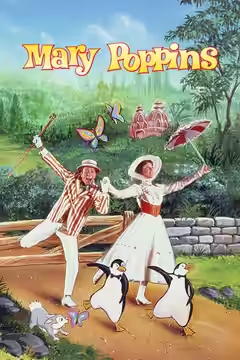
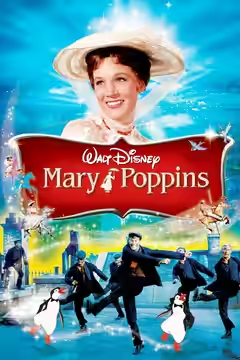
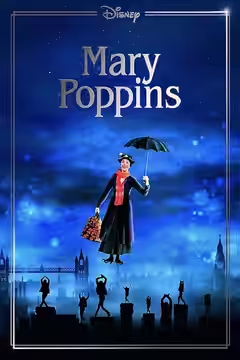
Robert Stevenson’s musical runs long and Dick Van Dyke’s Cockney has never recovered, but Julie Andrews, the Sherman brothers’ songs and David Tomlinson’s frightened banker make it Disney’s best live-action film. It is a children’s film that is quietly about a father.
Disney’s film of P.L. Travers’s books is a good deal softer than she was. It is a musical about a strict nanny made by a studio that could never bear to be strict for long. It is too long and its Cockney accents are a national joke. We recommend it all the same, and not only for children. It is the best live-action film Disney ever made, and it has more sadness in it than most people remember.
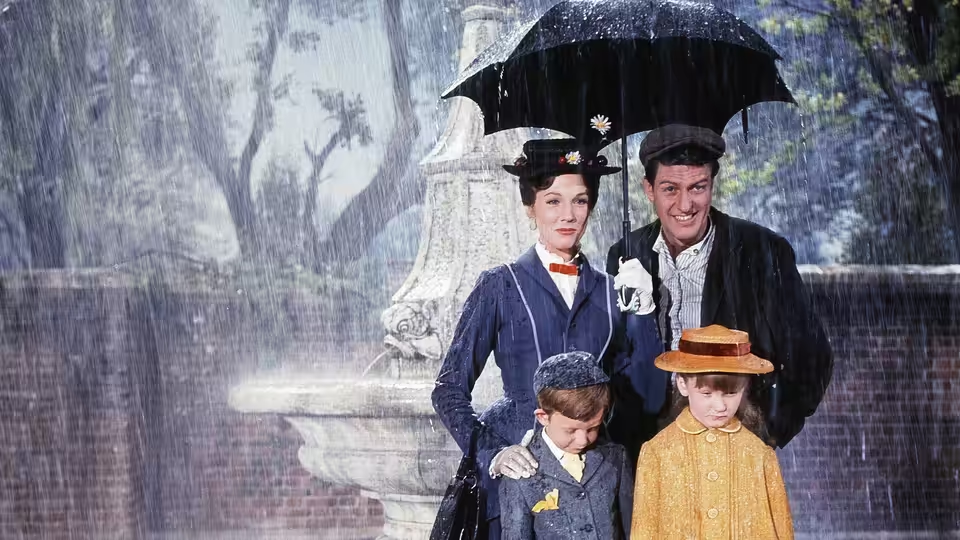
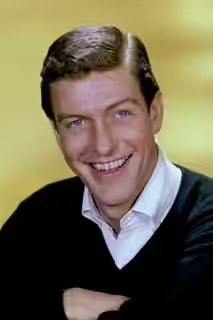
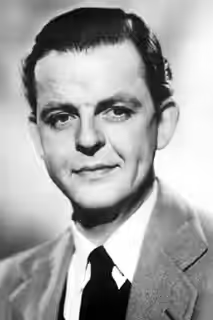
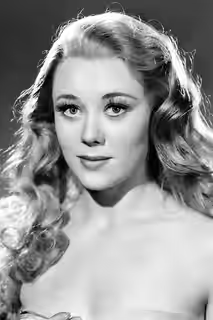
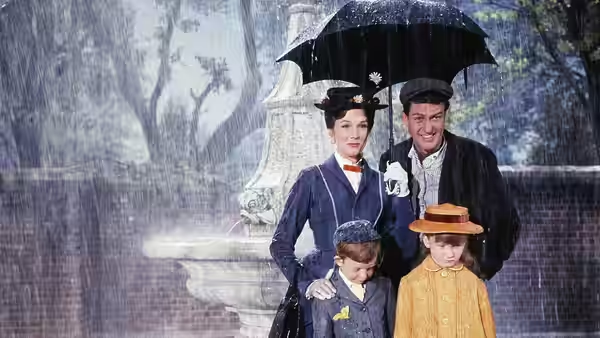
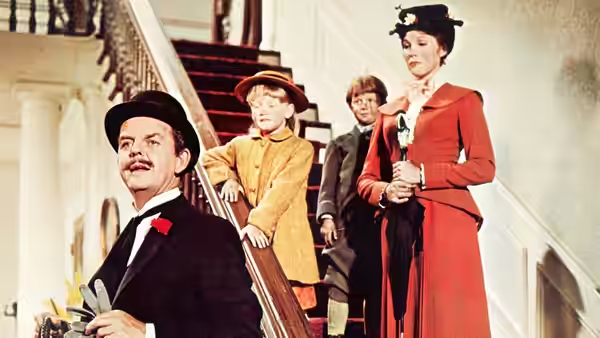
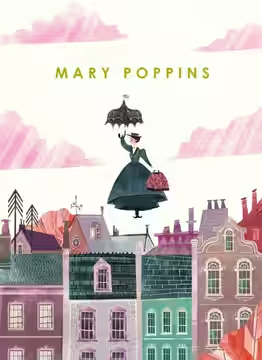
The setting is Cherry Tree Lane in Edwardian London. Mr Banks (David Tomlinson) works at a bank and wants his home run like one. Mrs Banks (Glynis Johns) is out marching for the vote. Jane (Karen Dotrice) and Michael (Matthew Garber) have driven off another nanny, and when their father advertises for a stern replacement a woman called Mary Poppins (Julie Andrews) comes down out of the sky on the end of an umbrella and takes the job before he has quite offered it. Bert (Dick Van Dyke), a pavement artist and sometime chimney sweep, knows her from somewhere, and the film never says where.
Andrews is the reason it holds. Her Mary is vain, brisk and faintly amused by everything; she never explains herself and never says thank you. She sings A Spoonful of Sugar to a nursery that tidies itself at the snap of her fingers, and the trick of the performance is that she does not look pleased about it. The film’s one idea is that kindness can be delivered without a smile. She sings Feed the Birds at a bedroom window with Edward Colman’s light coming in low and the children half asleep. We were not ready for it. It moved us more than any of the dancing, because for two minutes nobody is trying to be delightful.
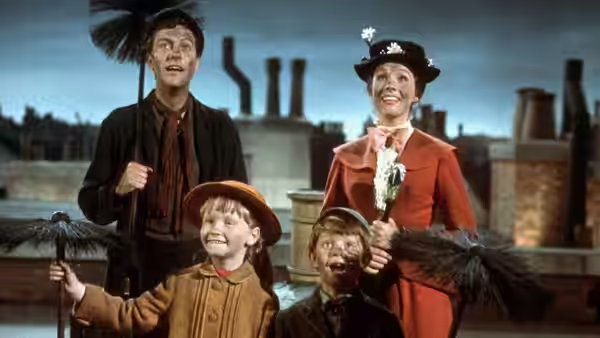
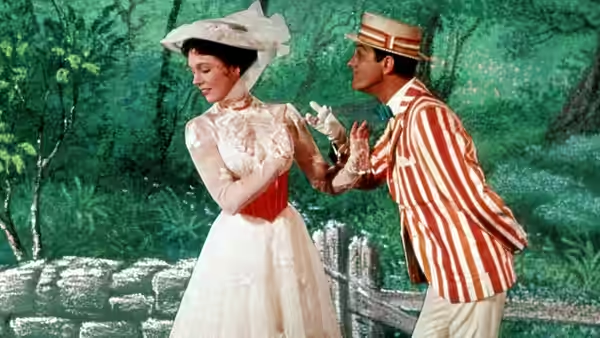
Richard M. Sherman and Robert B. Sherman wrote a score of tunes people who have never seen the film can hum: Chim Chim Cher-ee, Jolly Holiday, Supercalifragilisticexpialidocious, Let’s Go Fly a Kite. Van Dyke’s accent wanders from Bow to the American Midwest and back within a line, and it has been laughed at for good reason. It is the least of what he does. He dances with four cartoon penguins and keeps up, he plays the ancient chairman of Mr Banks’s bank under a great deal of make-up, and he is the only person on screen who enjoys Mary’s company as much as we do.
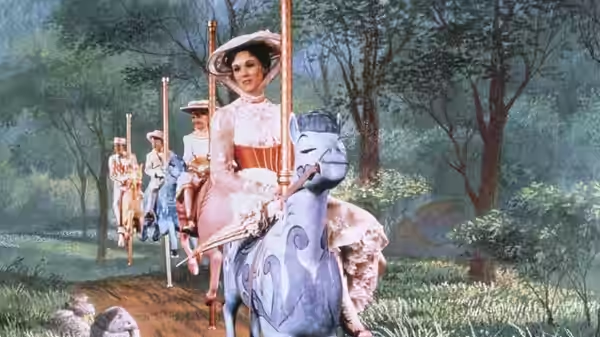
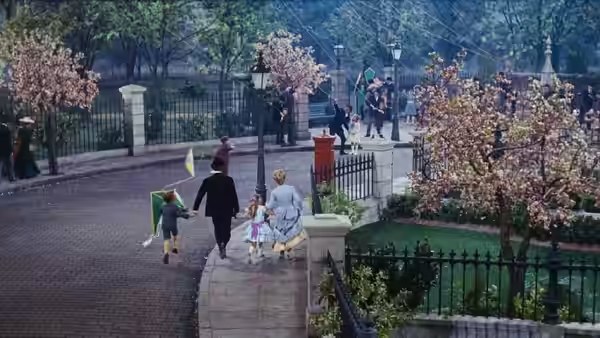
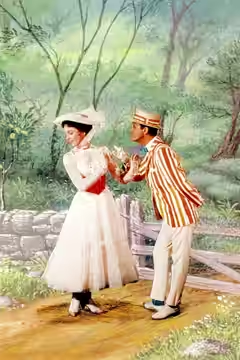
Colman’s London is chimneys and soot under a painted sky, with a St Paul’s built far too large on the horizon; one early critic took that as a fault and we take it as the point. When Mary, Bert and the children jump into a chalk drawing, the actors stroll through a painted countryside among drawn farm animals, and the seams show. We did not mind. What the film cannot hide is its length. At 139 minutes there is a stretch past the hour where Robert Stevenson lines up set pieces and loses the story, and Cotton Warburton lets the rooftop number Step in Time run on past its point. Fifteen minutes could go.
The story actually being told belongs to Mr Banks. Tomlinson plays him as a man who is not cruel, only frightened, and who has confused a tidy house and a steady job with looking after his children. Don DaGradi and Bill Walsh’s script gives him the turn in the second half, which we will not describe, and it lands harder than a film with dancing penguins has any right to. Johns has less luck. Her suffragette song is one of the best jokes in the picture, and the script forgets her afterwards.
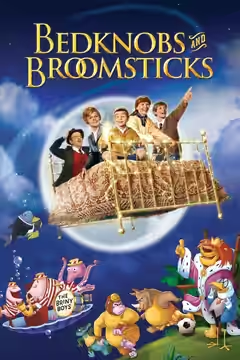
Stevenson made Bedknobs and Broomsticks seven years later with Tomlinson and the same mixture, and it shows what this one would have been without Andrews: pleasant, and gone by breakfast. Most critics land near where we do. The dissenters call the film too polished and too soft. The polish we grant. The softness we grant less readily: the film lets a grown man be wrong for two hours before it corrects him, and not many children’s films risk that.
Watch it with a child if you can borrow one. If you cannot, watch the father.