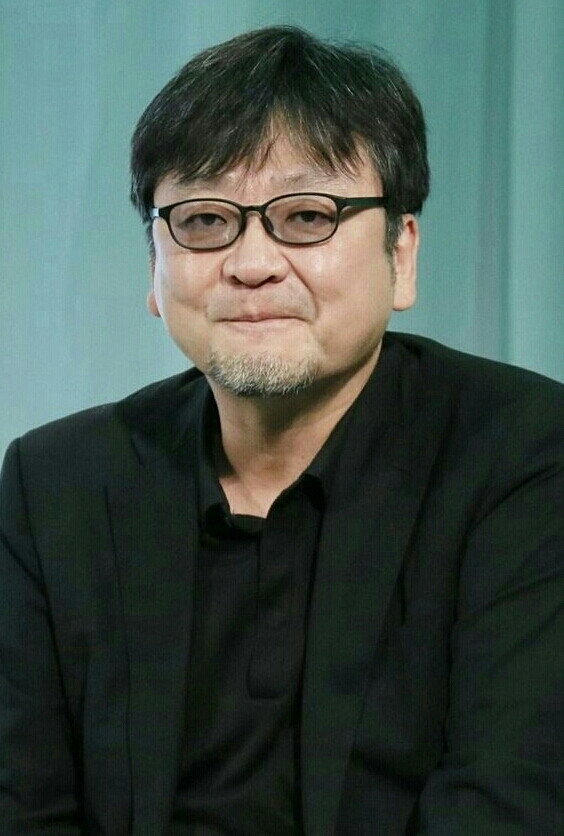
Mamoru Hosoda draws people flat and clean against backgrounds painted almost to photography, then lets a dozen years go past them. His patience with family time is rare in animation, and his women are asked to give more than he ever asks them to want.
Fi1m perspective
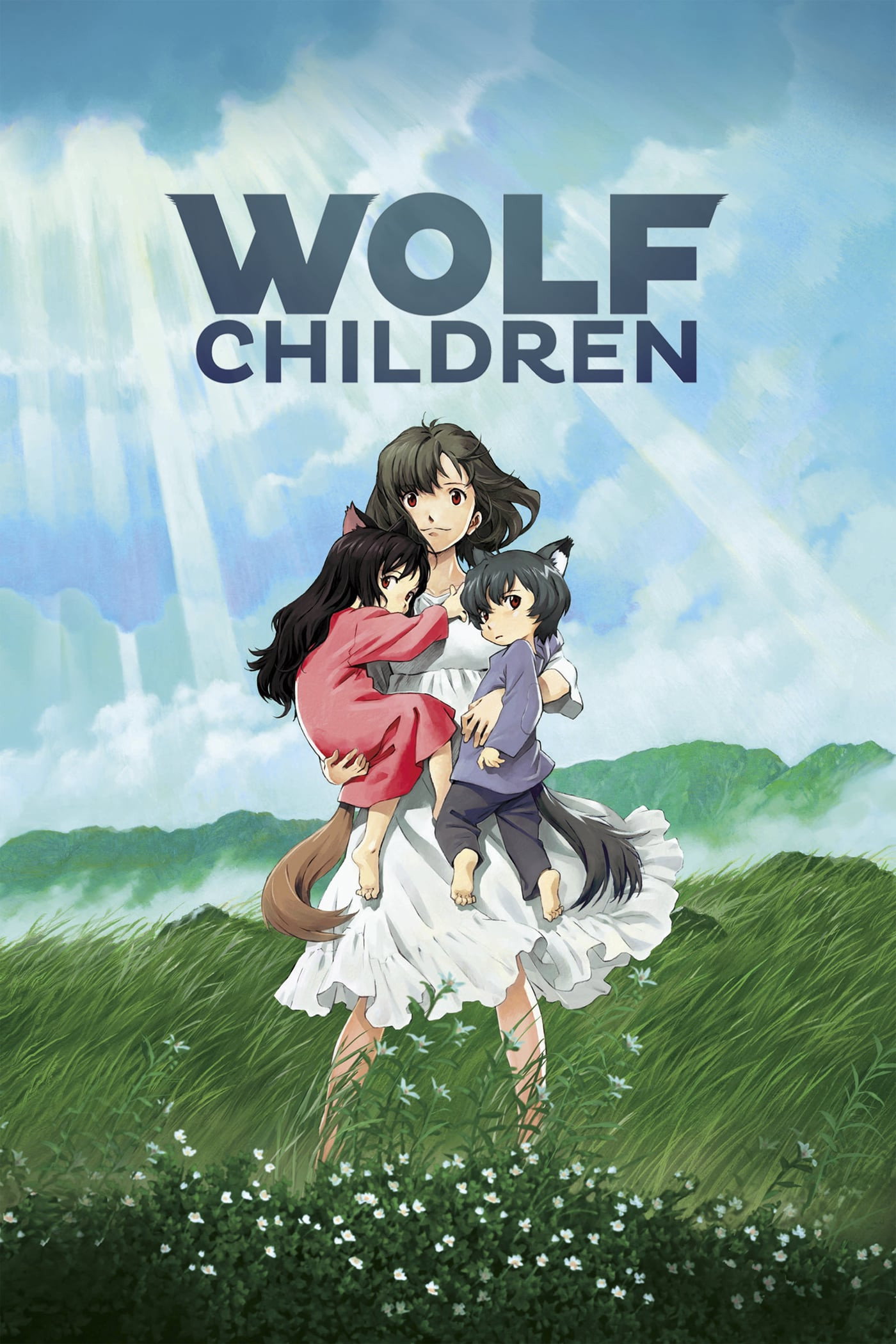
A young mother stands in a street with a feverish child, halfway between the children's clinic and the vet, and cannot move. That is the scene in Wolf Children (2012) where Mamoru Hosoda's method is easiest to see. The joke arrives first. The loneliness arrives a second later, when it is plain there is nobody she can ring. He draws his people flat, in clean lines and hardly any shadow, and sets them against backgrounds painted so carefully that a failed vegetable patch looks wet. The effect is of cut-outs moving through a real place, and he has trusted it for years.
He began at Toei Animation in 1991 as an animator, having studied oil painting rather than animation, and made his name on short Digimon films at the turn of the century. There was a brief attachment to Howl's Moving Castle at Studio Ghibli that did not stick, then two features at Madhouse, The Girl Who Leapt Through Time (2006) and Summer Wars (2009), the second of them his first original story. In 2011 he founded Studio Chizu with the producer Yuichiro Saito, and every feature since has come from there: Wolf Children, The Boy and the Beast (2015), Mirai (2018), Belle (2021) and Scarlet (2025). Satoko Okudera wrote three of them with him.
What he does well is time. Wolf Children covers the dozen years after a widow takes her two half-wolf children to a derelict farmhouse in the mountains, and it is built from small exact things: books on infant care stacked beside books on wolf behaviour, a howl at bedtime that must not be heard. The sequence in the snow moved us more than a film about wolves had any business doing, and it did so because Shigeru Nishiyama's cutting never stops to point at what is happening. What he does less well is the courtship. The Tokyo section hurries Hana and her wolf into parenthood in near-silent montage over Masakatsu Takagi's piano, and we had not yet decided whether we believed in them.
Our larger reservation is Hana herself. She smiles through the debt and the failed crops and the nights up with a sick child, and she is never once angry. Hosoda told an interviewer in 2013 that he prefers female protagonists because marriage and raising children "play bigger parts in the lives of women, leaving more space for artistic creation". The space, it turns out, is his rather than hers. Most critics have taken the film's talk of endless sacrifice as praise; we think it is the one thing holding him back from something better than very good. There is also occasional talk that the later films are more conventionally built than the early shorts.
Start with Wolf Children, at home, where its quiet has room. Then watch what the women in the later films are allowed to want, because that is where we will know whether he has moved.
Biography
Mamoru Hosoda is a Japanese film director, animator and screenwriter. He was born on 19 September 1967 in Kamiichi, Nakaniikawa District, Toyama. He studied oil painting at Kanazawa College of Art and began working in animation at Toei Animation in 1991.
Hosoda gained attention in the early 2000s with Digimon Adventure (1999) and Digimon: The Movie (2000). He later directed The Girl Who Leapt Through Time (2006), Summer Wars (2009) and Wolf Children (2012), for which he also wrote the screenplay. In 2011 he co-founded Studio Chizu. Subsequent films include The Boy and the Beast (2015), Mirai (2018), which received an Academy Award nomination for Best Animated Feature, Belle (2021) and Scarlet (2025).