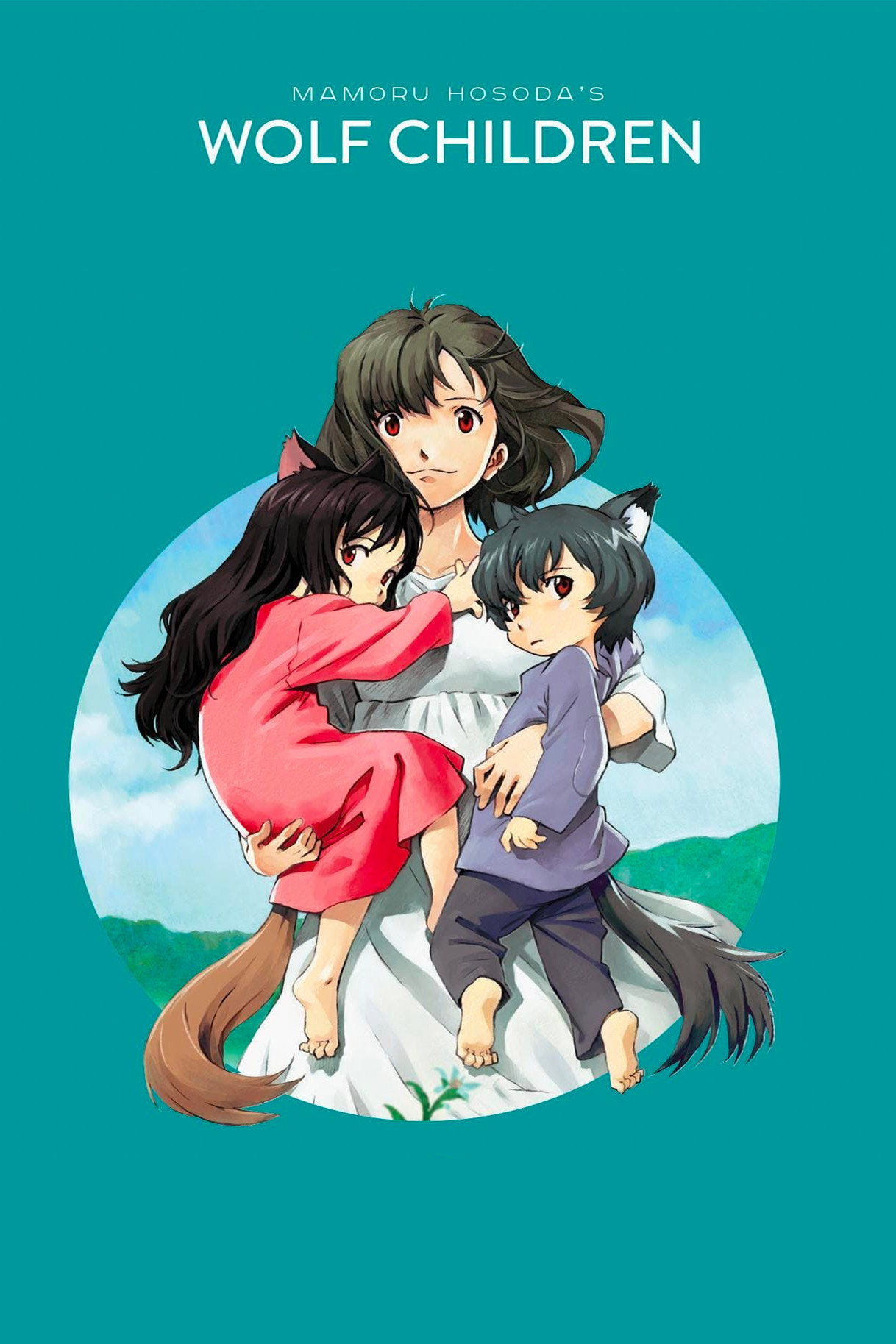
Mamoru Hosoda’s story of a widow raising two half-wolf children in the mountains is patient, quiet and, in one sequence in the snow, close to perfect. It treats motherhood as endless giving, and never quite asks what Hana wanted for herself.
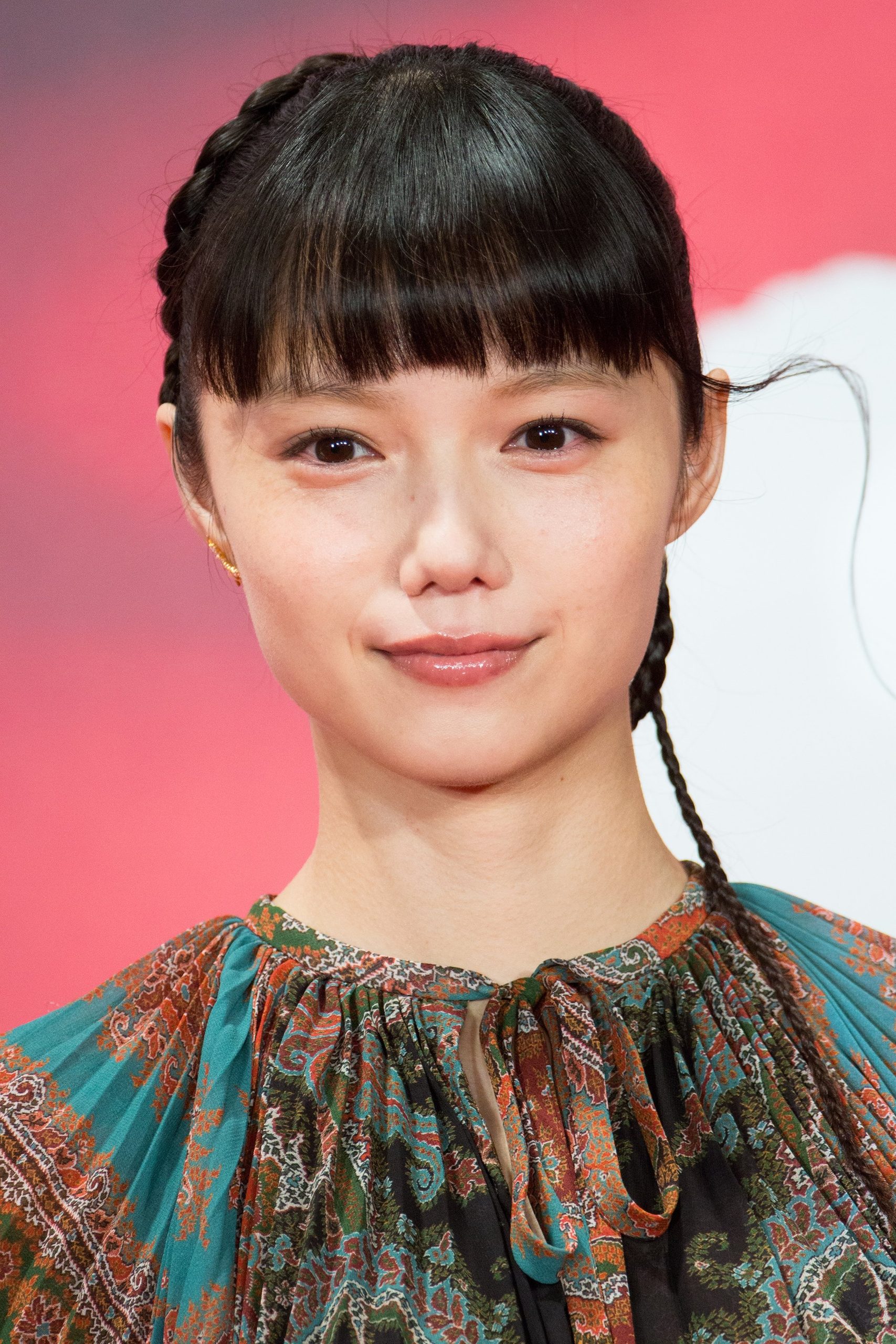
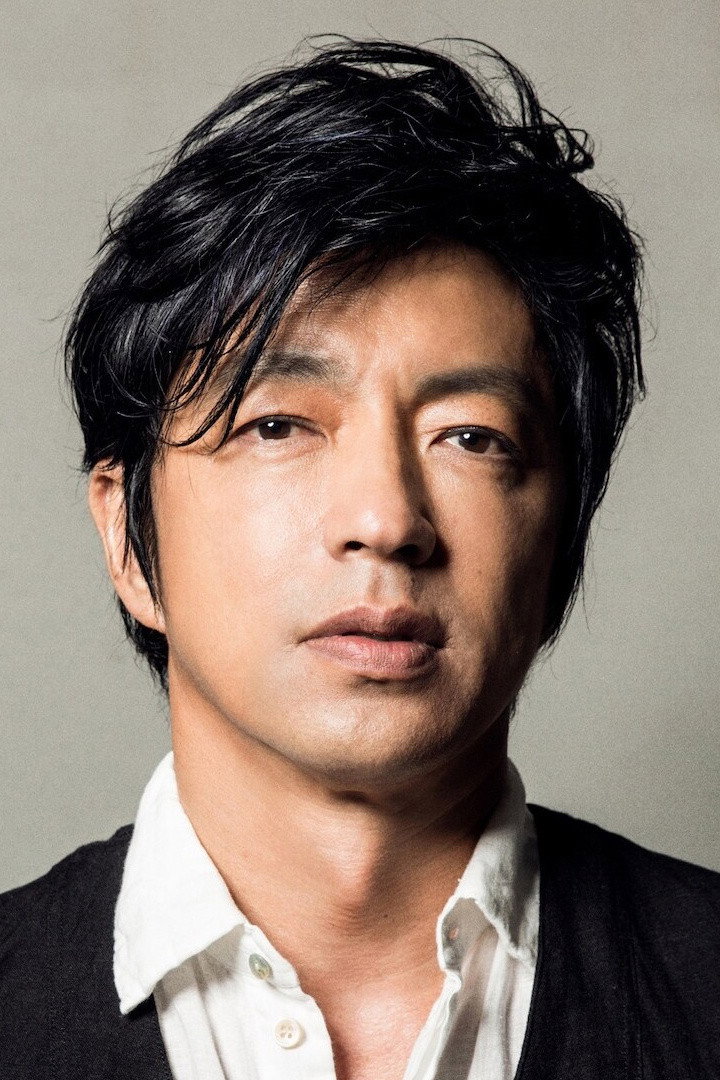
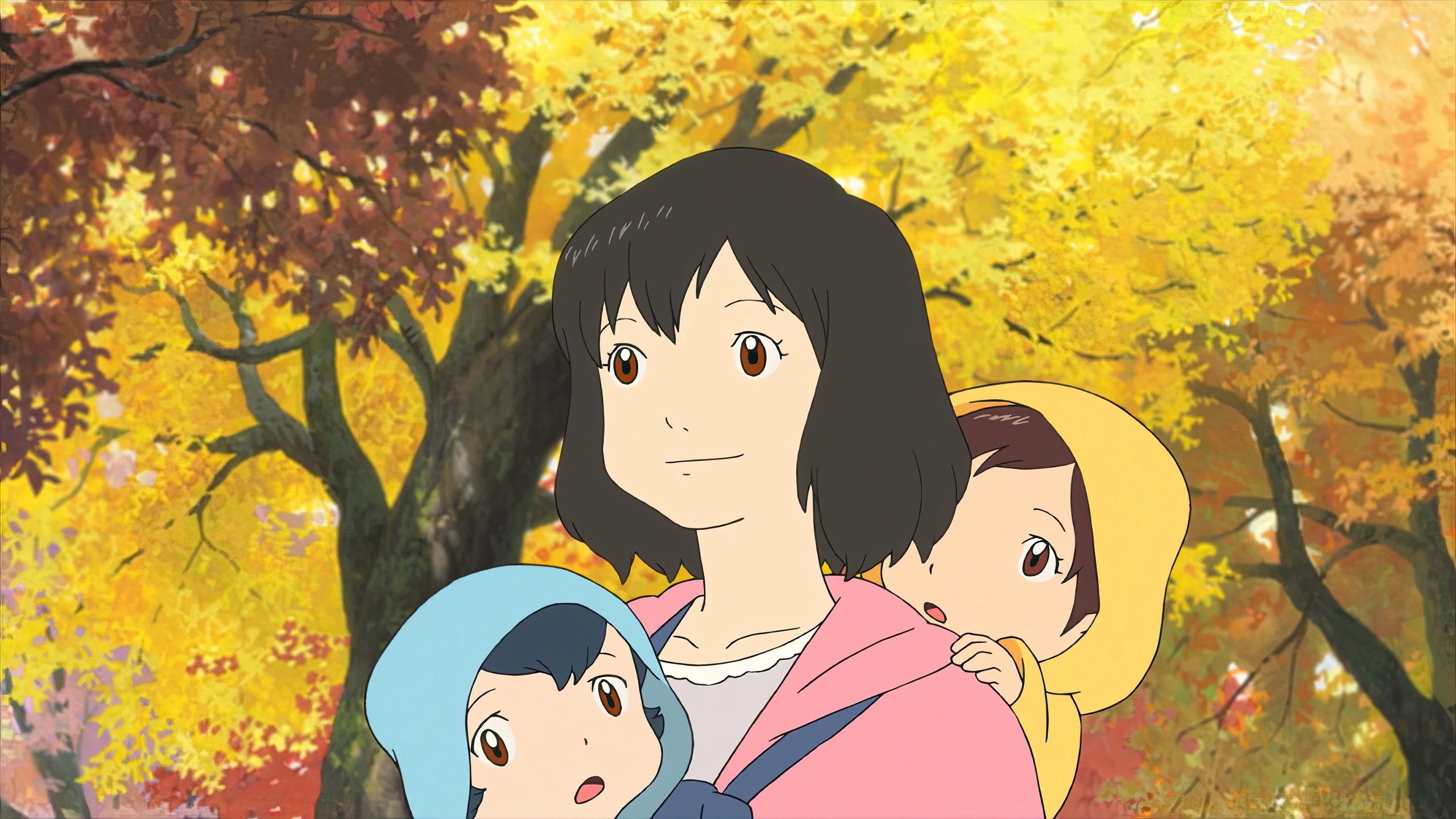
Hana (Aoi Miyazaki) is a student in Tokyo when she notices a young man at the back of a lecture with no textbook. He is a wolf who can pass as a man (Takao Ōsawa), and he tells her so before it has become a secret worth keeping. They have two children, Yuki, born in snow, and Ame, born in rain, and then he dies, early and without ceremony. Hana takes the children to a derelict farmhouse in the mountains, far enough from anyone that a howl at bedtime will not be reported. Mamoru Hosoda’s film covers the dozen years that follow, and it is very good, with one reservation we will come to.
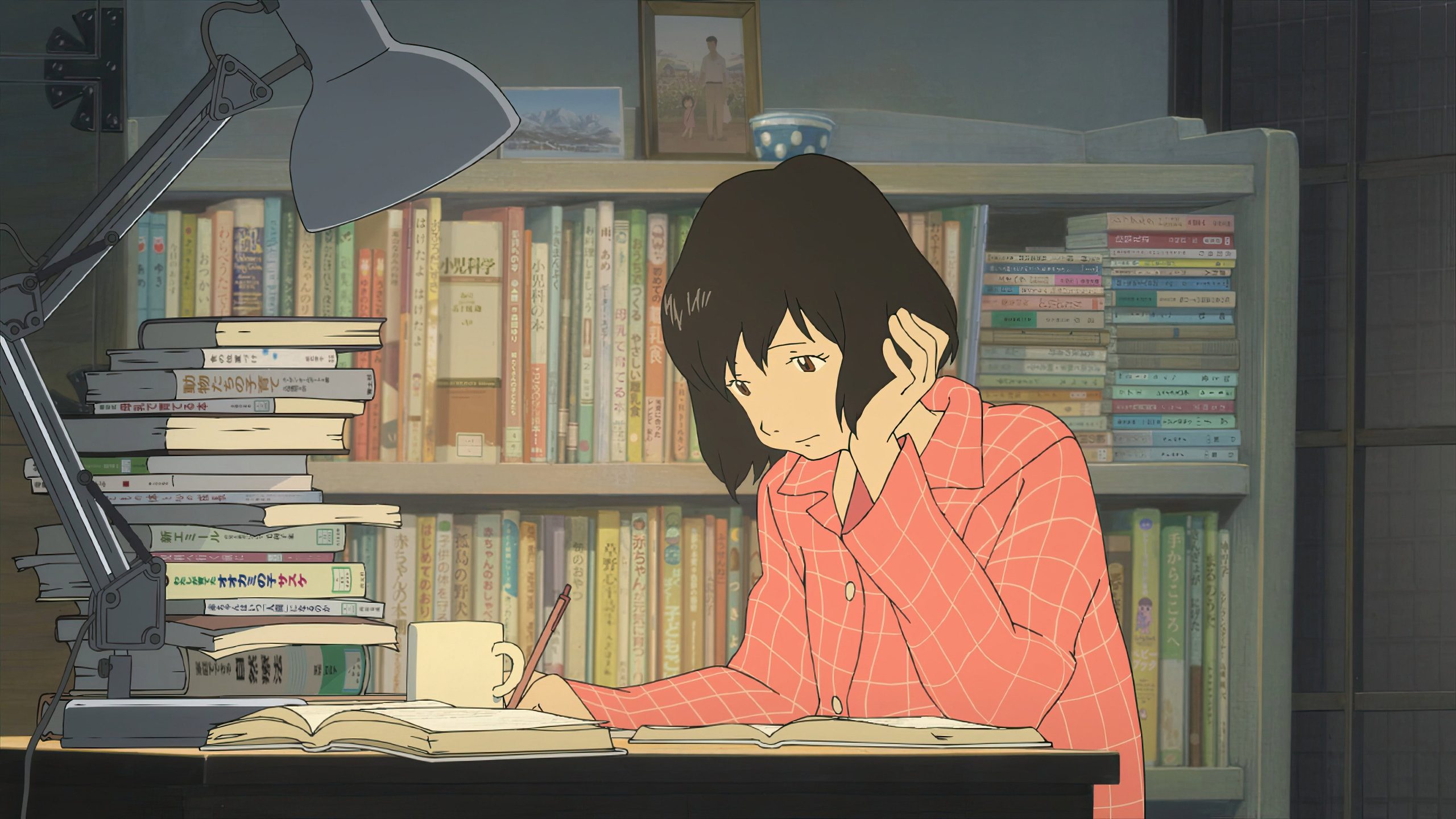
The Tokyo section is the weakest. Hosoda and his co-writer Satoko Okudera hurry the courtship along in near-silent montage over Masakatsu Takagi’s piano, and the pair are parents before we had decided whether we believed in them as a couple. Once the babies arrive the film finds its footing in small, exact things. Hana reads books on infant care with books on wolf behaviour stacked beside them. When Yuki runs a fever she stands in a street between the children’s clinic and the vet, unable to move. We laughed, and then we stopped laughing, because the film had made it plain there was nobody she could ring.
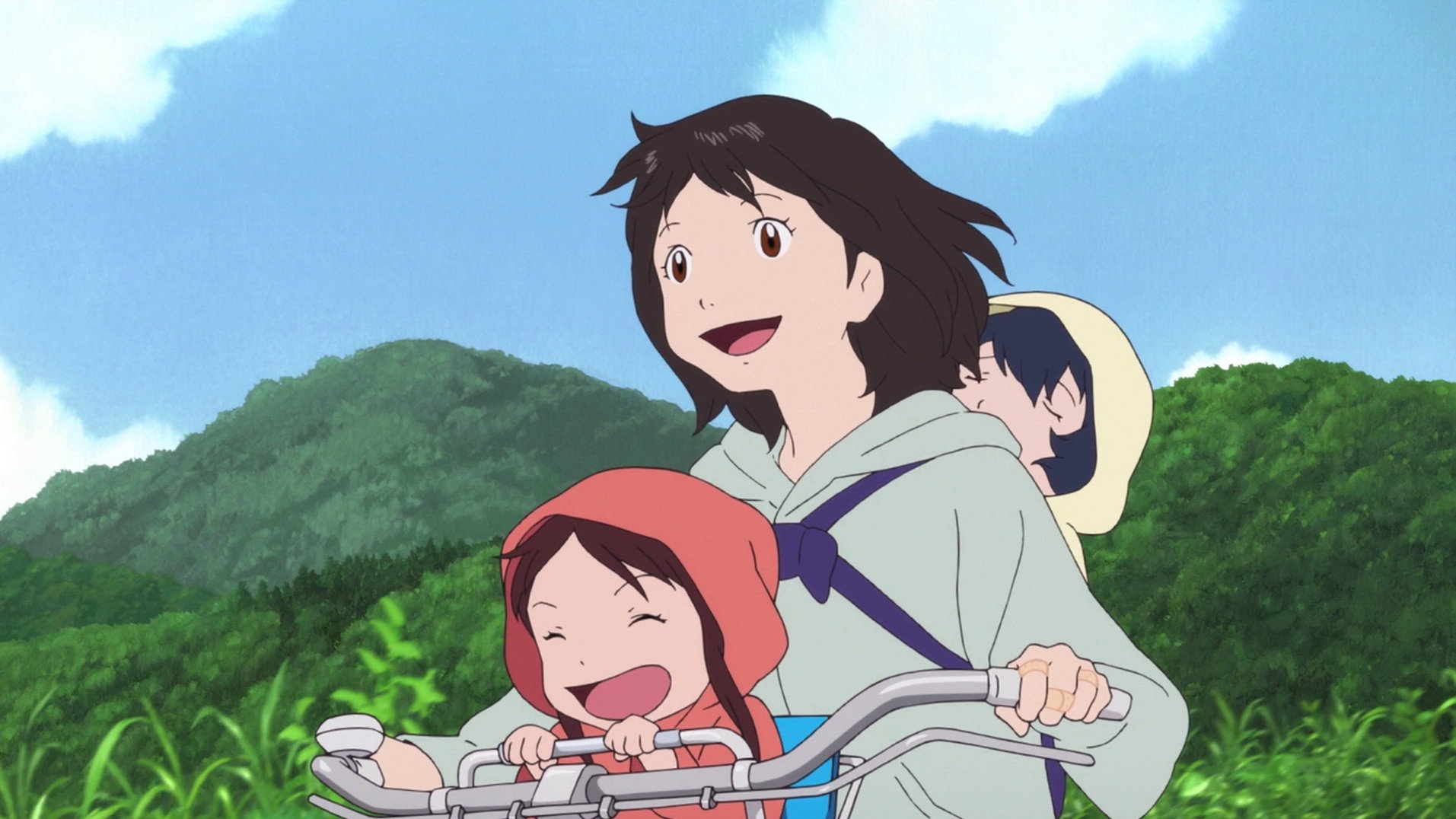
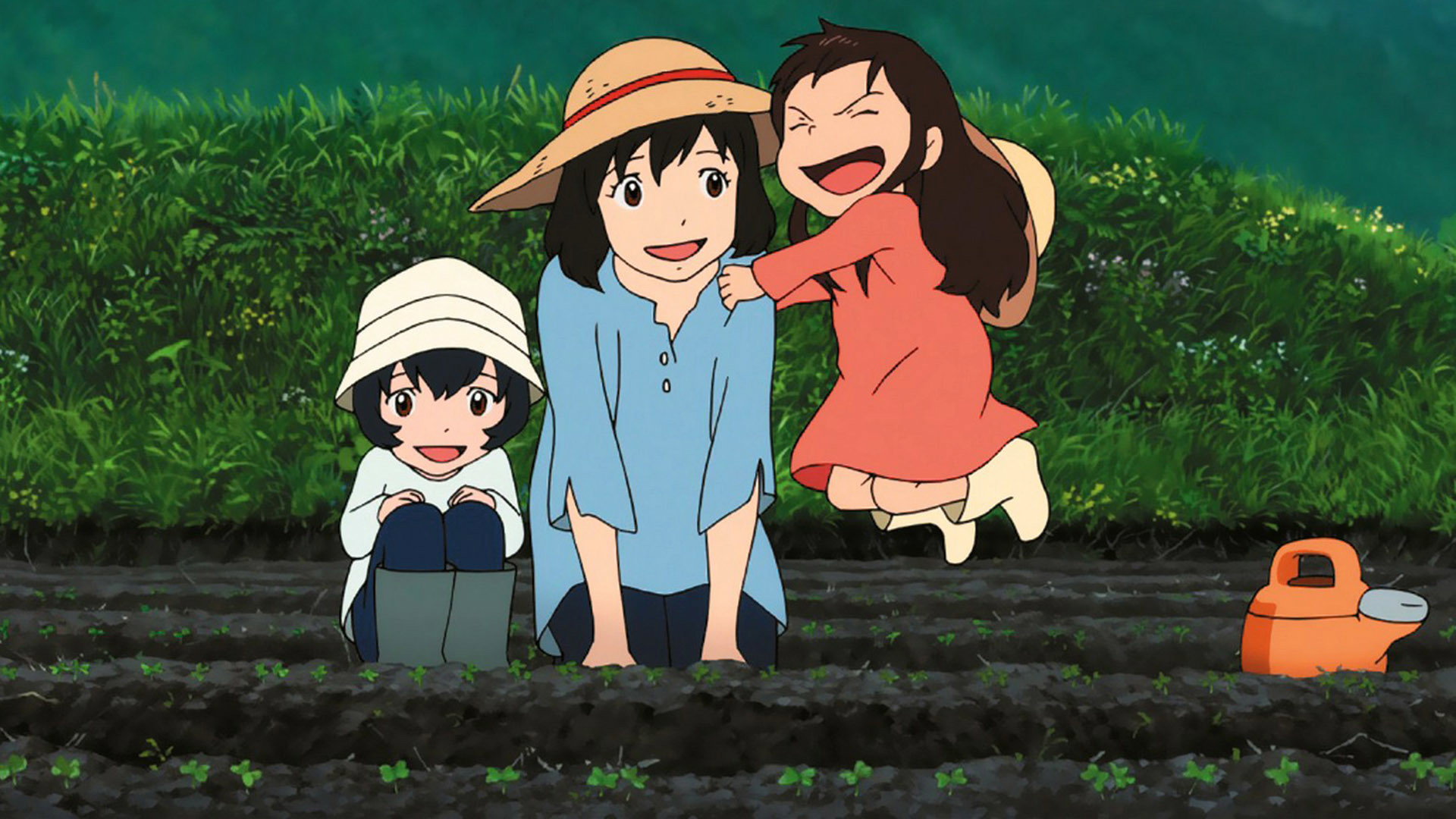
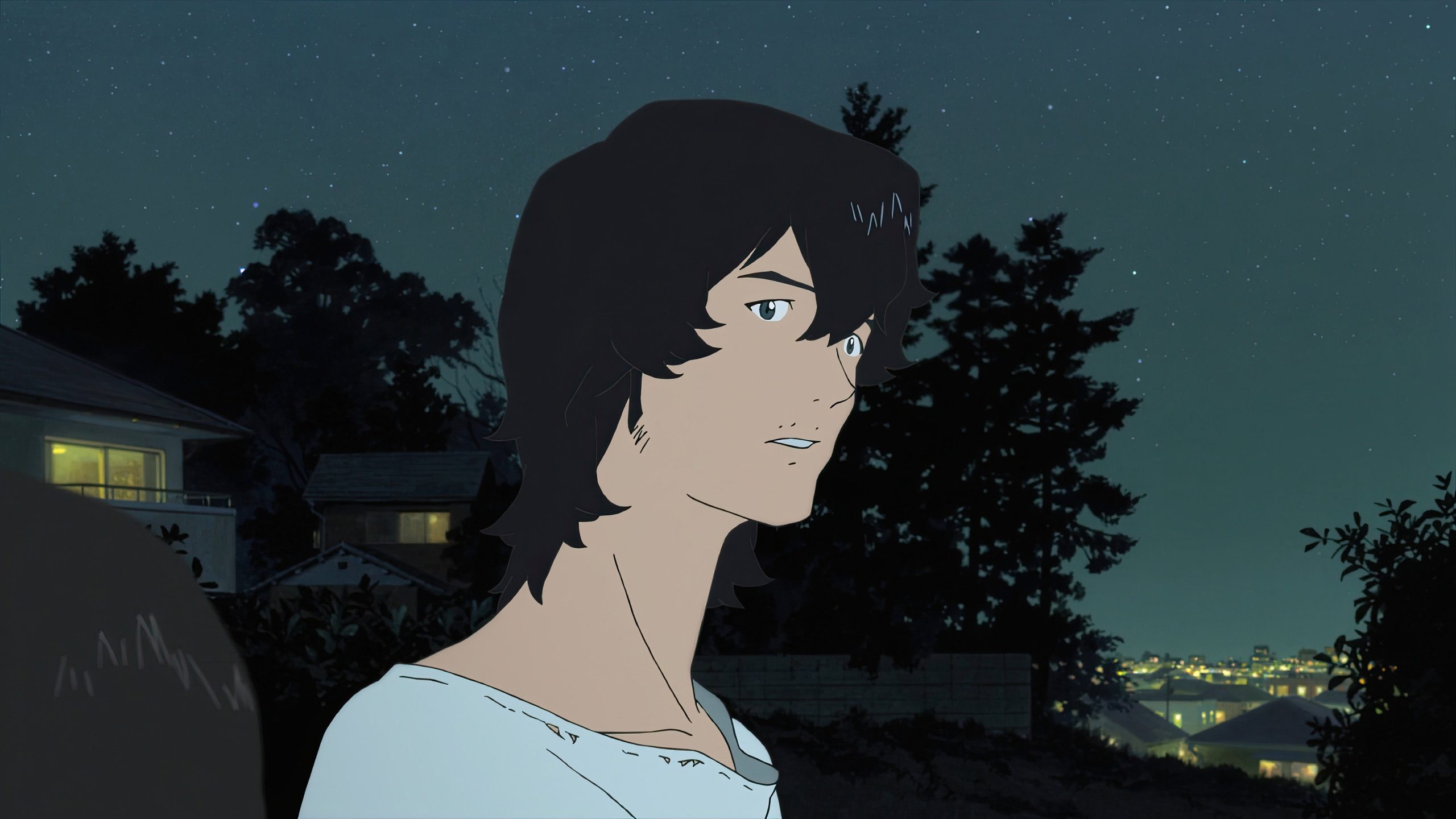
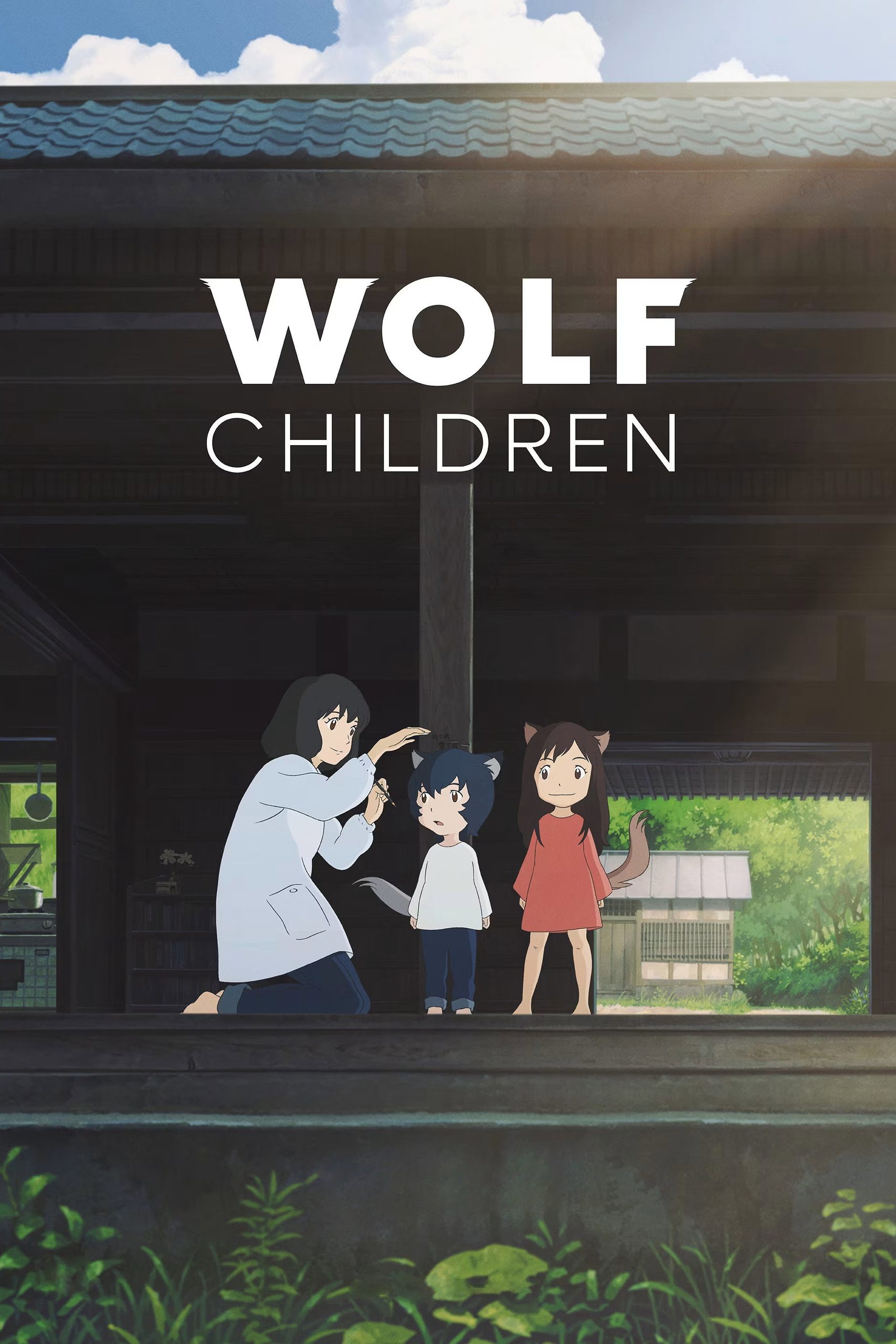
In the mountains the film settles and slows. The backgrounds are painted with such care that the wet furrows of Hana’s failed vegetable patch look almost photographed, while the people are drawn flat, in clean lines and hardly any shadow. That is Hosoda’s habit, and here it works: the children look like cut-outs moving through a real place, which is roughly what they are. Ryo Horibe’s camerawork, in an animated film, means deciding where the eye goes, and it goes low, at a child’s height, for long stretches. Shigeru Nishiyama’s cutting lets the children flicker between girl and cub mid-stride without stopping to point it out.
The best few minutes come with the first proper snowfall. Hana and the children run out of the house and down the white slope, the two of them turning into wolves and back as they tumble, and the frame rushes alongside as though someone were skiing beside them with a camera. Takagi’s music rises and nobody speaks. We grinned like children, and we are not children. It is the one stretch of the film in which being what they are costs nobody anything.
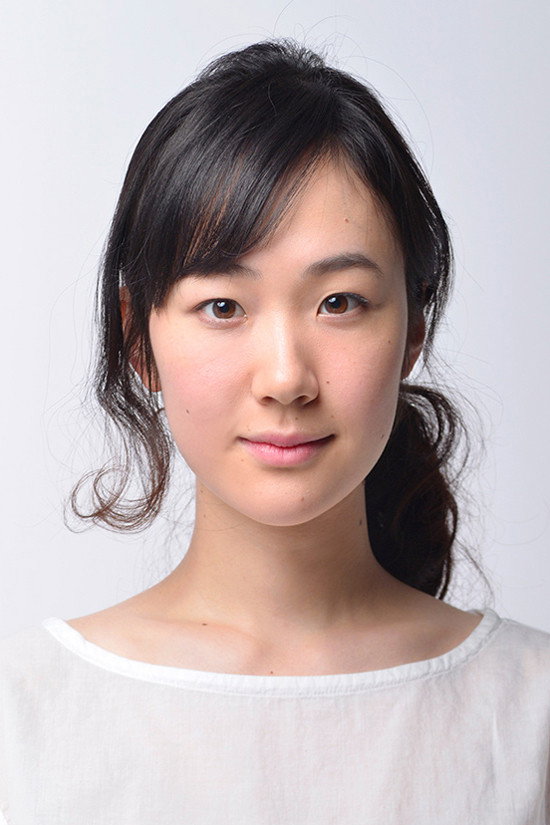
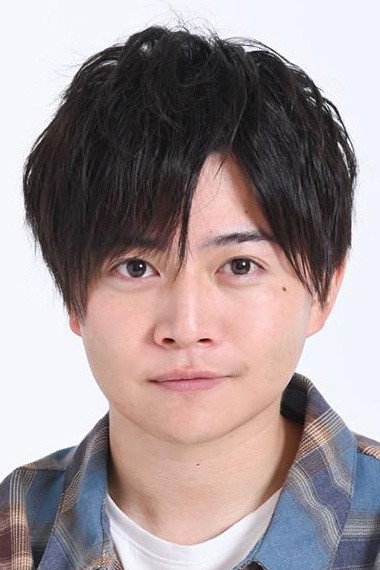
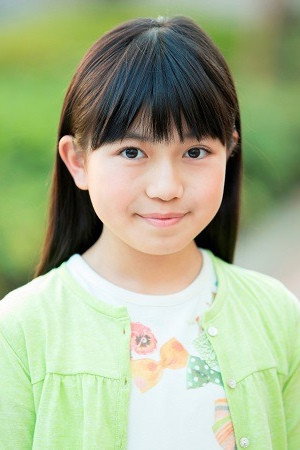
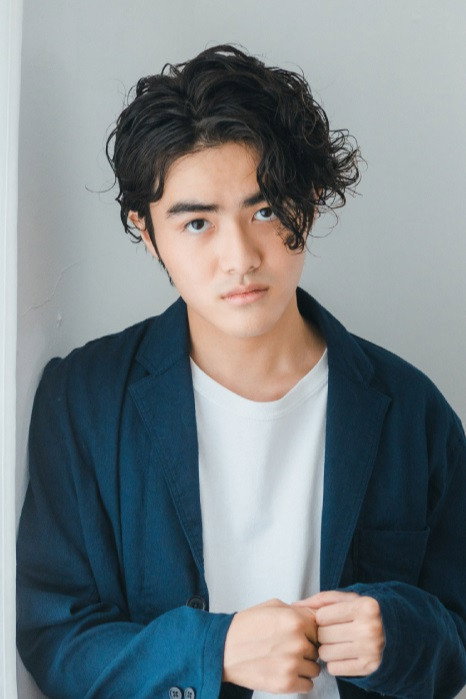
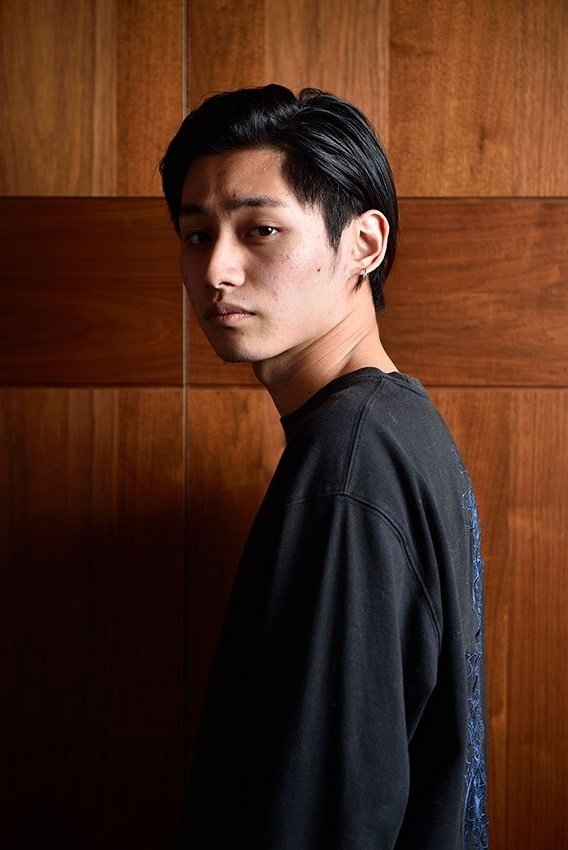
The children are well drawn as people, too. Momoka Ohno voices young Yuki as pure appetite, a girl who eats things she should not and keeps snakes in jars. Amon Kabe’s young Ame cries at everything and hides behind his mother. Then school arrives and, over the years the film covers, the two begin to swap. Yuki (Haru Kuroki, who also narrates as an adult) learns to sit still and keep her secret; Ame (Yukito Nishii) is pulled towards the forest. A new boy in Yuki’s class, Sohei (Takuma Hiraoka), notices something about her that nobody else has. Which world each child chooses, and what it costs Hana, is the second half, and we will not describe it.
Our reservation is Hana. Miyazaki voices her with a lightness that keeps the film from going soggy, and Hosoda draws her smiling through nearly everything: the debt, the failed crops, the nights up with a sick child. She is never angry. She is tired only for the length of a scene. She wants nothing for herself, and the film admires her for it. The tagline promises “endless sacrifice” and means it as praise. Most critics have taken the film at its word; we found ourselves wishing, just once, that she had shouted at somebody.
Against Hosoda’s own work it is smaller and slower than The Girl Who Leapt Through Time and Summer Wars, and better than either. At 117 minutes it could lose ten from the middle, where the years pass in short scenes that are each fine and together drift. If you have the choice, take the Japanese track. Watch it with a child of about ten, or with whoever raised you, and do not expect either of them to want to talk about it straight afterwards.