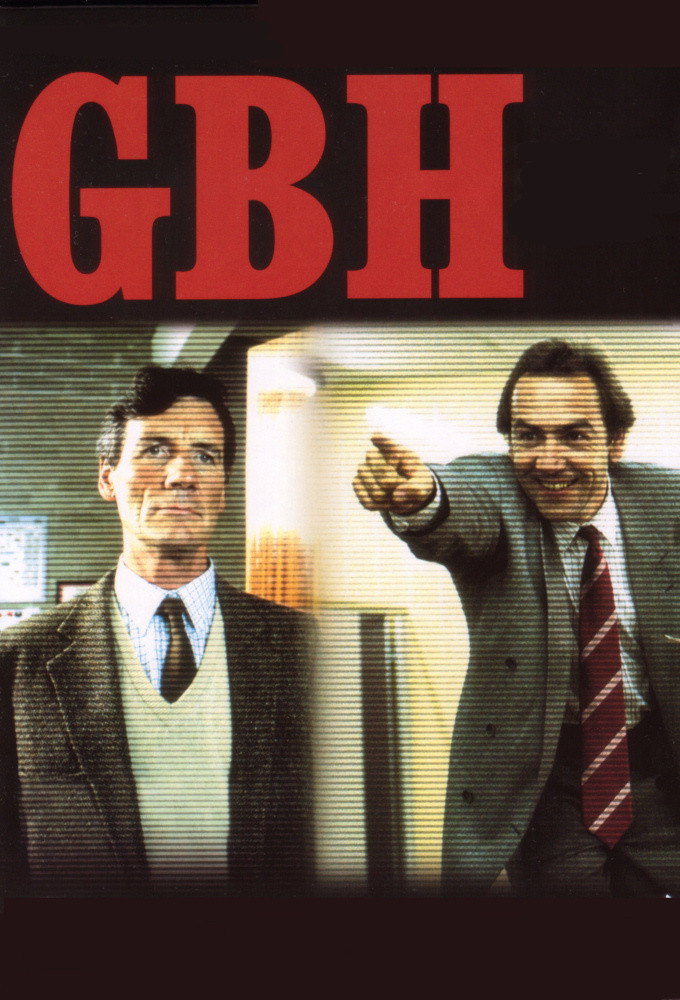
A television director who trusts a wide shot and a good script, Robert Young did his best work by staying out of Alan Bleasdale's way on G.B.H.. The features that followed are not where to look; the television is.
Fi1m perspective
The moment we keep coming back to in G.B.H. is not a close-up. Michael Murray, Robert Lindsay's council leader, is in the middle of a wide shot and the tics have started, and Robert Young does not cut in. He leaves the camera where it is and lets the crowd notice before Murray does. It is the plainest choice available, and it is the right one. On the evidence of the work we know best, Young's gift is knowing when to do nothing.
He came to it the long way. He began in the 1970s in horror, with Vampire Circus (1972), an episode of Hammer House of Horror and Soldier's Home (1977), and spent the 1980s as a working director of British television: Minder, Bergerac, The Mad Death, and many episodes of Robin of Sherwood (1984), where he is credited with bringing the series a mysticism it had not had before. That is journeyman work in the honourable sense of the word. Then, at the start of the 1990s, he turned to black comedy, first with Jeeves and Wooster (1990) and then with Alan Bleasdale's G.B.H. (1991), and found the thing he was good at.
G.B.H. is the one to see. Young shoots the day of action, the marches and pickets and meetings in smoke, like news footage, and when the violence arrives it is quick and ugly and over. He keeps Elvis Costello's music low and sad and out of the way of the shouting, so that it never tells us what to think about a man we already have too many thoughts about. We had spent hours laughing at Murray's tics, and the first time Young held the wide shot and let a roomful of faces change before Murray's did, we stopped laughing and were not sure what to do instead. The shot is nothing special. The decision not to help us is the direction.
The series is long, and its conspiracy plot is the weakest part of it, and a director carries some of that even when the script is Bleasdale's. The cinema that followed did not go as well. There was Splitting Heirs (1993), a feature comedy with John Cleese and Eric Idle, and then Fierce Creatures (1997), which he was given on the strength of G.B.H. and which another director was brought in to finish. He has gone on working, in television and in features such as Eichmann (2007) and Blood Monkey (2007), which we have not reviewed.
If you want to know what he can do, watch a city council come apart over seven episodes and notice how rarely the camera moves. Then notice that you never wanted it to.
Biography
Robert Young is a British television and film director. He was born on 16 March 1933 in Cheltenham, Gloucestershire.
In the early 1980s he directed episodes of the series Bergerac. He went on to direct the 1991 miniseries G.B.H., for which he received a BAFTA nomination. His other television credits include episodes of Robin of Sherwood and Jeeves and Wooster.
Young's feature films include Vampire Circus (1972), Splitting Heirs (1993) and Fierce Creatures (1997). He has continued to direct television drama into the 2000s.