Tetsurō Araki makes people fly: soldiers on wires through a city, drawn so that the eye keeps pace. On Attack on Titan it produced action that anime rarely matches. Away from a fight, in a meeting or a corridor, he is a less certain hand.
Fi1m perspective
A body leaves a rooftop on a cable, the ground drops away, and the picture goes with it. That is the Araki shot, and once you have seen it you find it everywhere in his work: the soldiers of Attack on Titan (2013) swinging between buildings on their gear, the runners of Bubble (2022) crossing a city by parkour. He draws the movement flat, in the old hand-animated way, and sets it against machine-built depth, so the figure stays a drawing while the world it moves through has weight. He storyboards a great deal of it himself, which is why a series with dozens of credited directors can still look like one person's.
He came up at Madhouse, which he joined in 1999, and made his television debut there with Death Note (2006–2007), a series that has almost no action in it and lives on people thinking in rooms. He left around 2011, made Guilty Crown (2011), and then went to Wit Studio for Attack on Titan, directing the first season and serving as chief director on the second and third. Kabaneri of the Iron Fortress (2016) kept the partnership with Wit and kept the fighting. He has worked freelance since the middle of that decade. Hiroyuki Sawano has scored three of his projects and Arifumi Imai has directed action on two, and the loud, propulsive thing people mean when they say an Araki show has a look is at least partly theirs.
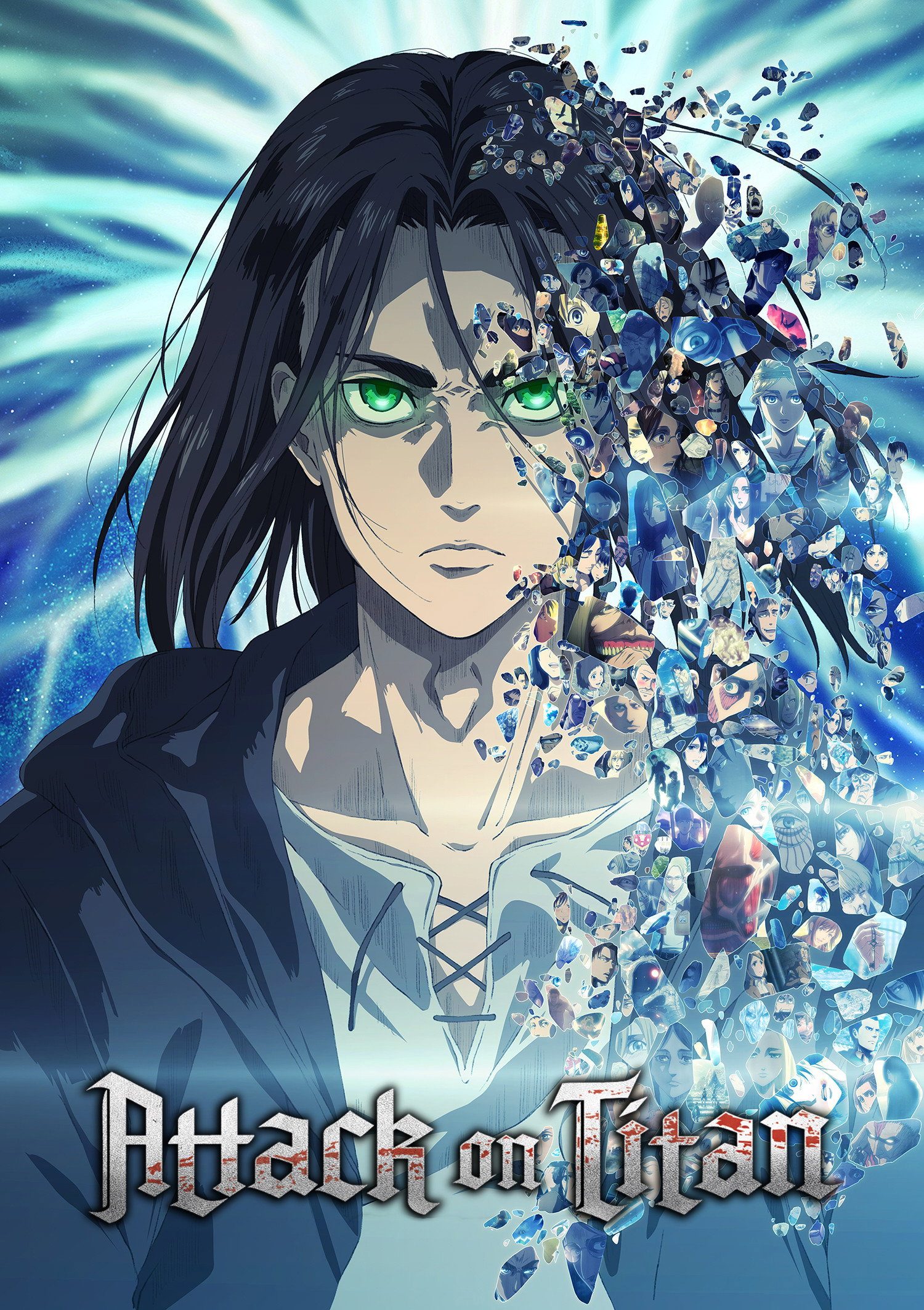
Attack on Titan is the case for him. We scored it 83 and called most of its run superb, and the part that is superb is the part he built: the soldiers in the air, the giants on the ground, the drawing holding together at speeds where it ought to fall apart. We forgot, for whole stretches of the first season, that we were watching a drawing at all, and it took a giant's hand closing on somebody to remind us. The case against him is in the same review. When the fighting stops the series sits down, and the tribunals and corridors of late season one are a slog under his direction, not somebody else's. The look changes in the Final Season, with giants built by computer and Yuichiro Hayashi in charge, and we noticed the join; but by then Araki had gone, and that is worth saying in his favour.
Bubble set out to do something quieter. He has said of it, "This time around, we wanted to tell a very beautiful and ephemeral story, that is a love story," and the story is told, once again, through people running and leaping across a city. We have not reviewed it and will not judge it here. But it tells you what he trusts. Araki has spent twenty years making bodies fly beautifully, and he has not yet shown that he can make one stand still.
Biography
Tetsurō Araki is a Japanese animator, storyboard artist and director. Born on 5 November 1976 in Sayama, Saitama, he graduated from Senshu University and began his career at the Madhouse studio.
He made his directorial debut with the 2005 OVA Otogi-Jūshi Akazukin. Araki is best known for directing the anime adaptations of Death Note (2006–2007) and the first three seasons of Attack on Titan (2013–2019). Other notable works include Highschool of the Dead (2010), Guilty Crown (2011–2012), Kabaneri of the Iron Fortress (2016) and the film Bubble (2022).
He is married to editor Aya Hida. Araki has received Best Director awards at the Newtype Anime Awards in 2013 and the Tokyo Anime Award Festival in 2014.