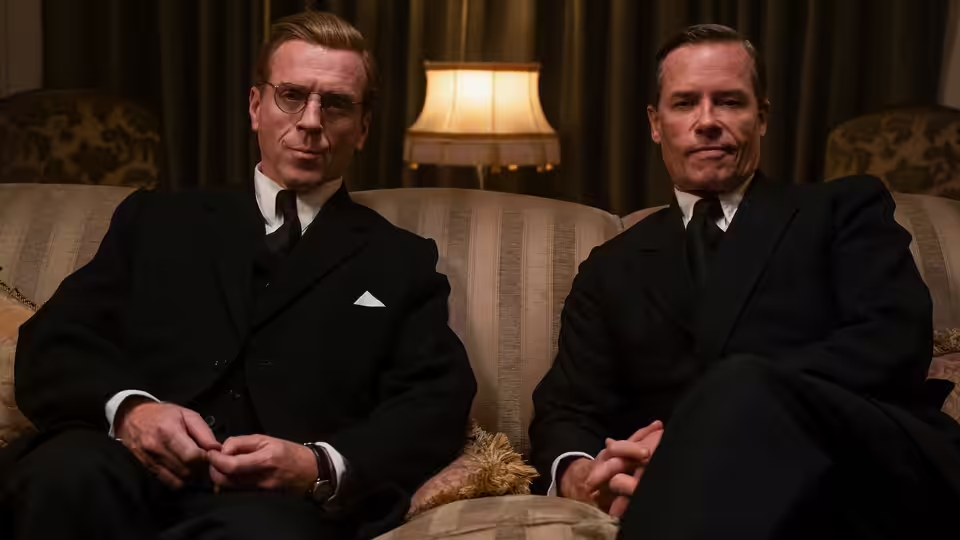
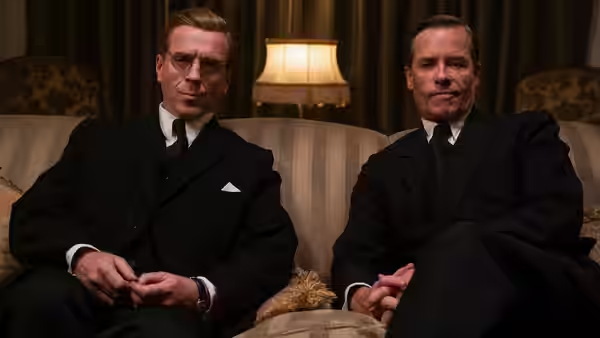
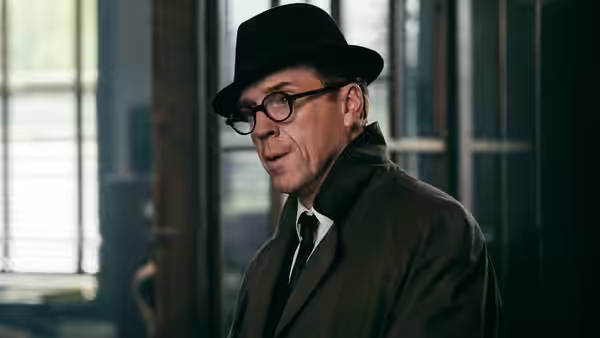
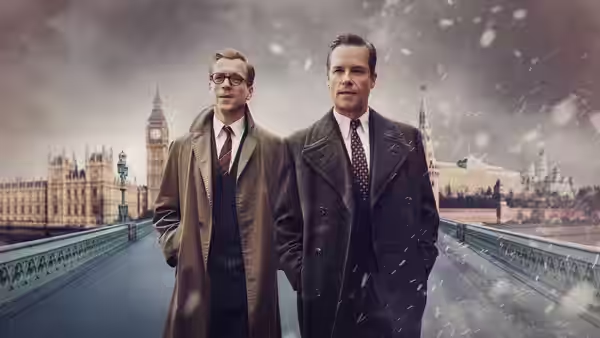
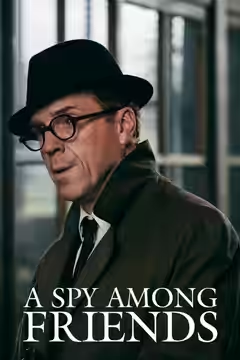
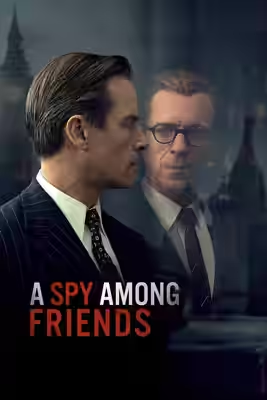
Guy Pearce and Damian Lewis are superb as the traitor and the friend he made a fool of, and whenever the two of them share a room this is as good as spy television gets. Between those rooms it is slow, grey and far too fond of explaining itself.
Ben Macintyre’s 2014 book told the story of Kim Philby and Nicholas Elliott, two MI6 men who were the closest of friends for more than twenty years, until one of them turned out to have been working for Moscow throughout. Alexander Cary’s six-part adaptation, directed by Nick Murphy, keeps the bones of it: the confrontation in a Beirut flat in January 1963, Philby’s disappearance, and the questions asked in London afterwards. It is handsomely made and patiently acted, and it is about two hours longer than its story. When Pearce and Lewis are in the same room it is as good as this genre gets on television. The rest of the time it is waiting for them to be.
Pearce plays Philby as a charmer who has stopped bothering to charm. He is funny, tired, faintly bored by his own cleverness, and he lies the way other men clear their throats. The Moscow scenes, in which he drinks in a bare flat under the eye of Monika Gossmann’s Galina and is asked to account for himself to a new set of masters, give Pearce the chance to show a man discovering that the thing he betrayed everything for is a small cold room, and he does not overplay it. Lewis has the harder part. Elliott is upright, courteous and quietly destroyed, and Lewis plays him as a man who has been made a fool of in front of the whole service and will not give anyone the satisfaction of seeing it hurt.
The Beirut scene is the one that got to us. Two men in good suits talk about the weather, the war and old friends, and nobody raises his voice, and we found ourselves more upset than we had any right to be at a conversation about nothing. It is Lewis’s face that does it, a small tightening around the mouth each time Philby says something kind. We had not expected to feel the betrayal personally. We did.
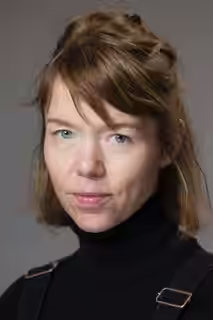
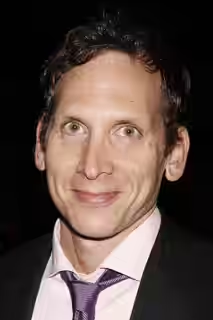
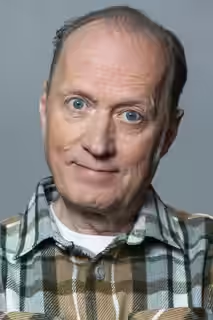
Around these two the series builds a frame, and the frame is the trouble. Lily Thomas, the MI5 officer who debriefs Elliott, is invented for the screen, and Anna Maxwell Martin plays her with a dryness that cuts through the clubland fug like a window being opened. She is the best thing in the series that is not Pearce or Lewis. But the device means that everything we see is a story being told afterwards, and the series keeps stopping so that she can say aloud what we have just watched. Adrian Edmondson gives Sir Roger Hollis the smoothness of a man who has never once been contradicted at lunch; Stephen Kunken’s CIA man is furious and short of patience, which is a relief; Nicholas Rowe’s Sir Anthony Blunt is silky and brief.
Paul Spriggs dresses the Beirut flat in shutters and a sofa the colour of the whisky, Whitehall in leather, brass and decanters, and Moscow in almost nothing, so that the three worlds can be told apart at a glance. The photography keeps to browns and greys and lets the cigarette smoke hang thick enough to see. Dustin O’Halloran’s score is mostly spare piano and low strings, and it is at its best when it is barely there; once or twice it swells to tell us a scene is sad when Lewis had already made that plain.
The real fault is length. The series has one event and one question, what Elliott knew and when, and six hours is a long time to circle it. The third and fourth episodes stall, the wartime flashbacks are handsome and tell us little we had not already been told, and somewhere in the middle we were bored and began counting the drinks. The series is also gentler on MI6 than it pretends to be. Lily is there to scold the old boys on our behalf, and because she is fictional the scolding costs nothing.
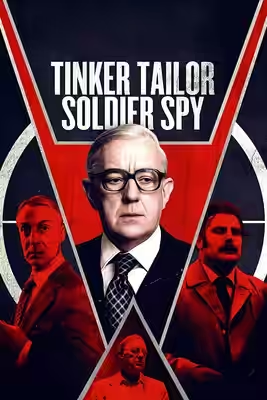
The 1979 Tinker Tailor Soldier Spy took seven episodes and earned every one, because John le Carré gave Smiley a puzzle to solve. Here we know the answer from the first scene. What is left is how one man feels about it, and that is enough for a film. See it for the two of them, two episodes a night so it does not get the chance to idle, and have a drink to hand. Everyone on screen does.