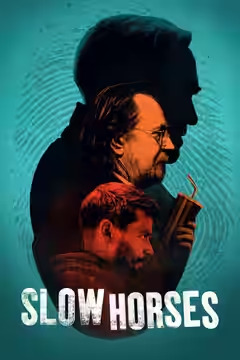
Mick Herron’s failed spies make a fine series, and Gary Oldman’s Jackson Lamb is the reason. The office is the show; the thriller plot each run of six episodes hangs on is ordinary, and the series gets away with it.
Slough House is where MI5 sends the officers it cannot sack. Mick Herron’s novels handed the writers that premise, and Will Smith and his colleagues do the sensible thing with it: they treat the building as the main character. River Cartwright (Jack Lowden) arrives after a mistake made in front of everybody, and the first episode spends its opening minutes running him through it at full tilt, so that we know how good he might have been. Then it sits him at a desk going through a journalist’s rubbish. The verdict, since you are in a hurry: this is very good, and the best of it has almost nothing to do with spying.
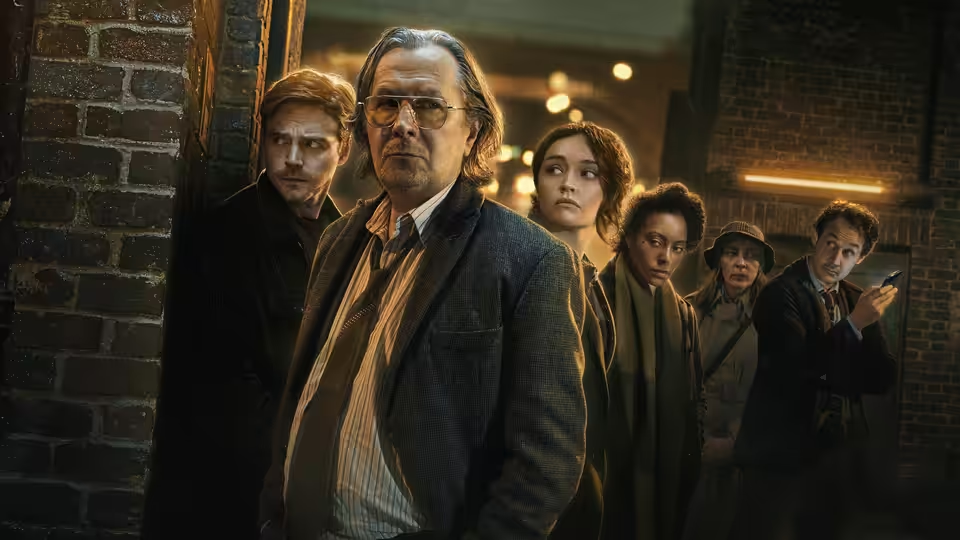
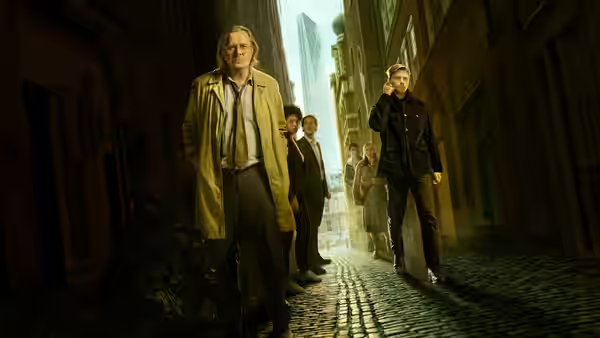
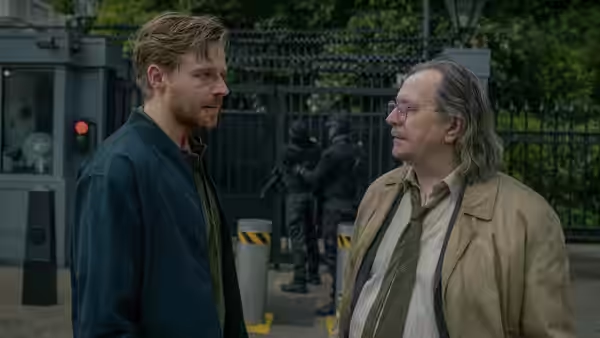
Gary Oldman’s Jackson Lamb runs the place from an upstairs room that smells, even through a screen, of last night’s takeaway. Oldman plays him as a man who has decided to be repulsive on purpose. Guy Speranza dresses him in a raincoat that has not met a dry cleaner in years, a cardigan and socks with the toes out, so that whenever he stands next to Kristin Scott Thomas’s Diana Taverner, who runs things at head office in tailoring you could cut yourself on, the joke is made before anyone speaks. We laughed out loud, more than once, at the sheer commitment of it. Then, in the second episode, Lamb does a small decent thing without looking at anybody, and we realised the filth was cover.
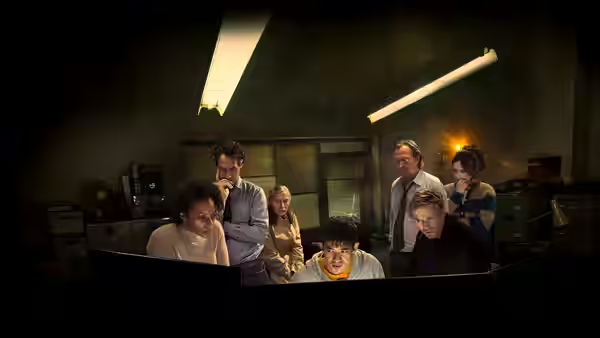
The office around him is cast with care. Saskia Reeves’s Catherine Standish keeps the files and her dignity. Christopher Chung’s Roddy Ho believes he is the only competent person in the building, and is nearly right about the computers and wrong about everything else. Rosalind Eleazar’s Louisa Guy has the face of someone passed over who knows exactly why. Aimee-Ffion Edwards turns up later as Shirley Dander and hits people. None of these are big parts, and each gets a look or a line that tells us what the person did to end up here. Lowden holds the middle. River is the only one who still thinks he might get out, and Lowden plays that hope as faintly embarrassing, which is right.
Tom Burton and Choi Ho Man have built Slough House as a place that stopped being redecorated some decades ago: brown carpet, a kettle furred with limescale, desks that do not match, a staircase nobody has hoovered. Danny Cohen and David Chizallet light it yellow, as if one bulb has been doing all the work, and shoot head office in blue-grey glass and white corridors, so that a straight cut from one to the other is a joke in itself. Daniel Pemberton’s title theme, a slouch of a song that sounds as if the singer has been up all night, does the same job in sound.
What works less well is the reason each run of six episodes exists. Every series hangs on a thriller plot, and the first one is the kind you have seen before; we will not describe it. Whenever it takes over from the desks, we wanted it to hurry up, and by the fourth episode we were checking how long was left, which we never did while Lamb was on screen. The show knows it is a comedy with a thriller attached, and the thriller is the part it takes least care over. Later runs bring in Hugo Weaving and give more room to Jonathan Pryce as David Cartwright, the old hand River still defers to, and they are at their best when they, too, stay in the building.
One dissenting review found the whole thing too familiar, and we can see what it means: disgraced agents, double-crosses, a service that would rather bury a mistake than fix it. That is looking in the wrong place. The plots are familiar. When Lamb is on screen, nothing else in the genre is doing quite this.
Six episodes at a time is the right dose, and it works better at home than it would in a cinema, because Lamb mutters and you will want to rewind.