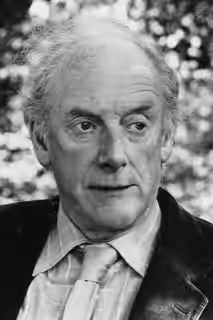
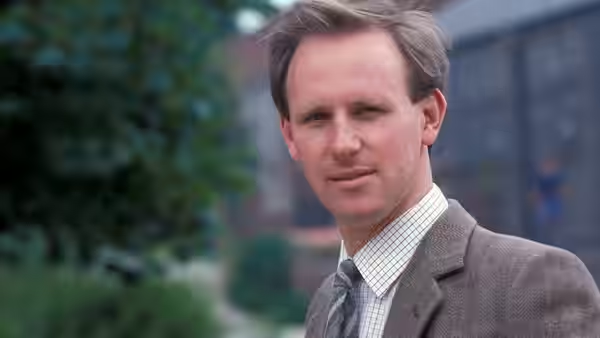
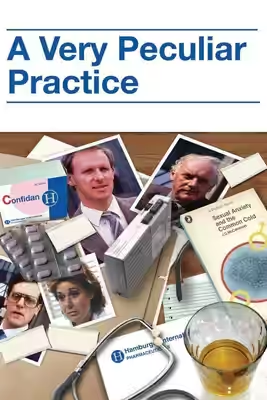
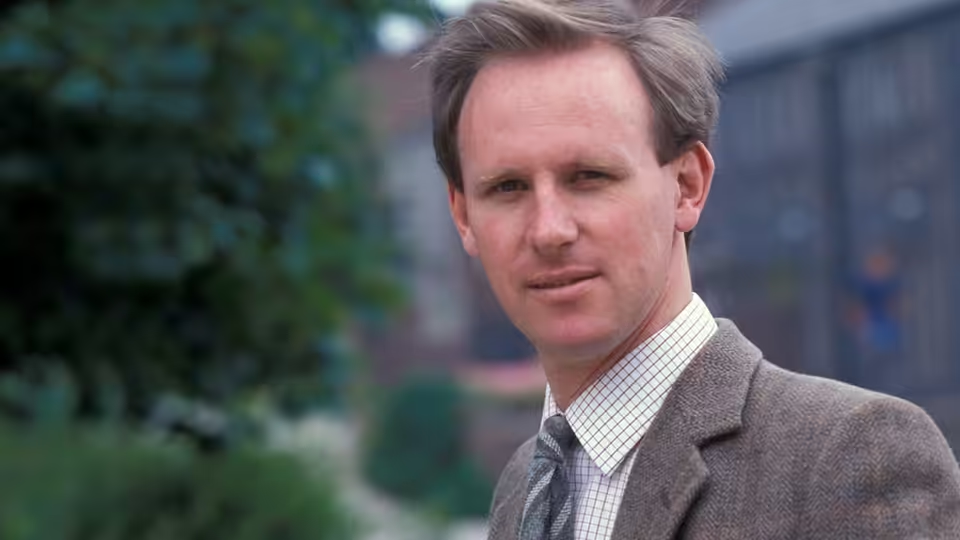
Dr Stephen Daker (Peter Davison) standing outdoors in a tweed jacket and tie
Series review

A Very Peculiar Practice

1986 · Created by Andrew Davies · Series · 50m

In a sentenceWe would happily watch these doctors for hours before letting any of them examine us

On a university campus, Dr Stephen Daker (Peter Davison) is part of a medical ensemble that includes Dr Jock McCannon (Graham Crowden), Dr Rose Marie (Barbara Flynn) and Dr Bob Buzzard (David Troughton). Vice-Chancellor Ernest Hemmingway (John Bird) represents the university hierarchy. Maureen Cahagan (Lindy Whiteford) and Lyn Turtle (Amanda Hillwood) also feature, alongside two nuns played by Elaine Turrell and Sonia Hart. The doctors’ professional setting meets the wider campus in a series that mixes drama with black comedy and lets surreal elements intrude on university life.

Fi1m review

Andrew Davies’s campus medical comedy is sharp, strange and worth making time for. Its ensemble earns our attention, though its taste for eccentricity sometimes stops us caring as much as we would like.

A Very Peculiar Practice is a sharp, unsettling campus comedy that we recommend, with a warning that its appetite for oddity can keep the people at a distance. Creator and writer Andrew Davies takes the medical ensemble into a university setting, where professional titles offer plenty of opportunities for misplaced confidence. There is enough ordinary institutional life here to make the strangeness troublesome. Davies wants us to laugh at the people in charge without becoming comfortable in their company.

Peter Davison plays Dr Stephen Daker, the central figure among doctors whose shared profession gives them no automatic claim on our trust. Graham Crowden’s Dr Jock McCannon, Barbara Flynn’s Dr Rose Marie and David Troughton’s Dr Bob Buzzard give the comedy a strong ensemble. The pleasure is in watching such different comic presences occupy the same professional setting. Davison provides a useful centre without making the series feel as though everyone else exists simply to supply him with difficulties.

The nuns made us laugh, then left us slightly unsure what sort of programme we had agreed to watch. Played by Elaine Turrell and Sonia Hart, they are a concrete sign of how far this campus comedy is willing to wander from the expected. Their presence also helps explain its appeal. The strange elements make it harder to settle into the comfortable business of recognising a workplace type and waiting for the familiar joke.

David Tucker’s direction gives Davies’s writing room to be peculiar without making every oddity feel like an announcement. That restraint matters when a comedy already has so many competing personalities. John Bird, as Vice-Chancellor Ernest Hemmingway, extends the institutional comedy beyond the medical ensemble, and the university setting gives the series more to question than the competence of individual doctors. The humour is most effective when the professional setting remains credible enough for its absurdities to cause discomfort.

Our reservation is that eccentricity sometimes becomes an easy substitute for getting closer to these people. Davies can make us curious about a character without making us care enough about what happens to them. For a medical comedy, that is a meaningful limitation: some concern for the people involved is needed if professional failure is to carry any weight. The black humour remains enjoyable, but there are stretches when the programme’s determination to be strange feels over-insistent.

The two series contain seven episodes apiece, each running 50 minutes. That is a generous length for a comedy, and it gives the unease time to develop alongside the jokes. It also makes those stretches of emotional distance more noticeable than they would be in a brisker format. A medical comedy needs some prospect of care and competence if the doctors are to matter beyond their capacity to amuse, and Davies occasionally makes us wait too long for it.

Start with an episode when there is time to pay attention to more than the next punchline. We would steer anyone seeking a reassuring medical ensemble towards something gentler. For those willing to spend an evening with doctors they might hesitate to consult, we recommend staying.
Critical consensus AI synthesised

1 of 6
Positive
1
Mixed
0
Negative
0
The Telegraph
8 June 2026
90*

The series is hailed as a radical, sophisticated and subversive black comedy that has never been imitated or bettered and perfectly captures the spirit of the 1980s. The critic singles out Andrew Davies’s original writing and the surreal campus setting for particular praise.

Read the full review →

Straight answers AI written, from our review

Is A Very Peculiar Practice worth watching?
A Very Peculiar Practice is worth watching for anyone who likes their comedy sharp and a little unsettling, and we scored it 82. Andrew Davies's campus medical ensemble, led by Peter Davison, is strong and strange, though its taste for eccentricity sometimes stops us caring about the people as much as we would like. Those wanting a reassuring medical comedy should look elsewhere.
How long is A Very Peculiar Practice, and what is it rated?
A Very Peculiar Practice has episodes of about 50m. It is a drama and comedy series.
Where can I watch A Very Peculiar Practice in Iceland?
A Very Peculiar Practice is not on any streaming or rental service in Iceland at the moment. It is available in 1 other country; change your country at the top of the page to see where. Availability is checked daily.
How violent or frightening is A Very Peculiar Practice, and is it suitable for children?
A Very Peculiar Practice carries a UK 15 certificate, which rules it out for younger children. It is a black comedy rather than a frightening or violent one; the review notes unease and oddity, including two nuns who wander in from nowhere, but nothing graphic. It suits older teenagers and adults who can sit with a programme that keeps them slightly off balance.
How does A Very Peculiar Practice compare to Green Wing?
A Very Peculiar Practice is the drier and stranger of the two, while Green Wing is ruder, more physical and more openly silly. Both follow medical ensembles whose authority does nothing to restrain their foolishness, but Andrew Davies's series unsettles where Green Wing aims for laughs at the performers' lack of dignity. Choose the earlier programme for satire with a chill, the later for pure daftness.
What should I watch after A Very Peculiar Practice?
After A Very Peculiar Practice, try Green Wing (2004, Fi1m 83): Another medical ensemble where professional authority does little to discourage extravagant foolishness. Then Local Hero (1983, Fi1m 86): Institutional confidence meets a community that has little interest in behaving as expected.

Cast

If you liked this, try…

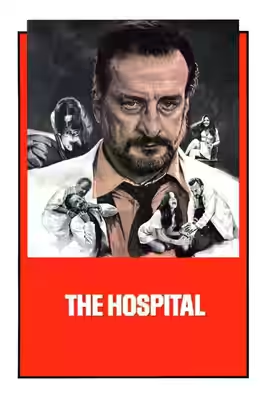
  1. The Hospital (1971) · not reviewed yetA darker medical satire for anyone who doubts that qualifications guarantee competence.

  2. The Kingdom (1994) · not reviewed yetHospital routines become increasingly strange, with a more openly frightening sense of humour.

  3. Green Wing (2004, Fi1m 83)Another medical ensemble where professional authority does little to discourage extravagant foolishness.

  4. Local Hero (1983, Fi1m 86)Institutional confidence meets a community that has little interest in behaving as expected.

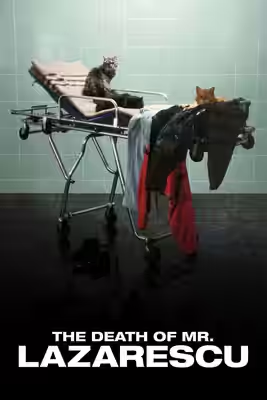
  5. The Death of Mr. Lazarescu (2005) · not reviewed yetMedical bureaucracy observed with patience, grim humour and a much harsher human cost.

Free account

Know what to watch tonight

Two lists that know where things are streaming, collections you can share, your own score beside ours, and Discover that remembers what you have seen.

  • Want to see, sorted by what is streaming now
  • Seen, with your score out of ten
  • No adverts, ever