Jack Rooke’s university comedy is funny, tender and particularly good on friendship between young men who seem to have little in common. Its eagerness to reassure can soften the jokes, but Dylan Llewellyn and Jon Pointing earn the affection.
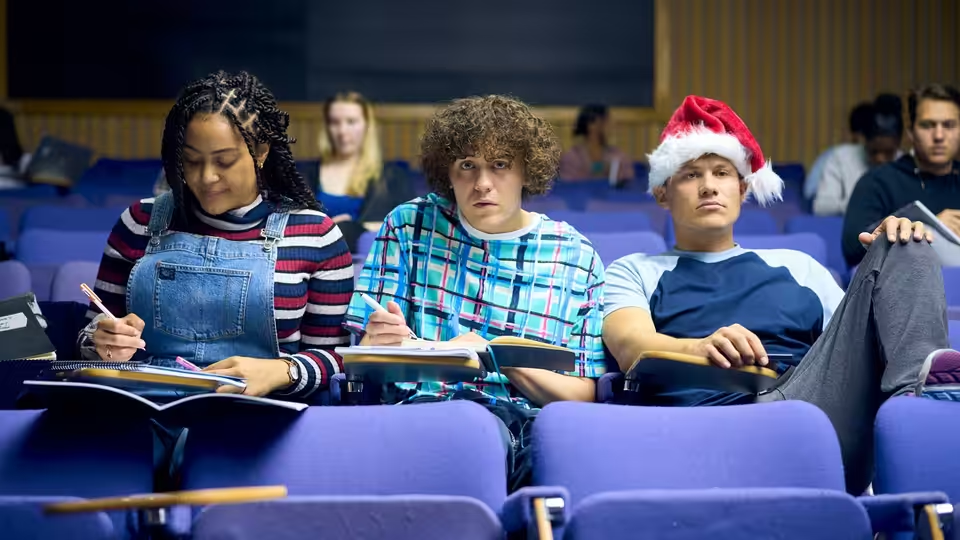
Jack Rooke’s Big Boys is a university comedy with a convincing reason for its central student to find the fun hard work. Jack, played by Dylan Llewellyn, is grieving his father and has not come out; freshers’ life asks him to begin again before he is ready. Rooke writes and narrates, keeping Jack’s anxieties close even when the comedy is at its busiest. We recommend it warmly, with a small reservation about how determined it can be to make everyone feel better.
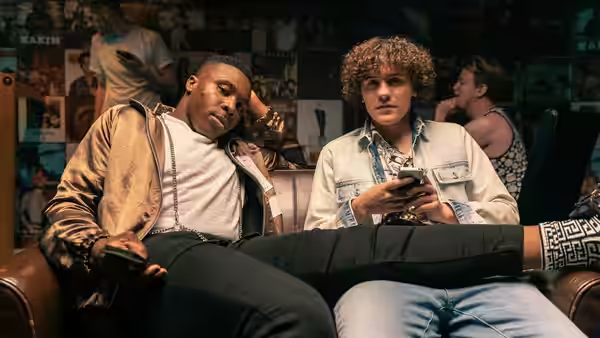
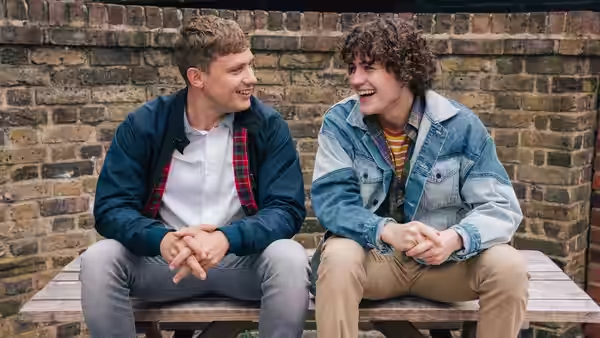
The friendship with Danny, played by Jon Pointing, makes the familiar coming-of-age material worth another visit. Danny is straight and laddy, which gives the writing an obvious opportunity for misunderstandings, but Rooke takes an interest in why these two might need each other. Llewellyn makes Jack’s shyness readable without reducing him to a collection of nervous habits. Pointing gives Danny sufficient warmth for the friendship to feel credible without making the difference between them disappear.
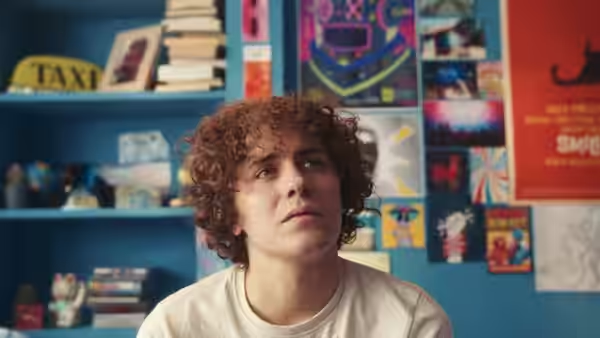
We were moved by Jack’s struggle to meet the demands of student life while grieving. It is Llewellyn’s vulnerability in those freshers’ experiences that does it, with so much pressure to enjoy himself before he has settled. Rooke understands the effort of seeming all right when other people are expecting a good time. The jokes help here, since a solemn treatment could easily make Jack’s bereavement his only characteristic.
Jim Archer’s direction handles the closeness between the two men without making every exchange feel like a lesson in friendship. Charlie Goodger’s cinematography and Ashling Johnson’s production design keep the university setting subordinate to the students, a sensible choice for a comedy so concerned with their discomfort. Gareth McEwen’s editing gives the jokes enough pace without making grief feel like an interruption. Fryars’ music helps the tenderness, though the programme is already persuasive enough on that front.
The qualification is that Rooke’s sympathy can make the writing a little too reassuring. There are times when a joke could be allowed to cause more trouble, and the care taken over everyone’s feelings costs the comedy some bite. That matters in a story touching on sexuality, loss and young men’s mental health, where embarrassment need not always be made bearable. Llewellyn and Pointing have already earned enough affection for the writing to risk being less protective.
The narration has a useful job in a university comedy: it lets Jack remain shy without making him inaccessible. Rooke supplies a way into the experience, while Llewellyn makes Jack’s social discomfort believable. This is where the programme improves on a familiar coming-of-age formula, which can hurry towards confidence as though growing up involved nothing else. It is willing to spend time with someone who has good reasons to find the whole business difficult.
The 24-minute episodes suit material that could become wearing if it demanded a much longer stretch of sympathy. We would happily spend another evening with these two, even allowing for the programme’s occasional fussing over them. Give it a go when a comedy about friendship sounds more appealing than another contest to see who can behave worst.