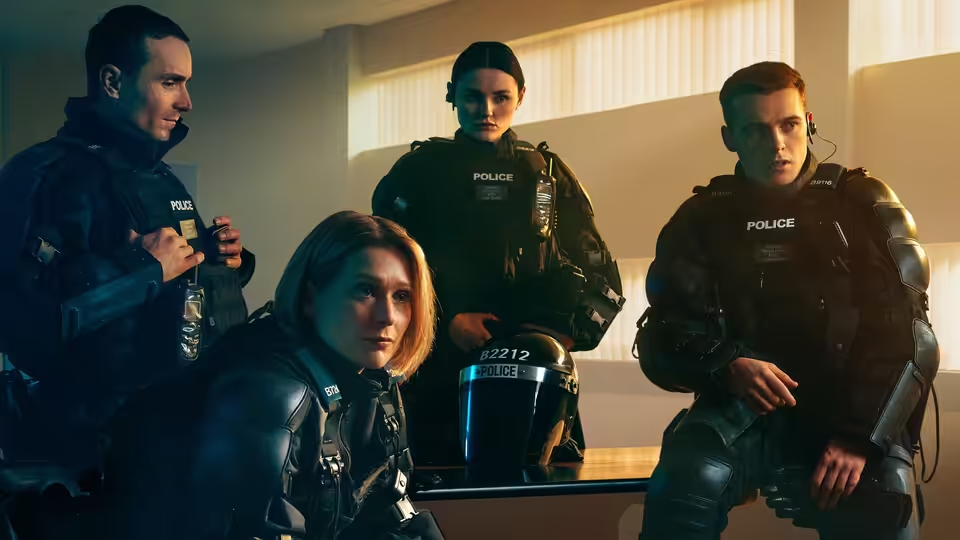
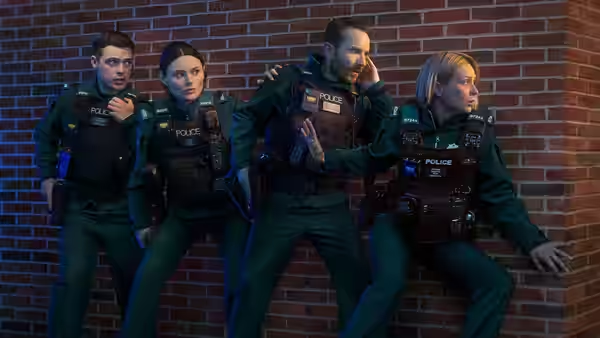
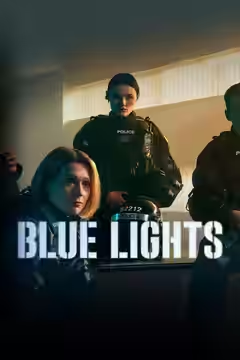
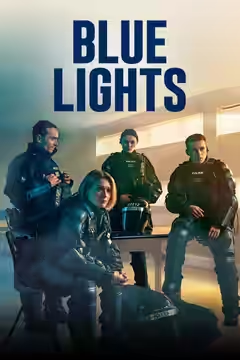
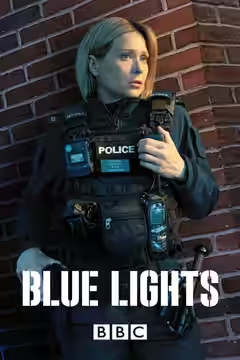
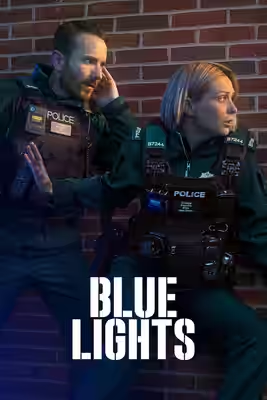
Blue Lights is a tense, humane police drama that makes its inexperienced Belfast officers worth worrying about. The rookie viewpoint can make the explanations conspicuous, but the performances give familiar situations enough weight to keep us involved.
Blue Lights is a tense, humane police drama, and we recommend it with one reservation: its rookie viewpoint sometimes makes the explanations too noticeable. Following inexperienced officers gives the programme a straightforward way into Belfast policing, without requiring anyone to arrive knowing the job. It also puts people who are liable to get things wrong at the centre of the story. Their lack of confidence has consequences beyond an uncomfortable meeting with the boss.
The Belfast setting matters because an officer’s authority cannot simply be assumed. The legacy of sectarian violence affects how the police are received, and the question of consent sits underneath the ordinary business of doing the job. We are asked to consider what happens when a uniform does not settle the question of whom to trust. That makes familiar police-drama situations more difficult, even before anybody makes a mistake.
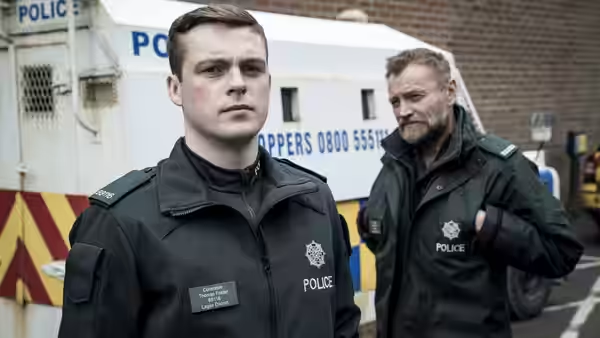
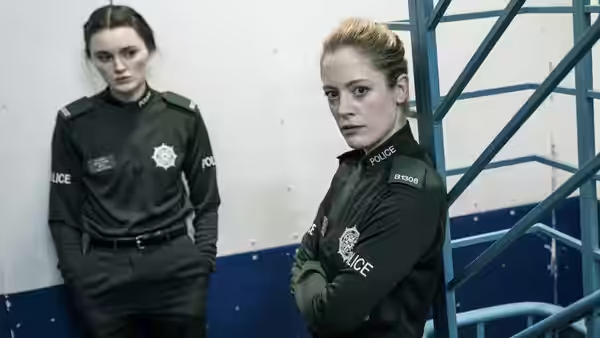
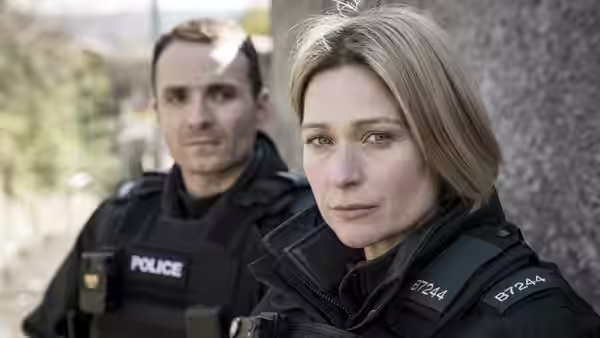
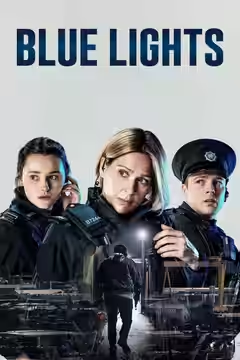
Sian Brooke’s Grace Ellis, Katherine Devlin’s Annie Conlon and Nathan Braniff’s Tommy Foster give that approach people we can care about. The performances make inexperience feel like a continuing problem, with little of the easy assurance that can make fictional beginners hard to believe. Devlin and Braniff are particularly good at keeping their characters’ vulnerability present without asking for sympathy. The ensemble’s appeal comes from the sense that competence still has to be learnt.
Gilles Bannier’s direction gets useful suspense from the recruits’ vulnerability. We were anxious for them. Their uncertainty remains visible as the work becomes dangerous, and we can follow the reasons for that anxiety without waiting for some hidden threat to be revealed. It helps that the programme is willing to build interest around ordinary officers, giving us time to worry about their judgement and their capacity to cope.
The weakness comes when the recruits also have to help explain the programme’s social and professional background. Writers Declan Lawn, Adam Patterson and Fran Harris work with an accessible route into complicated material, but we occasionally become too aware of the instruction being provided. Being new gives a character a reason to need things explained; it does not automatically make those explanations interesting. These passages are less persuasive than the doubts the actors communicate without having to spell them out.
As a police procedural, this is not attempting to replace every familiar part of the machinery. The inexperienced recruits and the gradually connected stories are recognisable enough. What distinguishes the programme is how seriously it takes the ordinary officer’s position in this particular city. We have reason to be interested in the people doing the work before we start wondering how the stories will fit together. The opening series has six episodes in which to develop those connections.
We would begin for the ensemble and allow the plotting to earn our attention at its own pace. Anyone looking principally for ingenious twists may find the emphasis on character too patient. The occasional lesson in how things work is a fair price for officers who seem capable of being frightened and making mistakes. Give it an evening when there is enough quiet to pay attention.