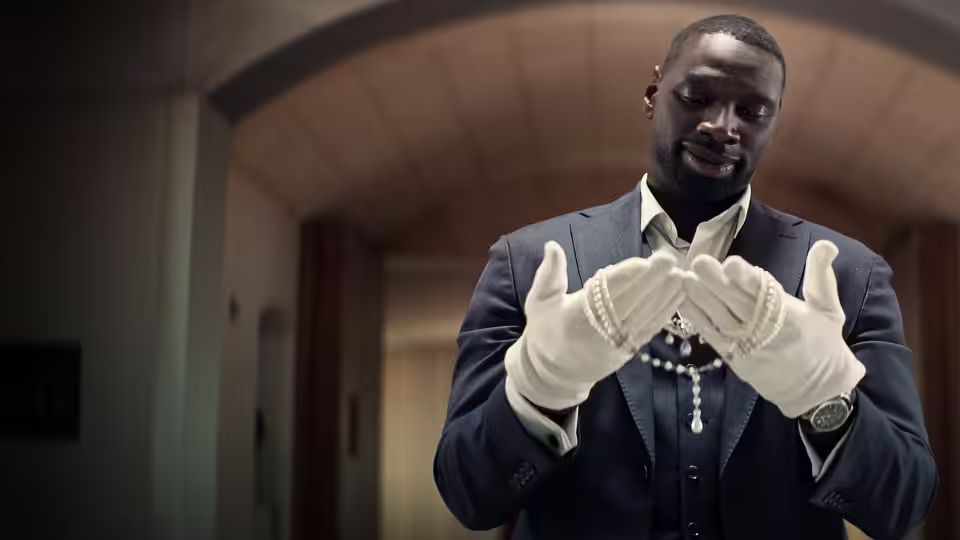
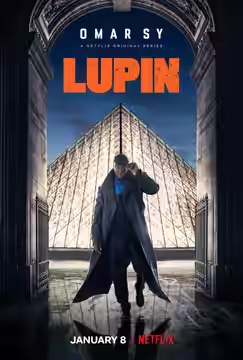
Omar Sy is the whole case for watching this Paris heist series, and he is a strong one. The capers are neatly built and the city looks expensive; the revenge story around them is thinner than the tricks and gets thinner as it goes.
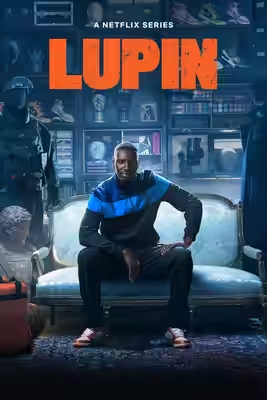
Arsène Lupin, Maurice Leblanc’s gentleman thief, has been filmed many times. The idea here is better: leave him on the page and give the books to a modern Parisian who reads them as a manual. Assane Diop (Omar Sy) is the son of a chauffeur who was accused of stealing a necklace from the family he drove for and died in prison, leaving the boy a copy of Leblanc. George Kay and François Uzan, who created the series with three others and wrote much of it, build each case on one of Leblanc’s tricks and tell you afterwards which one it was.
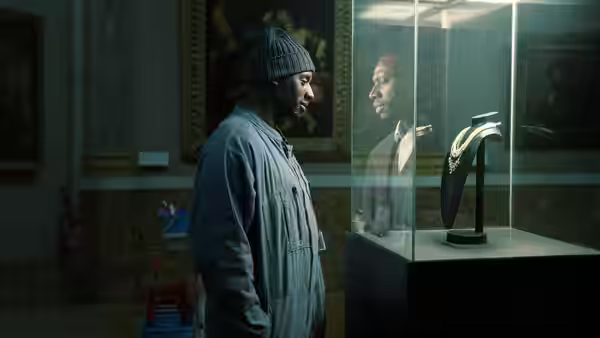
It is good, and if heists are yours it is worth your evening. The first case, in the Louvre, is worth it on its own. Assane owes money to Vincent Morville (Grégoire Colin) and pays him with a plan: Vincent’s men Kevin (Kamel Guenfoud) and Rudy (Arthur Choisnet) will lift the necklace from the auction while Assane pushes a cleaner’s cart through the galleries. The show runs the robbery once, then rewinds and runs it again with the parts we were not shown. We grinned through all of it, and the grin survived the second pass, which is where you notice the first did not quite add up. The cart and the overalls are also the show’s sharpest point about race, made without a speech: a Black man in a uniform is the most invisible thing in a French museum, and Assane knows it.
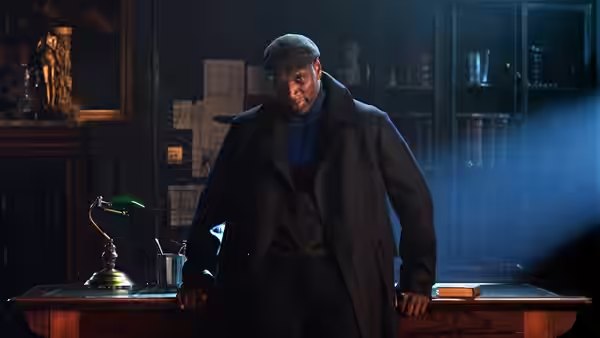
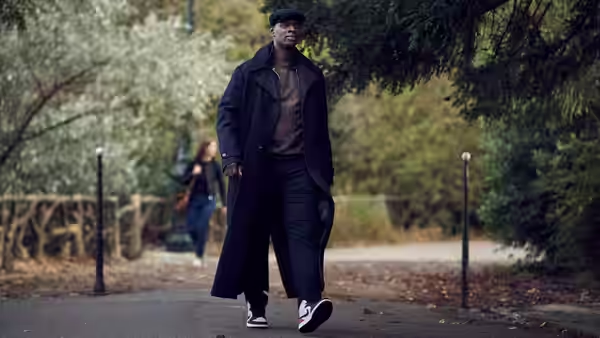
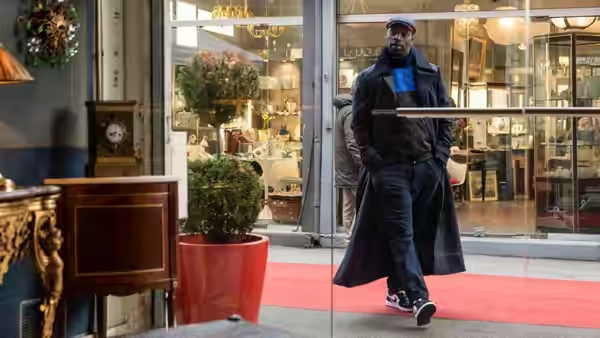
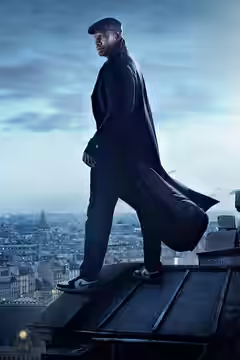
Sy is the reason to watch. He is tall and moves like a man who enjoys being looked at, and he plays Assane as someone who can switch being noticed off and on. The voices change, the walks change, the grin does not. When the series cuts back to the boy and his father, a book pushed across a table, Sy carries that too, and it moved us more than a heist show has a right to. The grown Assane is a grieving son doing magic tricks, and Sy lets you see both at once.
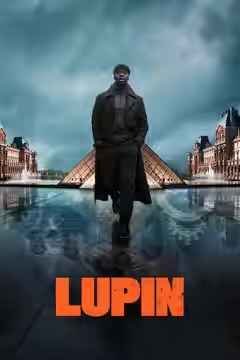
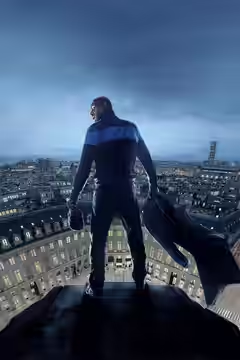
Three cinematographers, Antony Diaz, Martial Schmeltz and Christophe Nuyens, share the credit and settle on one look: Paris clean and expensive, the Louvre by night, the Seine with the lights on, and later the chalk cliffs at Étretat, where Leblanc lived. Mathieu Lamboley’s score is brisk, strings over a plucked bass that announce a trick is under way before the camera has shown you one. Six directors are credited, Louis Leterrier, Marcela Said and Xavier Gens among them, and the heists stay clear across all of them. We always know where the necklace is, which is more than most heist films manage.
The trouble is everything around the tricks. The police cannot find a thief that tall working in plain sight, and the series asks us to accept this more often than it earns. In the back half of the first ten episodes the twists arrive one an episode, a kidnapping, a double-cross, a new account of who betrayed whom, and each makes the scene before it count for less. By the eighth we were tired, and then annoyed that a show this nimble had chosen to be exhausting.
The third run, seven episodes first shown on 5 October 2023, goes further back into Assane’s family and slows down to do it. Sy is given heavier scenes and carries them. The reveals still come one an episode, but the people on screen have more to lose, so they land harder.
Leblanc’s stories are short, and this is not. Hustle and Ocean’s Eleven understood that a con is a pleasure of about forty minutes and nobody needs avenging at the end of it. Lupin wants the forty-minute pleasure and a twenty-five-year grievance and does not quite hold both. Most critics have been warmer than we are, and the gap is small: they forgive the plotting for Sy’s sake, and so do we, up to a point.
Watch it in French with the subtitles on. A dubbed version exists, and it takes away what Sy does with his voice, which is about half of what he does. Two episodes a night is right; the tricks are better than the twists, and in pairs you get more of the one than the other.