The fifth series of Man Like Mobeen earns its laughs, particularly through Mark Silcox’s Uncle Shady. Its tangled crime plot and some wearying adolescent jokes make this a qualified recommendation.
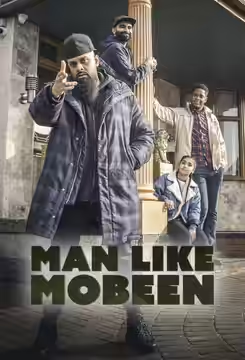
The fifth series of Man Like Mobeen is funny enough to earn an evening, although its crime plot is harder work than it needs to be. Creators Guz Khan and Andy Milligan put comedy and drama together with uneven results. The jokes keep the programme going when the storytelling becomes difficult to follow, which happens more often than it should. We recommend it for the comic performances, with some patience required whenever the business of explaining what is happening takes over.
Mark Silcox, as Uncle Shady, provides the clearest reason to stay. We laughed hardest at his deadpan delivery, which gives a line time to become ridiculous without pressing us to notice. The restraint is welcome in a programme whose crime plotting can get so busy. Silcox makes the humour seem unforced, and that matters when other jokes are so plainly working for their keep. There is pleasure in listening to a performer who does not appear anxious about whether we have understood that he is being funny.
The broader humour is less dependable. Some of the adolescent jokes become tiresome through repetition, and the discomfort they produce does not always seem worth the laugh being sought. A rude joke need not justify itself with a social purpose, but it does need to be funny. The writing sometimes persists after the joke has ceased to earn its space. These stretches are a real limit on our enthusiasm, particularly because Silcox demonstrates how much can be achieved without pushing so hard.
The crime story causes a different problem. Complication can be enjoyable when each new piece changes what we understand, but here it can become a matter of keeping up with events before we can care about them. That is particularly unhelpful when the comedy benefits from patience and an unhurried delivery. The programme makes those competing demands felt without consistently managing to satisfy them. A clearer account of events would let us pay more attention to the performances, rather than having to keep checking our understanding of the story.
The shape of the programme makes that overcomplication more noticeable. The first series has four episodes; the fifth has six, still a fairly compact space in which to balance jokes and crime drama. Brevity ought to help a comedy like this, keeping its less successful habits from wearing away its appeal. Yet additional plot does not automatically make a short series more satisfying, and here it can make the writing feel crowded. Guz Khan and Andy Milligan could afford to be more selective about which complications deserve the time.
Our reservation is about that unevenness, rather than the decision to give a comedy serious consequences. Crime and comedy can accommodate each other perfectly well, provided the story remains clear enough for the jokes to have room. Here, enjoying Uncle Shady requires no such effort, and Silcox supplies enough laughs to make the rougher stretches tolerable. Start with an appetite for deadpan humour and some tolerance for jokes that overstay their welcome. If tangled crime stories reliably spoil an evening, choose something else.