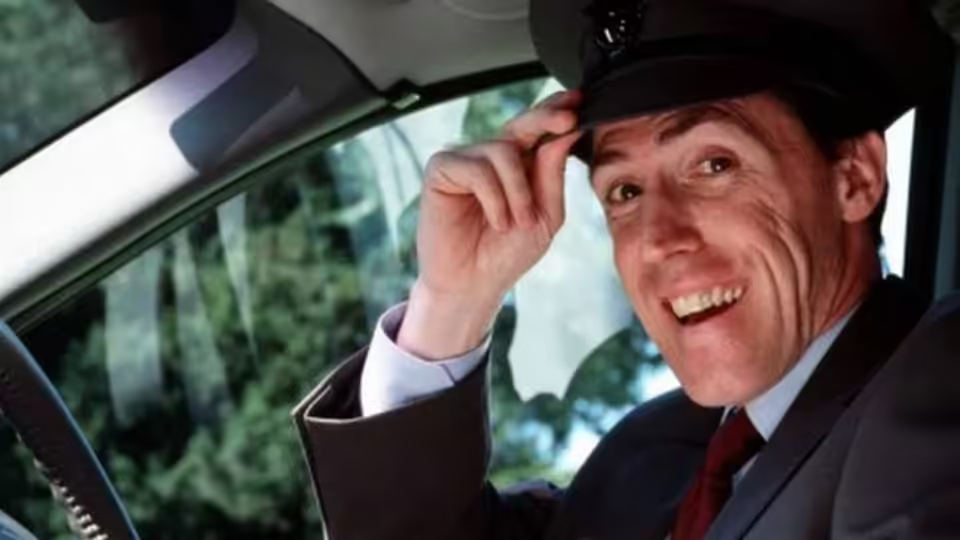
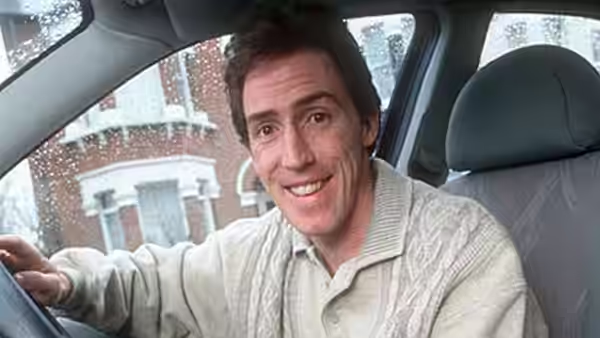
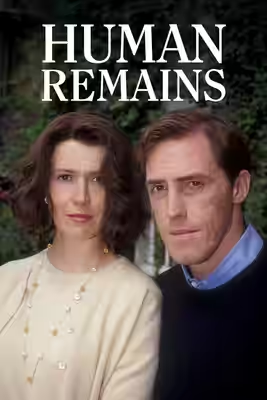
Rob Brydon and Hugo Blick put one man, one car and one camera on screen and make something funnier and sadder than most comedies manage with a full cast. The first series is close to perfect; the second stretches a short joke to half an hour.
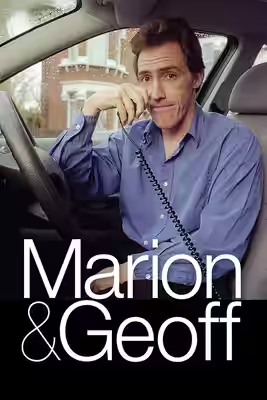
Rob Brydon and Hugo Blick have made a comedy in which a minicab driver talks to a camera on his dashboard and nothing else happens. Keith’s wife Marion has left him for Geoff, the two boys live with them, and Keith has decided, against all the evidence he keeps handing us, that this is going rather well. The first series arrived on 26 September 2000 in ten episodes; a second followed on 29 January 2003 in six. It is one of the saddest comedies made for British television, and it is very funny, and the two facts depend on each other.
Brydon’s performance is the whole programme and he knows it. He smiles into the lens the way a man smiles at a stranger he hopes will like him. He calls the boys “the little smashers” and reports, with pride, that Geoff is good with them. Every piece of good news he brings us is bad news, and he delivers it in the voice of a man who has just been told he has won something. He never once asks for pity, which is why we give it. There is a great deal of acting in not acting, and Brydon’s stillness in the driver’s seat, hands at ten and two, is as controlled as anything in the period.
Blick, who directs and produces as well as sharing the writing, keeps the camera in one place and the car interior lit by whatever is coming through the windscreen. Graham Hodson, the editor, has nothing to cut to, no reaction shot, no second face, so every cut is inside Keith’s own talk, and the pauses are left in. The writing works by instalment: each episode drops one small fact about the arrangement, and the next episode corrects it, and the correction is always worse. Keith does not notice. We do.
Here is the moment that got us. Keith explains who Geoff is, in the terms you would use for a neighbour who has lent you a ladder, and we laughed, because the phrasing is exact and the delivery is immaculate. Then it registered what he had just said, and we felt ashamed of ourselves, which we think is the intended effect. The series keeps doing this. It wins a laugh and then makes us look at the man we have laughed at, and by the end of the first series we were not laughing at Keith at all; we were worried about him, in the way you worry about a relative who keeps saying he is fine.
The second series is the weaker one, and the one review we have read agrees. The episodes run to half an hour, and Keith’s circumstances change in ways we will not describe. The cab was the point: a man going round in circles for money, narrating a life he is not living. Give him more room and more time and the joke, which was always a short one, starts to show its working. There are still fine stretches, and Brydon is never less than appealing, but we found ourselves checking how long was left, which we never did in the first series.
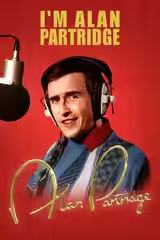
The obvious comparison is with Steve Coogan’s Alan Partridge, another man who thinks he is doing well and tells us so. Partridge is a monster and we are invited to enjoy him. Keith is not a monster, and the series will not let us enjoy him from a distance; it sits us in the passenger seat and makes us listen. That is the harder trick and Brydon and Blick pull it off.
Watch the first series first, and one episode at a time, which is how it was built to be taken. Do not binge it, because the sadness accumulates and the comedy does not. If you find yourself wanting to climb into the car and tell Keith the truth, that is the programme working.