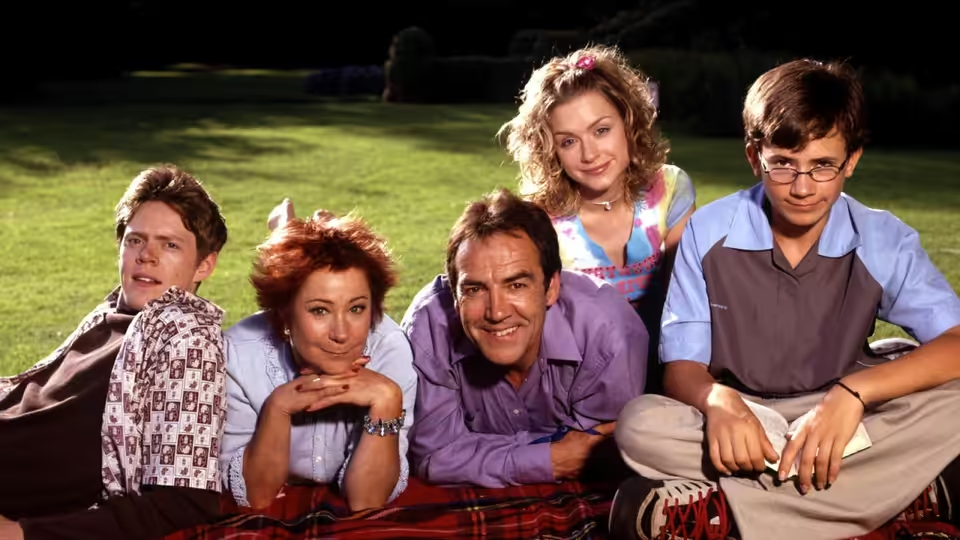
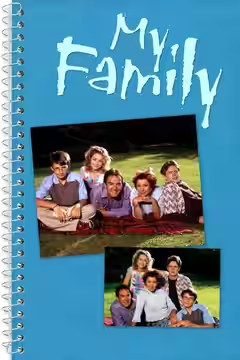
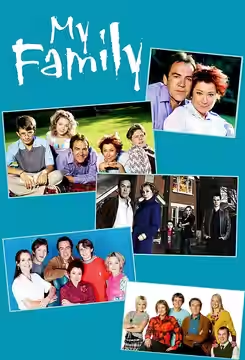
A broad, studio-bound family sitcom built on the American assembly line, lifted a long way above its scripts by Robert Lindsay and Zoë Wanamaker. We laughed more than we expected to and remembered almost none of it afterwards.
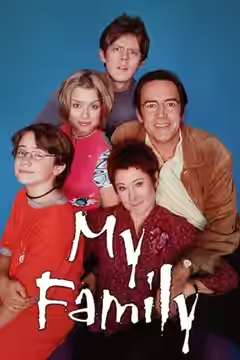
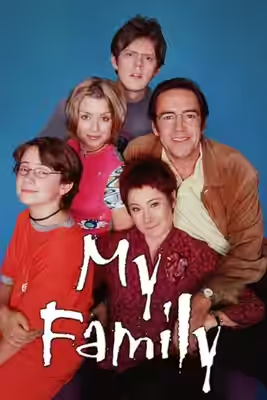
My Family is a British sitcom built the American way. Fred Barron created it, Geoffrey Perkins produced, and the writing credits, Andrew Kreisberg, Tom Leopold, Darin Henry and David Cantor among them, read like a room of writers passing a script along a table. Ben Harper (Robert Lindsay) is a dentist who would like his house to himself. Susan (Zoë Wanamaker) runs that house, and the three children, Nick (Kris Marshall), Janey (Daniela Denby-Ashe) and Michael (Gabriel Thomson), are there to make sure Ben never gets what he wants. That engine ran for eleven series and 110 episodes, from 19 September 2000 to a final run in 2011.
It is a mixed thing, and we will not pretend otherwise. The scripts are machine-made: a lie, a misunderstanding, a slammed door, a slow turn to camera. But the people saying the lines are better than the lines, and that is worth something at half past eight on a weeknight.
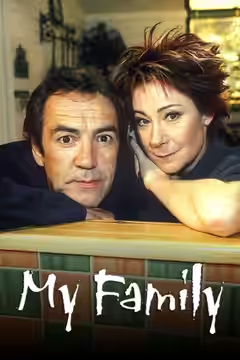
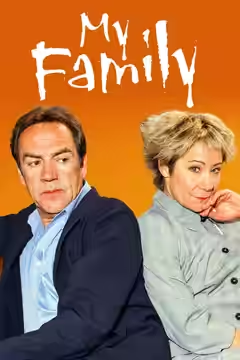
Lindsay plays Ben as a man forever one remark away from saying what he thinks, and the remark usually arrives. The best jokes are the face before it, the long stare at a child who has just asked for money. Wanamaker gives Susan a brisk, slightly mad competence, and the two of them argue in the shorthand of a couple who stopped listening to each other years ago and are perfectly happy about it. We laughed, properly and out loud, at Lindsay hearing out one of Nick’s business ideas with the expression of a man being told the time by a dog, and we felt no shame about it.
Marshall is the show’s one original note. Nick is the idiot son, and every scheme is introduced by walking through the front door and announcing it; Marshall plays him with a loose, grinning stupidity that never asks to be liked and is liked anyway. Denby-Ashe and Thomson get less. Janey wants things and Michael is cleverer than his father, and for long stretches that is all the writers give them. Later series bring in Abi Harper (Siobhan Hayes) and the small Kenzo (Tayler Marshall), and guests such as Jemma Redgrave as a therapist, and the household takes on new shapes without the jokes changing.
Jay Sandrich, Ed Bye and Baz Taylor direct, and there is not a great deal to direct. Three walls, a sofa, a kitchen, a staircase, a front door that opens on cue. The studio audience laughs loudly and on time, sometimes before the line has finished. This is where we tired. By the fourth episode in one sitting we knew the shape of every scene before it started, someone lies, someone finds out, Ben sighs, and we were bored while the audience was still roaring. The gap between their noise and our quiet is the show’s real problem.
The reviews so far have been savage. The one we have read scores it close to nothing and calls it out of step with modern television comedy, which is true and beside the point. By 2011 British sitcoms had mostly given up the audience and the sofa, and My Family had not, so it was being judged against things it was never trying to be. We think that is too hard. A studio sitcom should be judged on whether its leads can carry a weak script to the end of the half hour, and Lindsay and Wanamaker can, every time. The episode counts tell their own story, thirteen a series through the middle years and seven or nine by the end, and the thinning is felt in the later runs.
Put on one episode and you will laugh. Put on four and you will start counting the doors.