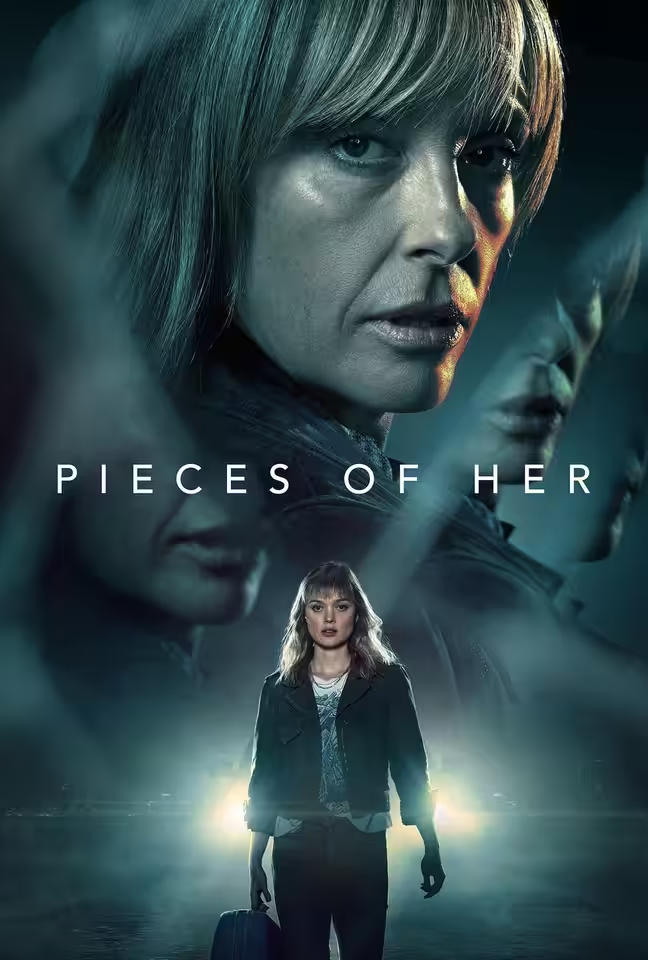
Toni Collette gives this overlong family thriller a reason to keep watching, but the flashbacks repeatedly drain its momentum. A strong opening promises more urgency, and more feeling, than the series can sustain.
PIECES OF HER gives Toni Collette a mystery to carry and then keeps finding reasons to put her aside. Created by Charlotte Stoudt from Karin Slaughter’s novel, this eight-episode series begins with enough urgency to suggest that the telling will be brisk. It is a mixed thriller: an arresting opening, a performance worth watching and too much time spent waiting for the next useful piece of information. We can see the appeal of the complications, but they do not justify the length.
Director Minkie Spiro makes the opening action feel immediate and dangerous. We were gripped by its violence, and disappointed when the subsequent explanations failed to sustain that tension. Spiro gives the drama credible surroundings before asking us to accept its complications. That helps a mystery: we need to believe that these people have lives beyond the information they are keeping from one another.
Collette’s Laura Oliver remains the main reason to continue. She gives the character enough emotional weight to keep us interested through some circuitous storytelling. Opposite her, Bella Heathcote’s Andy Oliver has less help from the writing, which needs the mother-daughter relationship to matter without spending enough time developing it. We wanted more scenes of these women simply dealing with one another, before another revelation arrived to redirect their attention.
Cinematographer Ole Birkeland and production designer Steven Jones contribute to the credible surroundings that make the action effective. Their work serves the thriller without giving the quieter stretches much interest of their own. The music, credited to Danny Bensi, Saunder Jurriaans and Chase Deso, maintains unease efficiently enough, though it becomes harder to respond as the pace slackens. Those passages need more sharply written exchanges between the characters, rather than further encouragement to anticipate trouble.
The flashbacks are where Stoudt’s series becomes most wearing. Going into the past can give a thriller fresh urgency, but these passages too often interrupt what has already begun to interest us. They also mean less time with Collette, an unfortunate choice when she is doing so much to hold our attention. As the explanations accumulate, the pace slackens and the family drama gets no richer. Eight episodes start to feel like a requirement the story has been asked to meet.
Some of the turns still land, and it would be unfair to pretend that nothing here gives the patient viewer a jolt. Spiro can make a sudden change of direction register, and Collette gives the surrounding material more conviction than it earns on the page. Yet a family mystery needs discoveries to change how we feel about the people involved. Too often, we are merely being told something else about them, followed by another stretch of explanation.
The familiar promise of this kind of thriller is that knowing a family more closely will make it more unsettling. There are glimpses of that programme here, particularly whenever Collette can take charge of a scene, but not enough to sustain the length. We would not recommend committing to it for the twists alone. If Collette is the attraction, be prepared to wait while the series attends to other business.