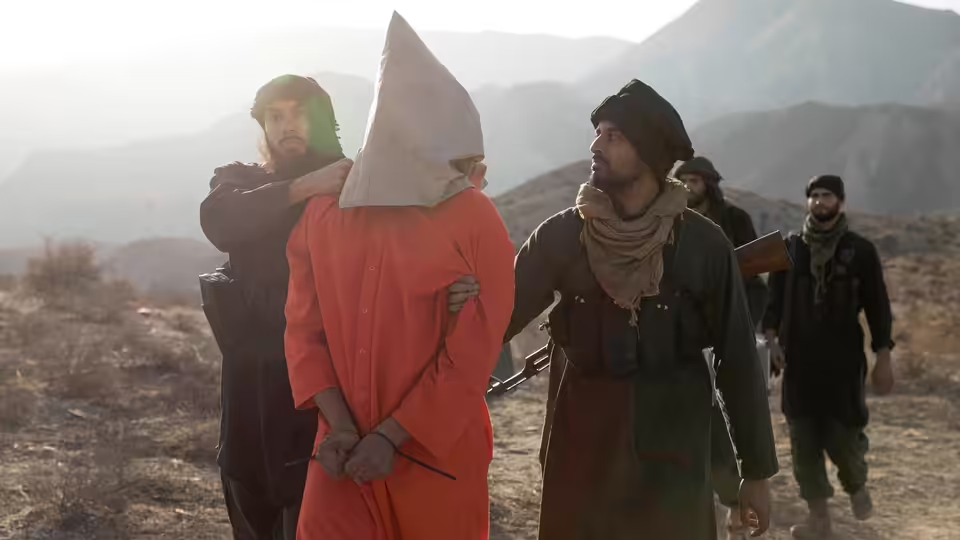
Ony Uhiara gives Peter Kosminsky’s four-part drama its strongest reason to watch. But the British protagonists’ allegiance to Isis remains too poorly explained for the series to fulfil its ambitions.
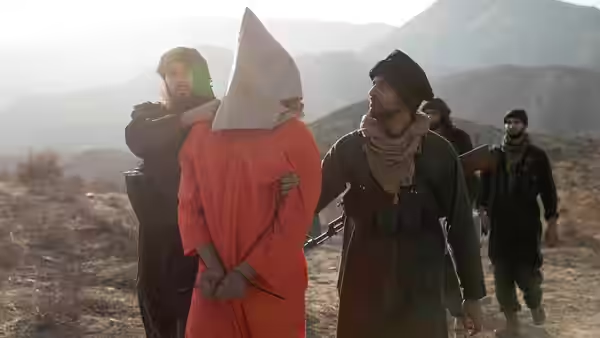
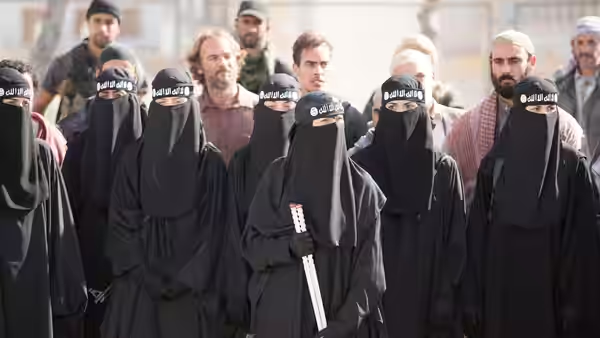
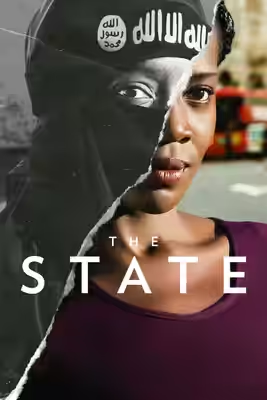
Peter Kosminsky writes and directs The State, a four-part drama about British recruits to Isis. It is compelling in stretches and well served by its cast, but the characters’ decision to join remains too poorly explained for us to recommend it. A drama on this subject needs to make that choice believable, however appalling we find it. Without that, each recruit starts with a question hanging over them that the subsequent disillusionment cannot answer.
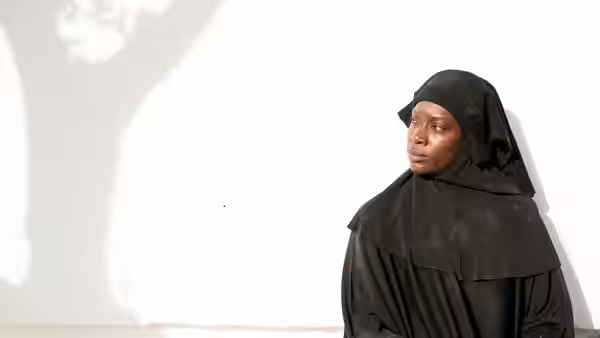
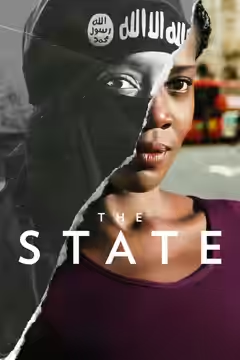
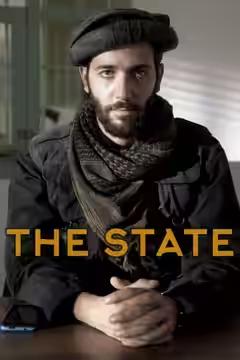
Ony Uhiara’s Shakira is the strongest reason to persist. Her performance makes the character’s disillusionment convincing, and keeps her worth attending to when the story becomes predictable. Ryan McKen plays Ziyad and Shavani Seth plays Ushna, among a cast capable of sustaining a richer account of these lives. We keep wanting more room for the people they play to be particular, rather than carry the burden of explaining an organisation.
We were frustrated by how little sense we had of what had persuaded the recruits to join Isis. This is not a demand for a speech explaining each character, or for one tidy cause that makes extremism comprehensible. It is a need to believe that these particular people could have taken this particular step. The series asks us to follow their changing responses while leaving that first decision unconvincing. There is enough time here to make their reasons clearer.
The series has Gavin Finney behind the camera and David Blackmore at the editing desk, with music by Debbie Wiseman and production design by Pat Campbell. Yet the question that kept distracting us was a writing question: why these people, and why this choice? The problem is not one that a different shot, a tighter cut or a more forceful musical cue would solve. Peter Kosminsky has not given the cast enough to make that first commitment believable.
The more convincing material concerns disillusionment, and here Peter Kosminsky allows the recruits more complexity. Being able to recognise what is wrong with an organisation does not make someone simple or innocent, and the drama benefits from taking their responses seriously. The difficulty is how often we can anticipate where the writing is taking them. We can be interested in what the series tells us about Isis and still feel that its characters have been given too little freedom to surprise us.
Political drama need not answer every question it raises, but it does have to persuade us that its people are more than examples. This series offers information and some thoughtful acting, yet too often feels as though it has decided what we should learn before deciding who we are watching. The subject warrants the attention, and the cast warrant better writing. Watch for Ony Uhiara if the subject already interests you; do not expect the series to explain convincingly how its recruits arrived here.