Chase Infiniti and Lucy Halliday give the return to Gilead two faces worth following, and Ann Dowd is as unsettling as ever. But ten episodes is too many for this story, and a good deal of the world-building we have seen before.
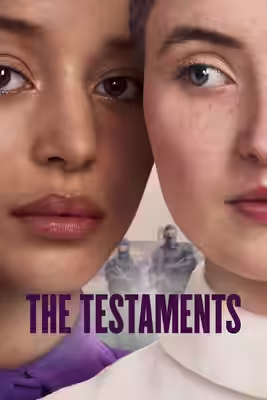
Margaret Atwood published The Testaments in 2019 as a sequel to The Handmaid’s Tale, and Bruce Miller, who ran the television version of that novel, has now adapted this one with Stuti Malhotra and a large room of writers. The story moves on a generation. Ann Dowd is back as Aunt Lydia, and also produces; nearly everyone else is new. Ten episodes arrived on 8 April 2026. It is good, and it is at least three episodes too long, and both of those things are plain from about the halfway mark.
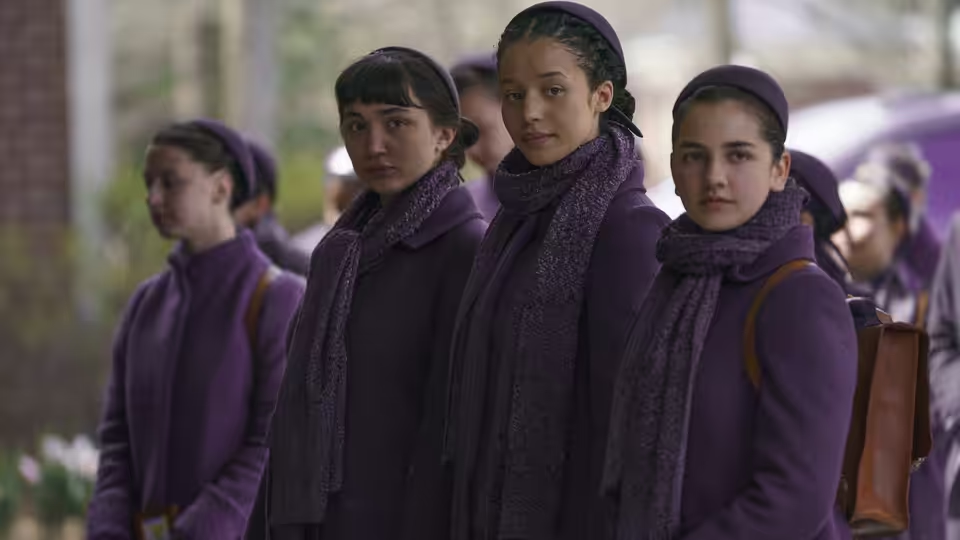
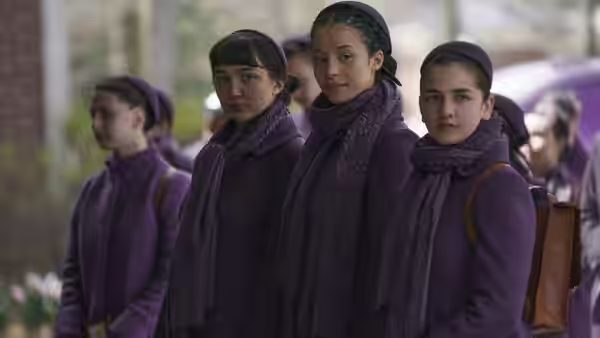
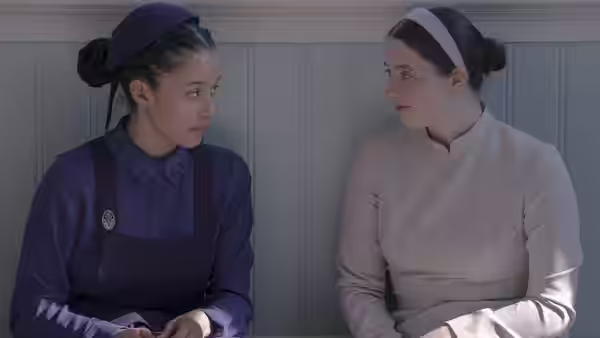
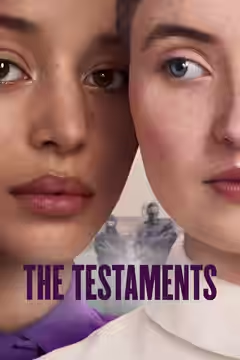
Agnes MacKenzie (Chase Infiniti) is a Commander’s daughter, raised inside Gilead with no memory of anything else, and now old enough that the adults have begun to talk about husbands. Her stepmother Paula (Amy Seimetz) wants her placed quickly. Her friends Becka (Mattea Conforti) and Shunammite (Rowan Blanchard) face the same arithmetic. Their schooling, such as it is, comes from the Aunts: Lydia, Vidala (Mabel Li), Estee (Eva Foote). Across the border, a girl called Daisy (Lucy Halliday) is growing up outside Gilead with parents who are careful about what they tell her. The two strands run apart for a while, and the series is patient about bringing them together.
Infiniti is the reason to watch. Agnes has been taught to hold her face still and lower her eyes, and Infiniti plays the stillness as effort rather than emptiness: you can see a question forming behind the trained expression and being put away. Halliday, given the louder part, matches her with a sulk that turns into something braver. Conforti’s Becka, the frightened one, moved us more than we expected. There is a scene early on in which the girls are shown what their married lives will look like, and Becka simply cannot make her body do the polite thing the others manage. We felt sick for her, and we understood then why the series wanted to be about girls rather than women.
Dowd has been playing Lydia since 2017 and knows exactly how much to give. Here she is written with a past the earlier programme only hinted at, and Dowd lets a little of it leak through, mostly in how she watches the girls when they think nobody is watching them. Nobody is asking us to forgive her. She is working out what she can afford.
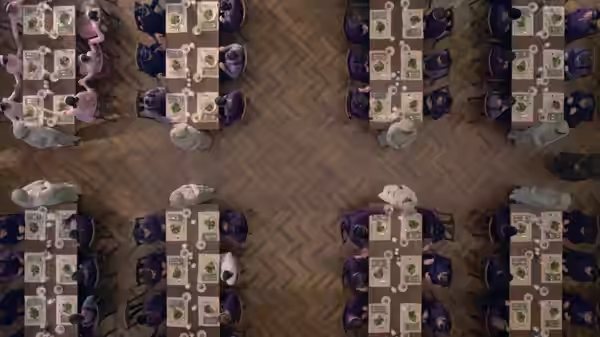
Greta Zozula and Marc Laliberté shoot the school in cold, even daylight, so the Aunts’ brown and the girls’ pale dresses sit against bare walls with nothing to pull the eye from faces. It is handsome. It is also a look we know from the previous programme, and by the third episode we had stopped noticing it, which is not what a look is for. Adam Taylor’s score does better: he keeps the music under the girls’ scenes and mostly out of the Aunts’, and the silence in Lydia’s office is doing real work. The directors, Mike Barker, Jet Wilkinson, Quyen Tran and Shana Stein, hold the style steady, and the editors, Ana Yavari, Wendy Hallam Martin and Lara Johnston, cut cleanly within scenes. Between episodes, the seams show.
The trouble is length. Atwood’s novel is brisk, and this is ten episodes. The middle stretch keeps pausing to show us how Gilead works, its ceremonies and ranks and colour codes, and we knew all of it already because we sat through the other show learning it. We were bored during one of these tours, and then annoyed at being bored, because the girls were waiting offscreen with a plot we wanted to get back to. Every time the series remembers it is about Agnes, Daisy and Becka, it picks up. Every time it remembers it is a franchise, it stops.
Set against its parent, it is gentler and less gory, closer to a school story with the lights turned down, and we do not hold that against it. It is a 15 and it earns the certificate without wallowing. What it has not found is a reason to be this long. Most critics have been kinder than we are, and the ones who liked it most liked the girls, which we understand.
Watch the first two episodes together. If Agnes and Daisy have you, stay, and forgive the middle. If the uniforms and the ceremonies are what you came back for, you have seen them done with more force before.