An erotic romance with attractive sex scenes, awkward performances and no convincing reason to believe in its central relationship. We cannot recommend a film that treats kidnapping as sufficient preparation for love.
365 Days is a poor erotic romance because it cannot make the attraction convincing, even when it makes the sex look attractive. Barbara Białowąs and Tomasz Mandes direct a story built around kidnapping and captivity, then ask us to accept those circumstances as an invitation to fall in love. The screenplay by Tomasz Klimala, adapted from the novel by Blanka Lipińska, gives the relationship far less care than it needs. The film takes its central proposition seriously without giving us much reason to.
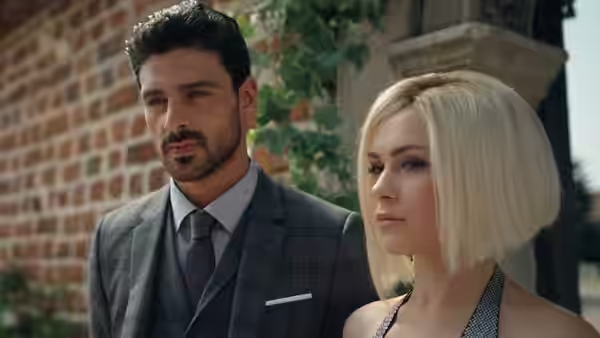
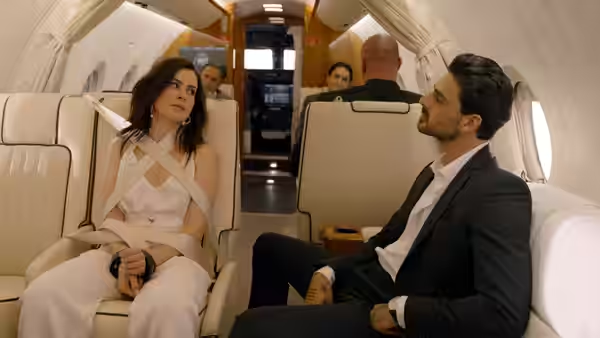
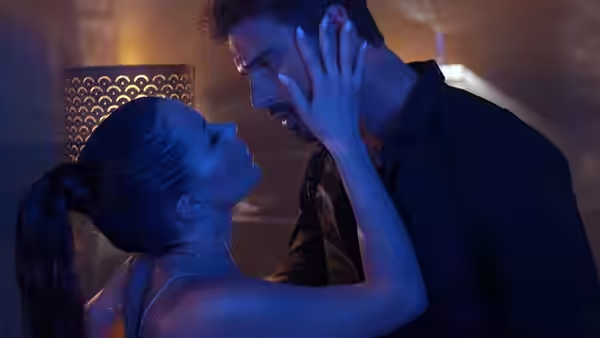
Anna-Maria Sieklucka plays Laura Biel, with Michele Morrone as Don Massimo Torricelli, the man whose pursuit involves holding her captive. Erotic fantasy can accommodate disturbing desires; nobody needs these characters to be sensible or morally instructive. Such fantasies can be troubling, funny or revealing about the people who entertain them. Here, the promise of attraction is supposed to settle our objections to the kidnapping. We felt queasy at that invitation, because the film keeps asking us to find coercion romantic.
The performances make the persuasion harder. Anna-Maria Sieklucka and Michele Morrone struggle with lines that need to carry both desire and the strain of this arrangement, and the delivery too often sounds merely awkward. We laughed at some of those readings, then found the film’s solemnity exhausting. Accidental comedy offers a little relief, but neither actor is given enough convincing behaviour to make the relationship matter between the sexual encounters.
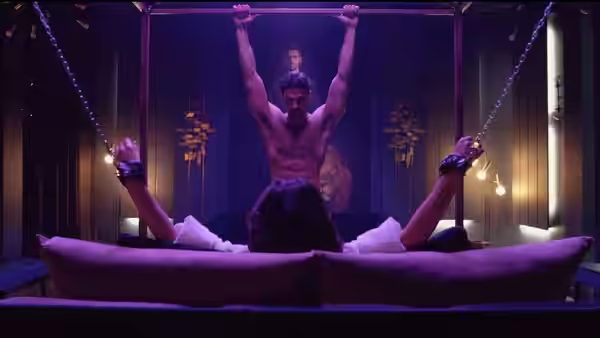
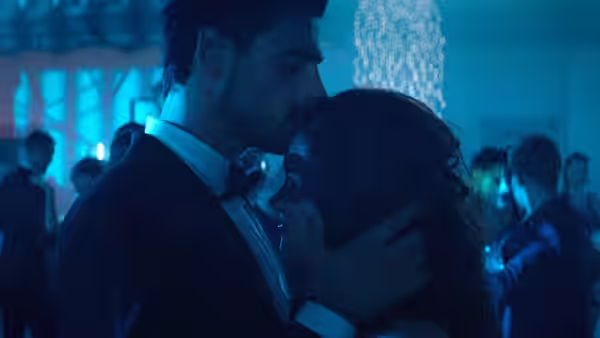
Bartek Cierlica’s cinematography provides the clearest virtue: the sexual encounters can be attractive to look at. There is enough visual appeal to explain why someone might stay with the film despite the dialogue. Agnieszka Bartold’s production design also serves the seduction, though the effort to make captivity inviting receives little scrutiny from the film itself. The care taken over appearances makes the thinness of the characters harder to overlook.
Marcin Drewnowski’s editing does little to make the relationship develop convincingly over 114 minutes. A succession of sexual encounters still needs some change in what the participants understand about each other if it is to sustain a drama. The music credited to Mateusz Sarapata and Michał Sarapata encourages the romance without helping us believe in it. These attempts to supply feeling become tiring when the characters have given us so little reason to care.
For an erotic drama, this is a basic failure. A look, a hesitation or a conversation can be worth watching for what it tells us about an attraction. This film offers little beyond the coercive situation and the promise of sex, then treats that combination as sufficient to keep us involved. Even viewers content to accept its fantasy are left with poor dialogue and a relationship that cannot support the running time.
The hostile reviews are justified, although the photography deserves the small allowance made for it. That allowance does not extend to the writing, which rarely gives the actors something credible to say or a persuasive reason to say it. Accepting the premise still leaves a great deal of dull drama to sit through. For an evening of erotic romance, choose something that gives its actors more to do than try to make captivity look desirable.