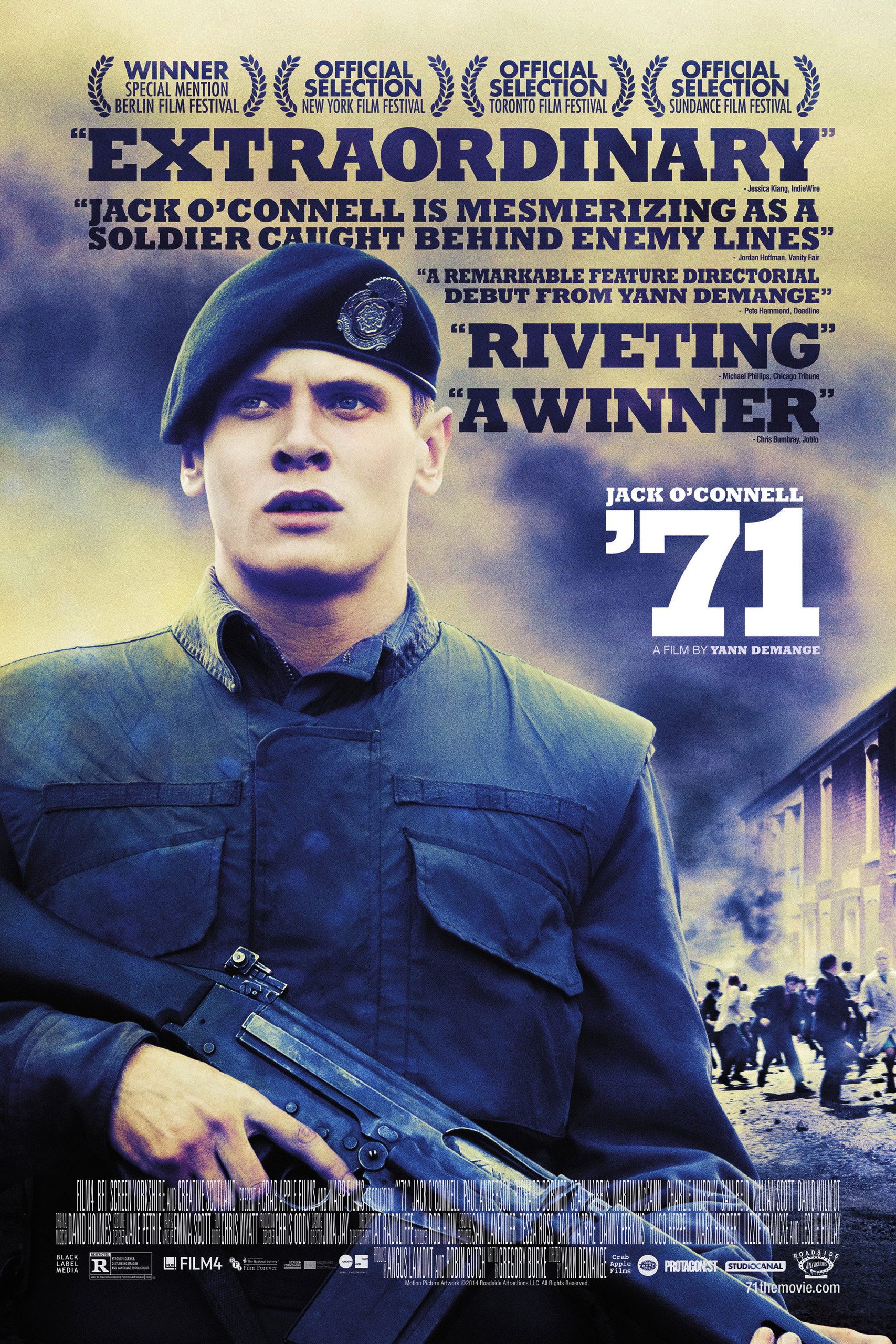
Yann Demange makes a gripping Belfast survival thriller, with Jack O’Connell giving its violence a frightened human centre. The plotting grows too convenient, but the action is clear, punishing and worth the strain.
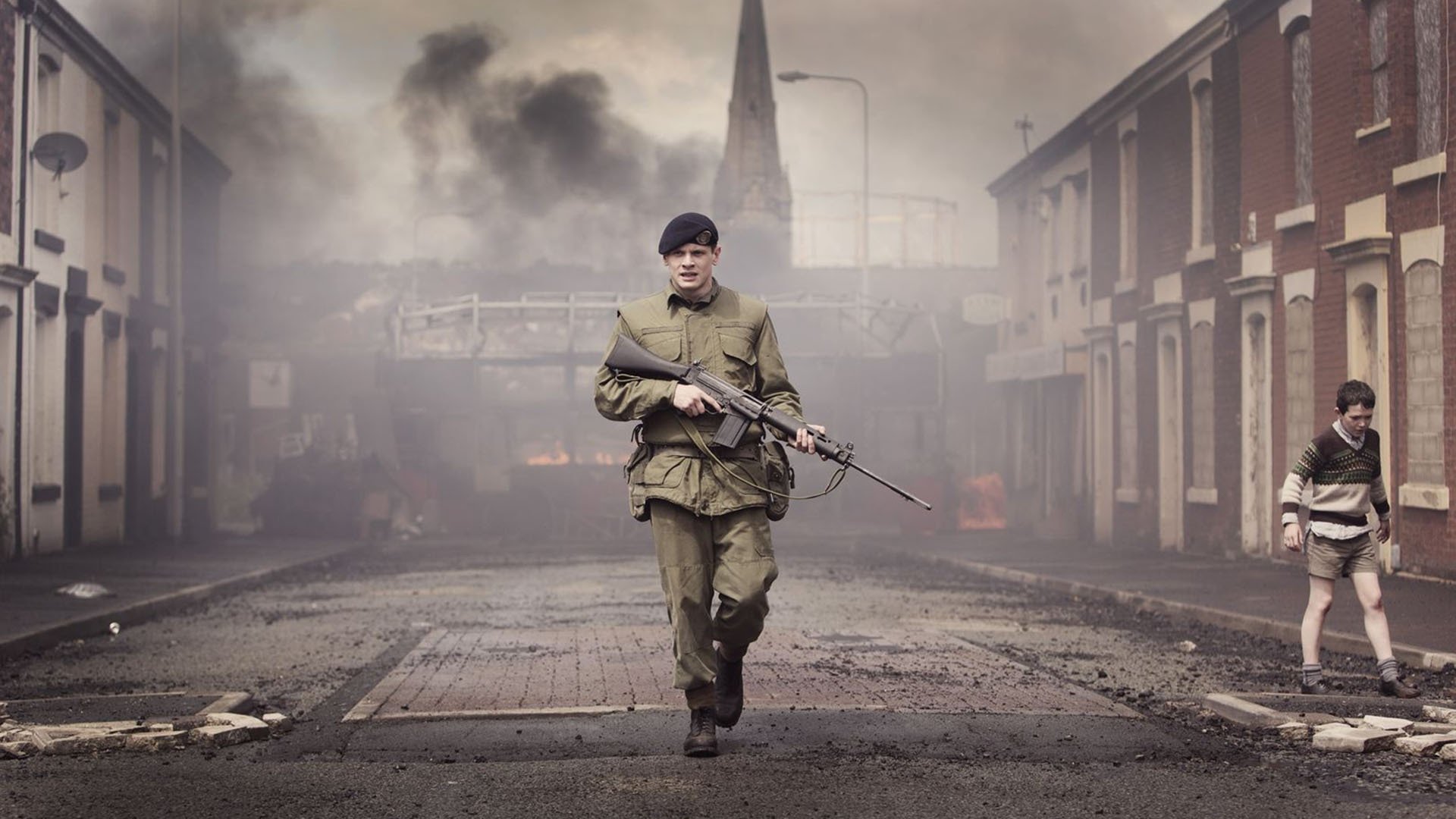
’71 takes a young soldier’s immediate problem seriously: he has lost his unit in Belfast and needs to get back alive. Yann Demange makes an absorbing survival thriller from that predicament, despite some forced plotting in Gregory Burke’s script. At 99 minutes, the film has enough time to make Hook’s fear matter without letting the chase slacken. Its interest in the Troubles begins with what a novice soldier cannot understand while trying to stay alive.
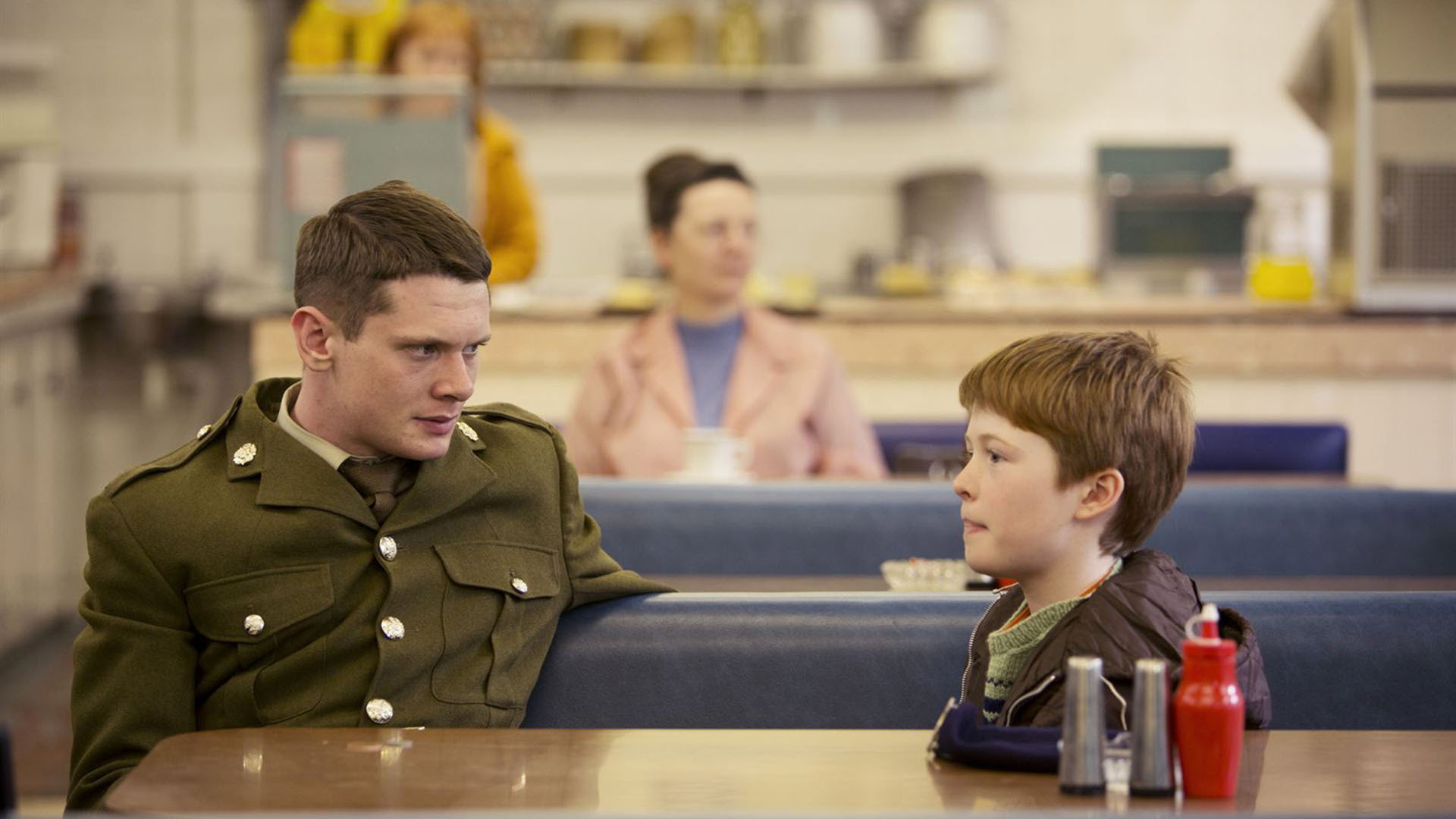
Jack O’Connell gives Gary Hook the physical presence an action lead needs, then refuses to make that presence reassuring. He seems young enough to expect somebody else to know what to do, and frightened enough to realise that nobody may. The performance makes bewilderment legible without turning Hook into a helpless spectator. That uncertainty keeps us close to him through stretches when explanation would only get in the way.
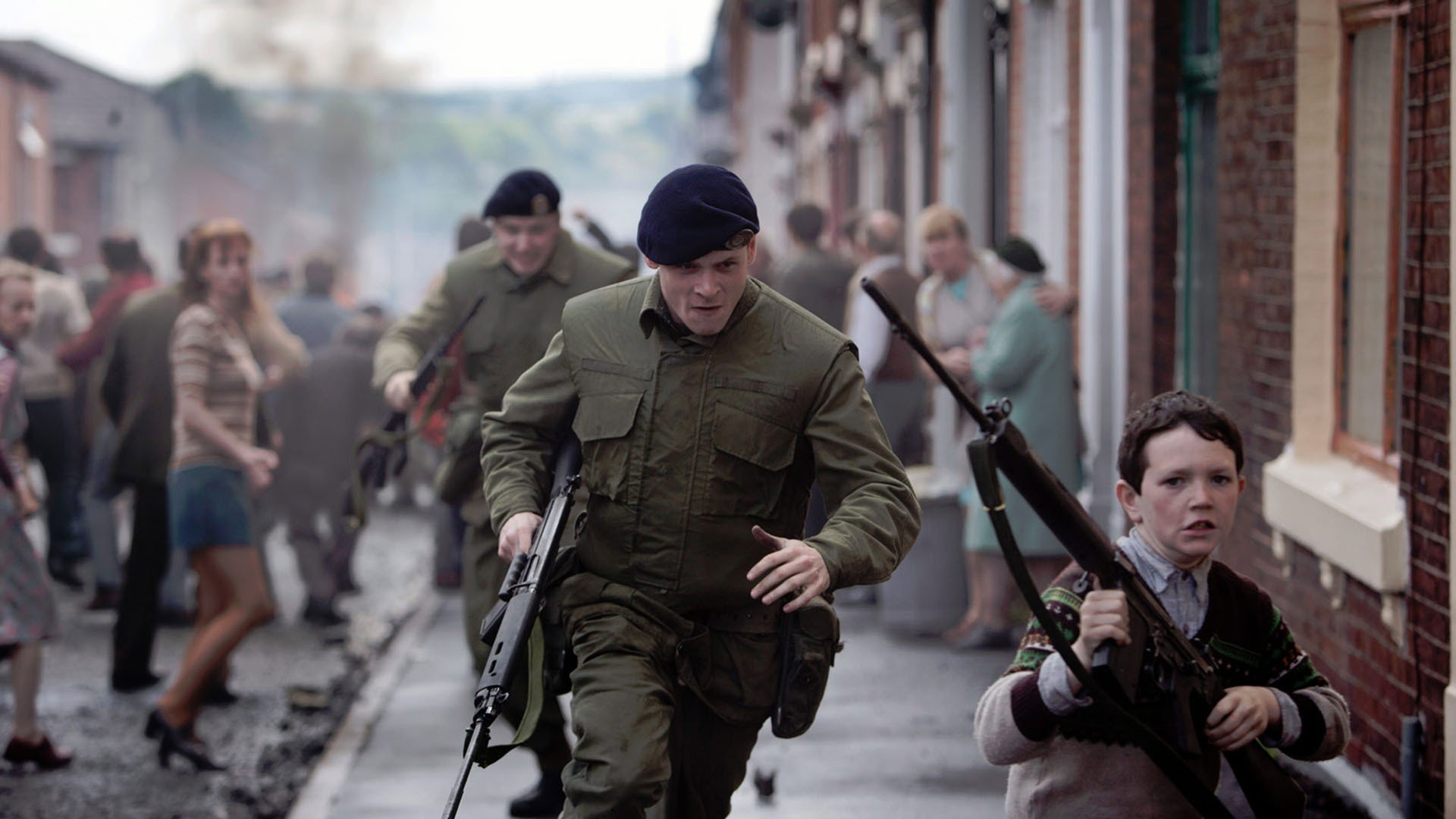
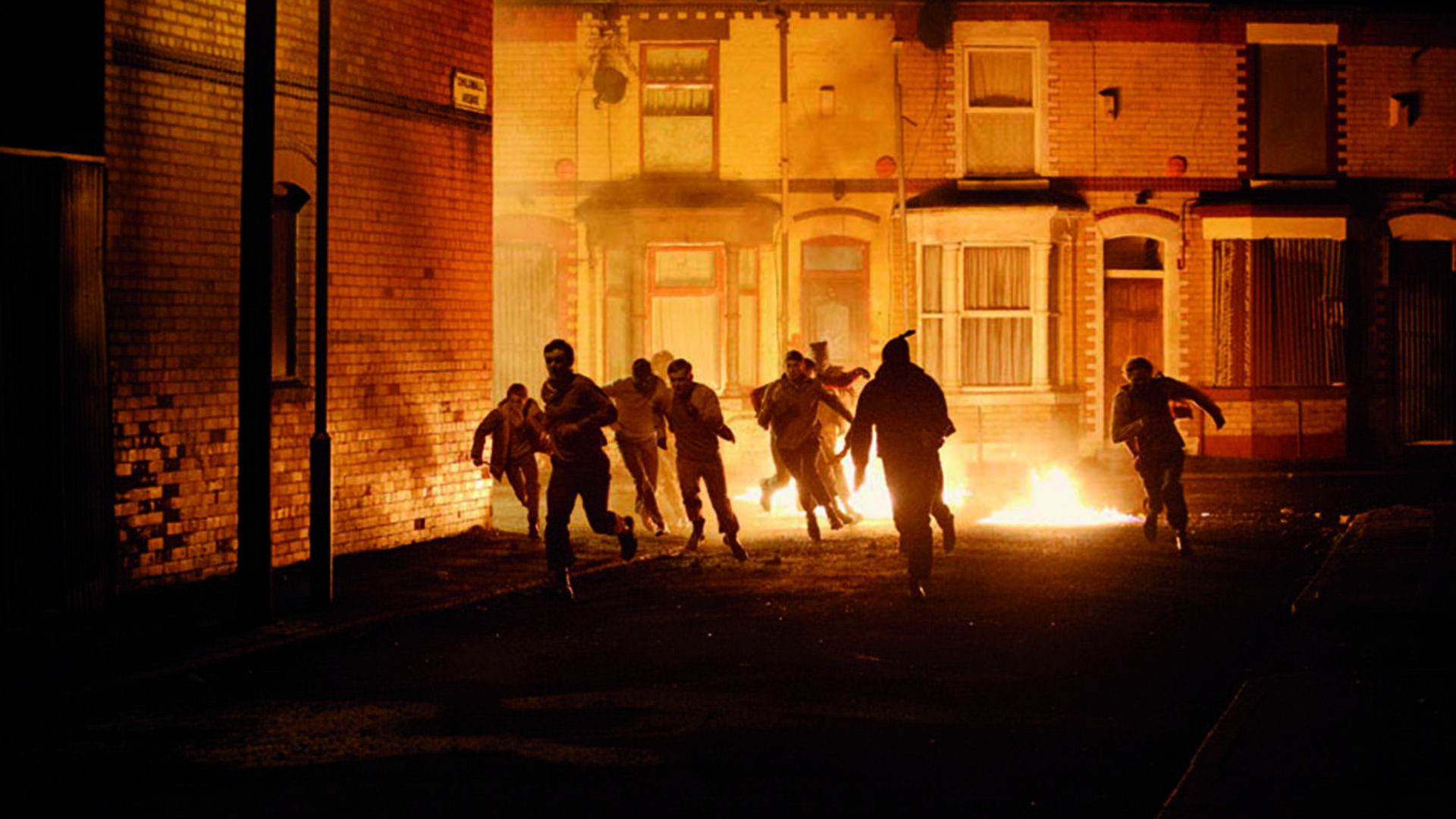
The riot is the clearest demonstration of how carefully the action has been organised. We were frightened for Hook, because the movement of the crowd makes losing the other soldiers seem horribly easy. Tat Radcliffe’s handheld photography puts us inside the disorder without making every movement equally unreadable. Chris Wyatt’s editing gives the pursuit an urgent pace while preserving enough sense of where bodies are for danger to register. The sequence needs us to understand how quickly a military operation can come apart, and the camera and cutting make that collapse convincing.
Chris Oddy’s production design does useful work in the recreation of the Falls Road, giving the pursuit a specific place and period. The streets feel inhabited even when our attention is fixed on the next possible threat. David Holmes supplies a pulsing score that sustains the pressure without making Hook’s predicament sound heroic. Between the music and the street setting, the film can become almost nightmarish without entirely abandoning the feel of a recognisable city.
The military men around Hook are well served by Sam Reid as Lt. Armitage and Sean Harris as Captain Sandy Browning. Both performances suggest that rank offers a poor guide to how much someone understands or how safely they can be trusted. Gregory Burke also makes room for divided loyalties and competing interests, so the danger cannot simply be sorted into two opposing camps. There is enough here to complicate a chase thriller, although the film leaves much of the conflict unexplored.
The difficulty comes when those competing interests require more plotting than the film can comfortably support. Some of the undercover strands feel arranged to demonstrate cynicism, and we become aware of the writer moving people into position. We need not describe where they lead to say that the pursuit is more convincing before these complications accumulate. This is a limited but noticeable weakness in a film whose physical dangers usually need so little explanation.
Within the stranded-soldier thriller, the achievement is how firmly the film keeps vulnerability in view. It delivers the speed and suspense the form promises without treating Hook’s predicament as a chance for him to prove himself. We keep watching because we want this frightened young man to get out of danger. Give it your full attention; keeping track of who wants what requires more effort than following the chases.