Alfonso Cuarón’s first American film turns Frances Hodgson Burnett’s boarding-school story into something green, gold and unhurried, with a child lead who never begs for our sympathy. The villain is cardboard and the last act leans on luck, but it is a lovely thing.
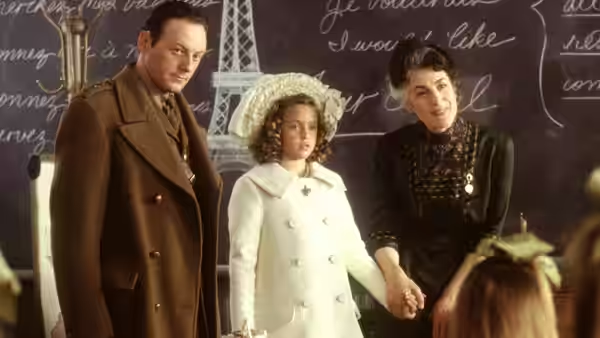
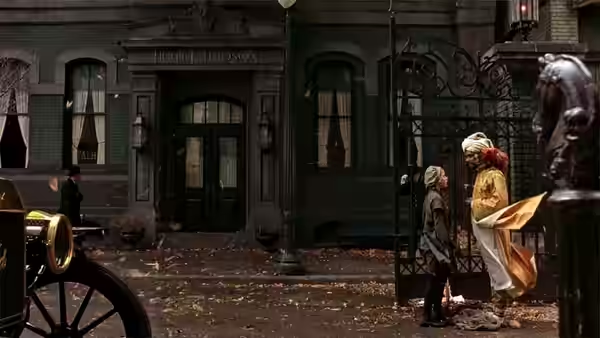
Frances Hodgson Burnett’s novel puts Sara Crewe in a London boarding school in the last years of the Victorian age. Elizabeth Chandler and Richard LaGravenese’s screenplay moves her to New York and brings the calendar forward to the First World War, so that Captain Crewe (Liam Cunningham) leaves his daughter for the trenches. It is the right change. It gives the film a war on the far side of the ocean that nobody at the school will discuss, and it gives Alfonso Cuarón, directing his first American film, a reason to make Miss Minchin’s Seminary for Girls look like a house where somebody has turned the lights down on purpose. This is a fine children’s film, and one of the few we would put on for a room with no children in it.
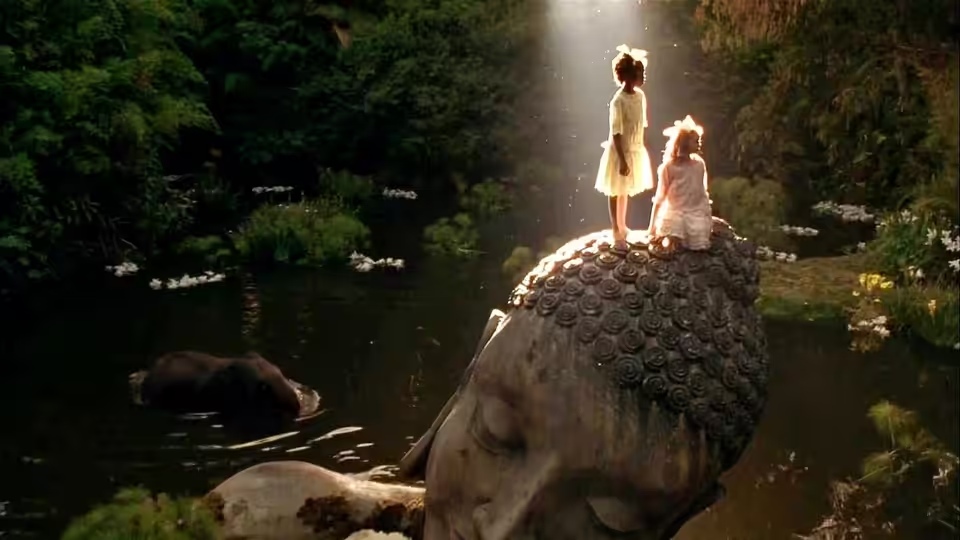
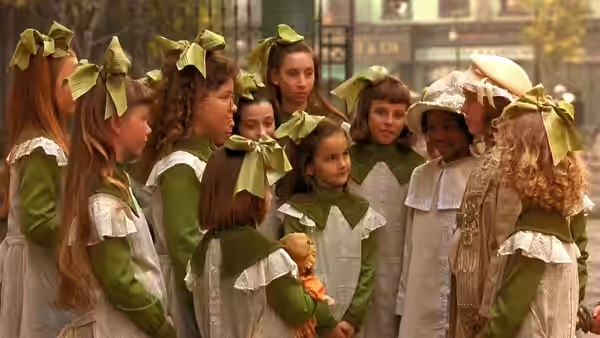
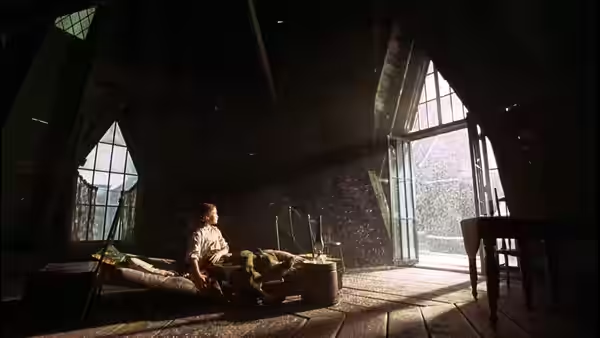
Bo Welch built the seminary as one tall, narrow house, and Emmanuel Lubezki lights it green from the skirting boards to the ceiling: green walls, green stair carpet, green daylight through the tall windows. The India Sara has left behind is gold and dust, and the stories she tells the other girls after lights-out are staged in full, with Cunningham doubling as Prince Rama in a painted forest and a demon with a great many heads waiting at the end of it. Judianna Makovsky puts Sara in cream and pale yellow, so that for her first week she looks as though she has walked in from a different film. Patrick Doyle’s score is choir and strings and does not apologise for either.
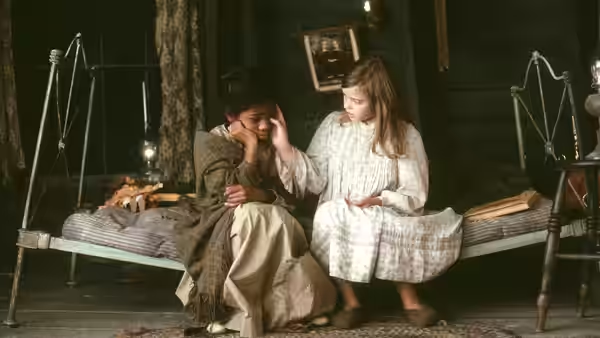
The scene that got us is a small one. Sara and Becky (Vanessa Lee Chester), the servant girl who sleeps in the next attic, wake to snow coming in through the skylight. Sara treats it as a visit rather than a leak, and Steven Weisberg holds on Chester’s face while she decides whether to believe her. It moved us more than we expected two children in a cold room to manage, and we think it is because the film has been so patient about the cold. We have watched Sara scrub floors and eat dry bread up there for long enough that a handful of snow feels like a present. What happens in that room a night or two later is the film’s best-known sequence, and we will not describe it.
Liesel Pritzker Simmons was not a practised child actress when this was made, and it helps. She says the lines plainly, does not widen her eyes, and when Sara tells Miss Minchin to her face that every girl is a princess it comes out as a statement of fact rather than a speech. Eleanor Bron plays Minchin with a straight back and a jaw held so tight you could crack a nut on it. Rusty Schwimmer, as her sister Amelia, is the soft one, forever caught between a scolding and a biscuit. Vincent Schiavelli turns up as Mr. Barrow, the man with the papers, and looks, as he generally did, as if he has come to measure the house for a coffin.
The flaws are in the writing. Minchin is a villain with no second thought in her; Bron is allowed one moment of self-pity late on and the film hurries her past it. The last third runs on coincidence, and the house next door turns out to be conveniently arranged. The Ramayana interludes are the best things here and there are not enough of them; they stop once the plot gets busy, as though nobody quite trusted a young audience to sit through a fourth. And the war, having been brought in to raise the stakes, is put away again the moment it has done its job.
Cuarón and Lubezki went on to make Children of Men together, and anyone who has seen that will recognise the way the camera here follows a child down a corridor and through a door without a cut. Family films of this period tended to be loud. This one is willing to be quiet, and the quiet is where both the fright and the comfort come from.
It runs 97 minutes and carries a U certificate, and it opened in British cinemas on 9 February 1996. Watch it with a child old enough to be frightened by an attic and young enough to want a story to fix it.