Kenneth Branagh’s Shakespeare goes home to Stratford to grieve, dig a garden and be told off by his family. Judi Dench and one firelit scene with Ian McKellen are worth the evening; Ben Elton’s script keeps explaining what the actors have already shown us.
Kenneth Branagh directs and plays William Shakespeare in a 101-minute film written by Ben Elton about the three years after the playwright stopped writing. The idea is a fair one. Here is a man who put more grief on a stage than anyone before or since, and who has never once sat with his own. The Globe burns, he goes home to Stratford, and the house he paid for is full of people who have managed without him. We will say plainly what we thought: there are two or three scenes here that justify the price of a ticket, and between them a great deal of talking about feelings that the actors had already made perfectly clear.
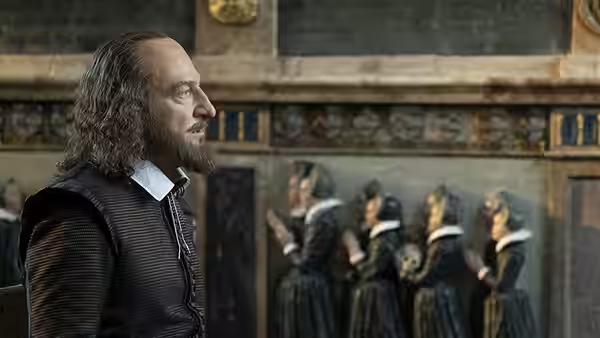
The first problem is the nose. Branagh has given himself a prosthetic beak and a receding hairline modelled, we assume, on the famous engraving, and for the first twenty minutes we were looking at the make-up rather than the man. That settles, eventually. Underneath it he plays Shakespeare as a soft-spoken, hesitant figure, apologising his way around his own kitchen, and it is a decent choice. The trouble is that Elton keeps handing him lines that announce what he is feeling, so that a face that has just told us he is ashamed is followed by a speech saying so.
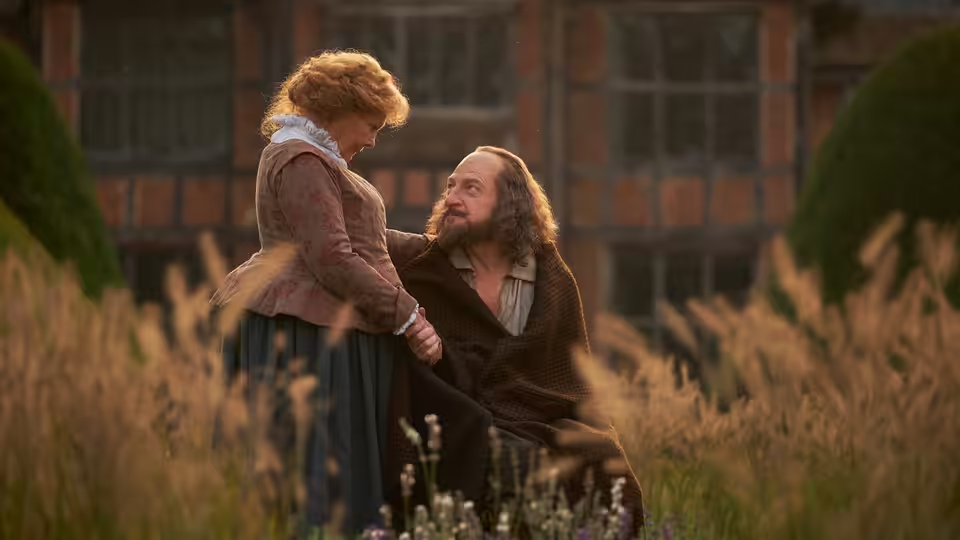
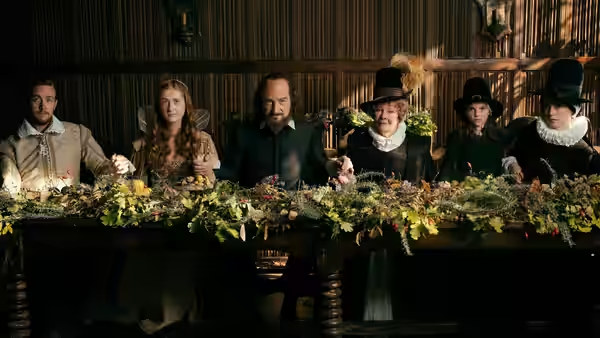
Judi Dench is the reason the domestic half of the film holds. Her Anne cannot read a word her husband wrote, and she has not forgiven him for being famous somewhere else. Dench plays her flat, patient and watchful, and when she shows him to the guest bed she does it as a woman settling an account rather than making a point. Kathryn Wilder’s Judith is the other live wire, angry with her father and unable to stop looking at him. Lydia Wilson has less to do as Susanna, and Hadley Fraser’s John Hall is written as a Puritan scold and played as one.
Then Ian McKellen arrives, and for ten minutes the film is what it wanted to be. Southampton sits by the fire with the man who once wrote him love poems, and the two of them speak a sonnet to each other, first as courtesy, then as something else. Zac Nicholson keeps the camera still and lets the candles do the work, so that two old faces hang in the dark. Patrick Doyle’s score stops. It moved us more than we expected, and the reason is simple: for once nobody is explaining anything, and two actors who have spent their lives inside this verse are allowed to show us what it does to them.
The rest of the craft is sober and handsome. Nicholson shoots the interiors by candlelight and the exteriors in flat grey Warwickshire weather, and James Merifield’s house is all low beams and dark wood, a place where sound carries. Michael O’Connor dresses everyone in black wool and keeps the collars plain. Úna Ní Dhonghaíle cuts at the pace of a man walking to his garden, which is right for the mood and hard on the middle hour. Doyle’s strings, so well held back by the fire, elsewhere lean on scenes that did not need leaning on.
The middle hour is where we drifted. Elton has strung together the documented incidents of the Stratford years, Judith’s courtship, an accusation against Susanna from a neighbour called John Lane (Sean Foley), a visit from Ben Jonson (Gerard Horan), and each arrives as an episode, is discussed, and is put away. We were bored, and then we were irritated with ourselves for being bored in the company of Dench and Branagh, and then we decided the fault was the script’s. The second half holds revelations about the family we will not describe. They are not bad ideas. They are delivered as speeches.
Branagh’s Henry V and Hamlet were films by a man who could not wait to get the words out. This one treats its subject with a hush that keeps the words at arm’s length, as if the great man might be disturbed. Most critics split down the middle on it and so, in the end, did we.
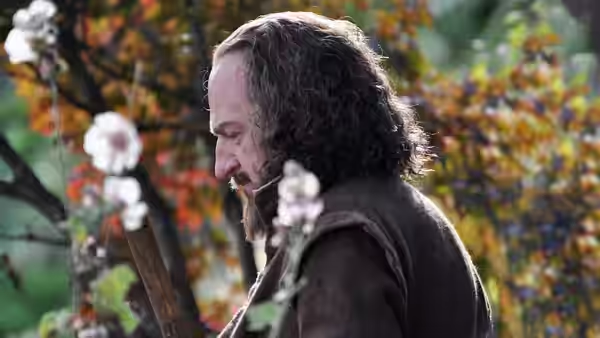
See it for Dench and for the fire. It is a film for a wet evening at home, where its slowness becomes companionable and the nose is smaller, and where you can be forgiven for going to put the kettle on while somebody explains a hollyhock.