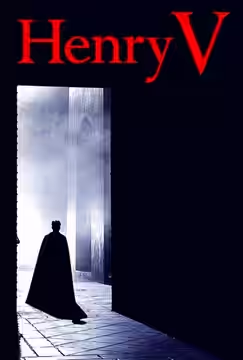
Olivier’s first film as director turns Shakespeare’s play into a Technicolor picture book, and it still stirs. The verse is clear, the Agincourt charge superbly built, and the king is never allowed to be wrong, which is the price of the year it was made.
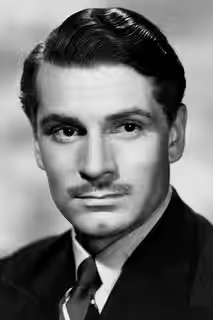
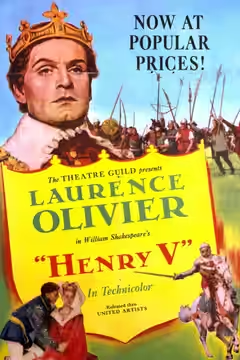
Laurence Olivier had never directed a film when he took on Henry V, and he took it on in wartime for a country that needed telling it would win. With Alan Dent and Dallas Bower he cut Shakespeare’s play down to 137 minutes, put the whole thing inside the Globe playhouse in 1600 and then let it climb out. It is a bold piece of work and, most of the time, a good one. We recommend it to anyone who thinks Shakespeare on screen means murk and mumbling; the caveat is that a king this certain of himself is not quite the king Shakespeare wrote.
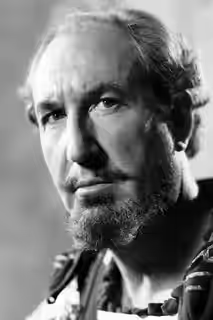
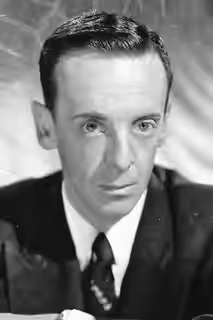
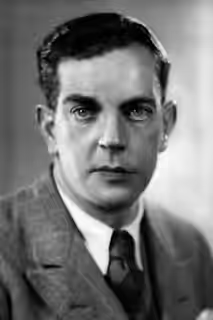
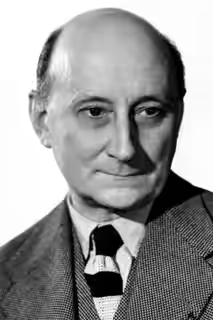
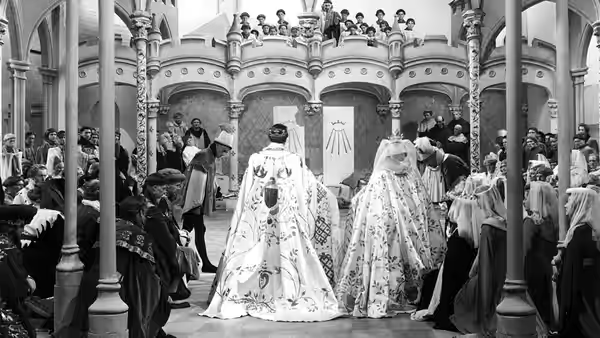
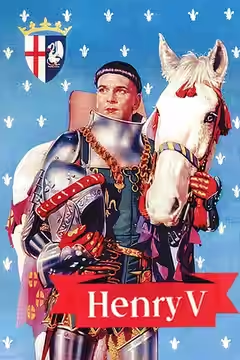
The framing is the film’s best idea. We begin above a model of London, drop into the Globe, and watch actors fixing their beards in the wings while the groundlings jeer. Felix Aylmer and Robert Helpmann play the two bishops as men who cannot find the right page, and the audience on screen laughs at them so we know we are allowed to. Leslie Banks’s Chorus speaks straight to us with an actor’s confidence rather than a narrator’s, and it is he who eases us out of the theatre. Once we are out, the sets are painted flats in the colours of an illuminated manuscript, castles with no perspective and skies of solid blue, and Roger Furse’s costumes match them: the French in silks that could not survive a drizzle, the English in a dozen sober reds. The film asks us to accept that Agincourt is a page in a book of hours, and for long stretches we did.
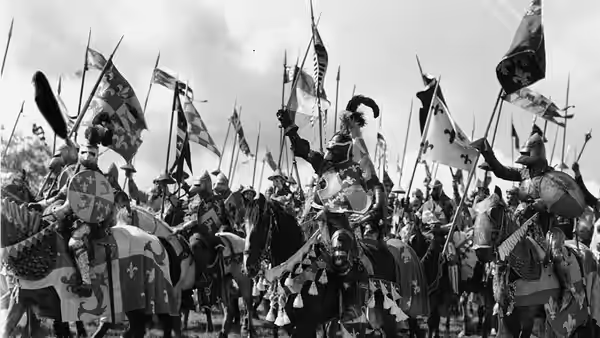
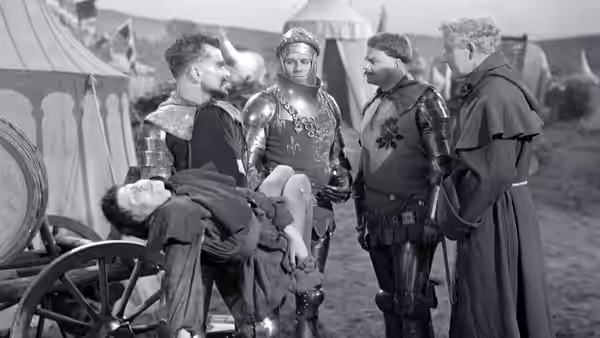
The battle is where Olivier stops painting and starts filming. Robert Krasker puts the camera on a track beside the French cavalry and holds it there as the horses go from a walk to a trot to a gallop, and William Walton’s music does exactly the same, a slow figure that quickens under them until it is running too. Then the English archers loose, Reginald Beck cuts to the arrows in the air, and the music stops. We have seen the sequence copied for eighty years and it still made us sit up. It is the clearest lesson in the film: build slowly, then cut.
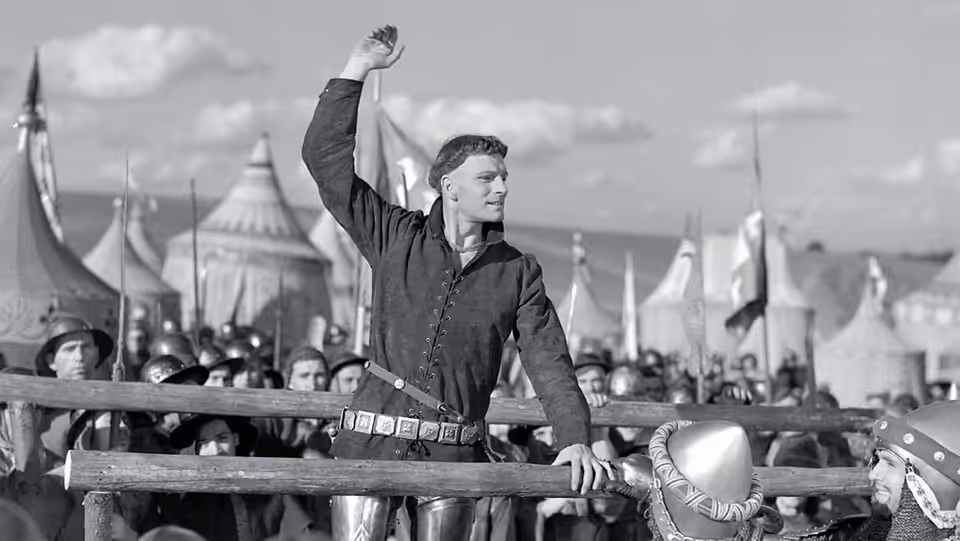
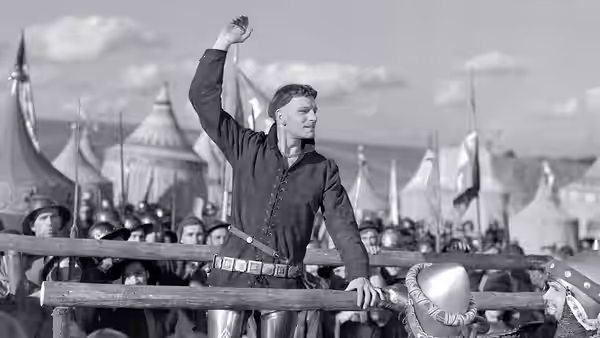
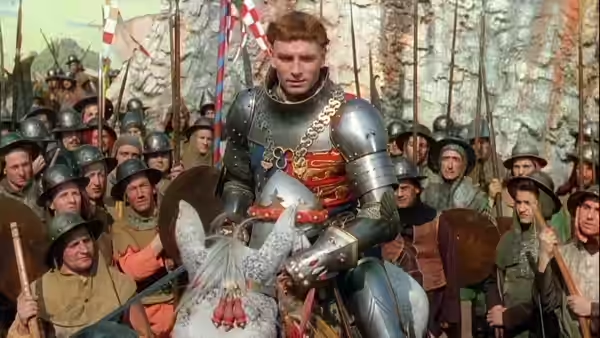
Olivier the actor knows what Olivier the director is doing. For the speech before the battle, the one about Saint Crispin’s Day, most films would move in on the face as the voice rises. He does the opposite. The camera backs away as Henry climbs onto a cart, and the speech grows to fill the space it is given. We were stirred, and we were a little annoyed at being stirred so efficiently, because we could see the machinery working. It works all the same. The verse throughout is spoken as sense first and music second, which is the only way it survives a soundtrack.
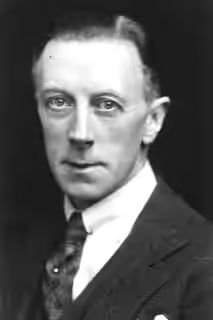
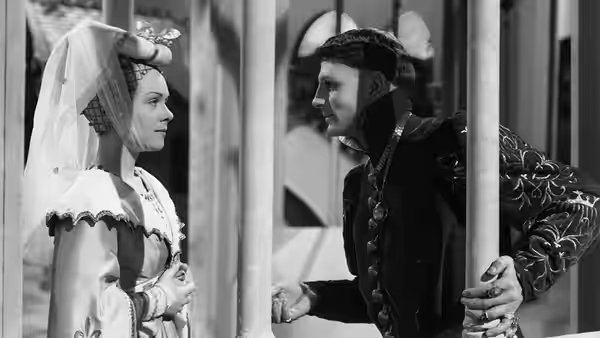
The supporting cast is stronger than a film this centred on one man usually manages. Renée Asherson’s Katherine gets an English lesson in a garden that is the funniest scene in the film and the gentlest. Robert Newton plays Pistol as a man who has been drunk since about 1409, and Ralph Truman’s Mountjoy delivers the French ultimatums with the weary politeness of someone who knows how they will be received. Leo Genn, as the Constable of France, is the only Frenchman allowed to be sensible, and Ernest Thesiger’s ambassador looks as though he is smelling something faintly off throughout.
What the film will not do is doubt its hero. The play has a Henry who threatens a town with slaughter and orders things on the field that a 1944 audience was not going to be shown, and the cuts to the text remove most of them. The result is a king who is brave, funny, pious and never cruel, and a war with a great deal of mud and almost no blood. The three styles, theatre, painted flat and real field, do not always sit together either; a scene will begin on a stage and end in a meadow and you feel the join. The low comedy at the Boar’s Head is played broad enough to reach the back of the Globe, which was presumably the point, and it dates the worst.
Every Shakespeare film since has had to decide how much of the stage to keep, and most have kept less than this one and gained less by it. Watch it with the sound up and the lights off. The pictures were made to be looked at, but it is the talking that has lasted.