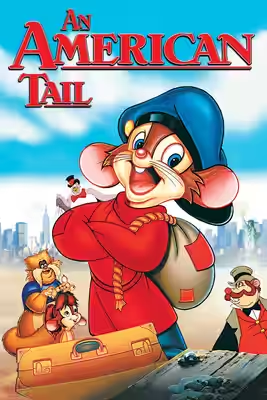
Don Bluth’s family adventure makes separation hurt, with expressive animation and music that earns its sentiment. The wandering story tests our patience, but Fievel gives us enough reason to stay.
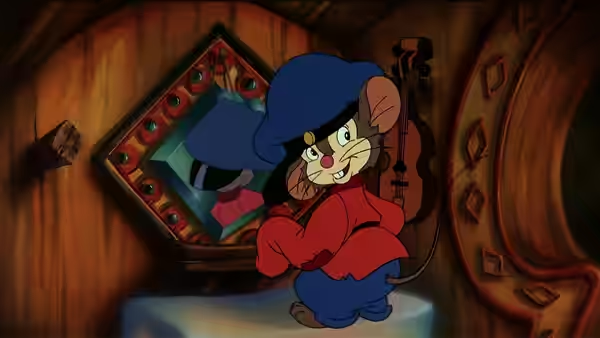
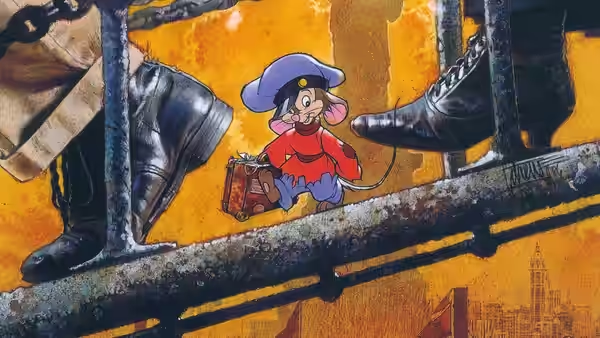
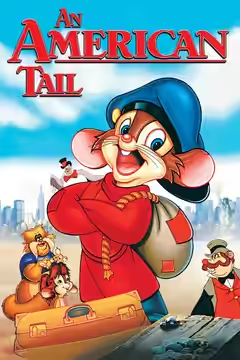
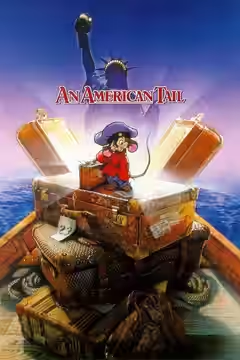
Don Bluth’s An American Tail is a moving family adventure whose wandering story keeps it from being as good as its animation. It asks us to take separation seriously, even when the characters involved have been drawn for a family audience. Fievel arrives in America alone and needs to find his family; that is enough to make the country seem forbiddingly large. We do not need much persuading to care about the search. At 80 minutes, however, the film still finds time to let that search stall.
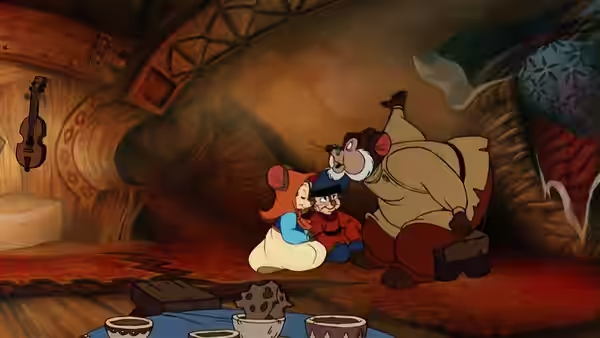
Phillip Glasser gives Fievel a voice that does not sound equipped to manage this predicament, which is exactly right. We found his arrival alone more upsetting than we expected. The performance keeps the need for family immediate, without making Fievel sound as though he is explaining the film’s lesson. Nehemiah Persoff, as Papa Mousekewitz, and Erica Yohn, as Mama Mousekewitz, supply the warmth that makes the separation matter. There is something recognisable here for parents as well as children.
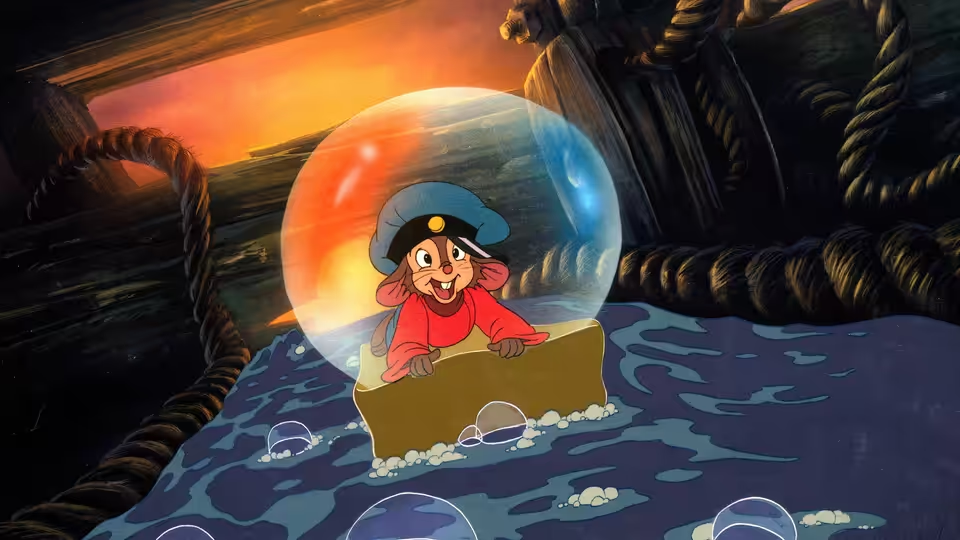
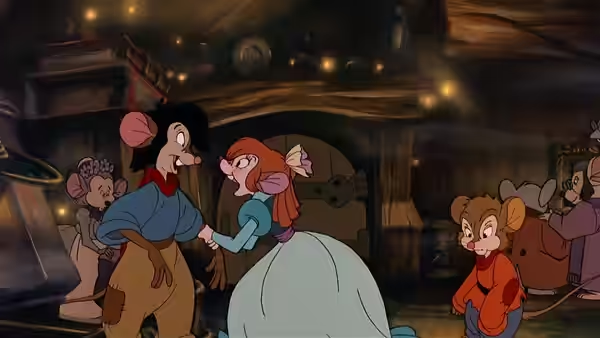
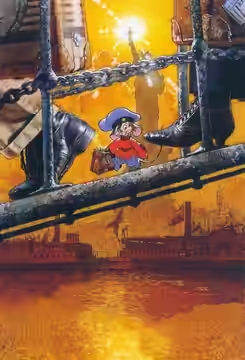
Don Bluth also handles the production design, and the animation earns much of our affection. The scale matters: Fievel needs to look vulnerable within his surroundings for the search to carry any weight. The Atlantic storm is the strongest example, with water that feels threatening enough to overwhelm the reassuring label of family entertainment. We were frightened by the force of it. The images make danger comprehensible without requiring a speech about it, and the U certificate should not be taken as a guarantee against distress.
James Horner’s music understands how much of this story depends on longing. It is generous with feeling, occasionally more generous than a scene needs, but it keeps us concerned about the family even when the plotting becomes distracted. The song Somewhere Out There is especially effective because the wish behind it is so uncomplicated. For a while, the film stops finding new business to occupy Fievel and lets the separation be enough. That patience would have helped elsewhere.
The screenplay by Tony Geiss and Judy Freudberg is less reliable when it broadens the adventure. Too many situations arrive with their dramatic purpose already obvious, and the villains offer little that might complicate our first impression of them. Fievel remains involving, but the surrounding story can feel assembled from familiar incidents. Dan Molina’s editing does not quite make those episodes accumulate into a steadily more urgent search. We keep being asked to care about another encounter when the original problem still has our attention.
As a family film, An American Tail has more respect for children’s capacity to feel sadness than its U certificate might suggest. A story about arriving alone in an unfamiliar country ought to allow some fear, and the film is right not to hurry past it. That gives us a reason to recommend it despite the uneven plotting. Adults may grow impatient with the detours while children remain quite properly concerned about Fievel. For children who find getting lost frightening, this is one to watch together.