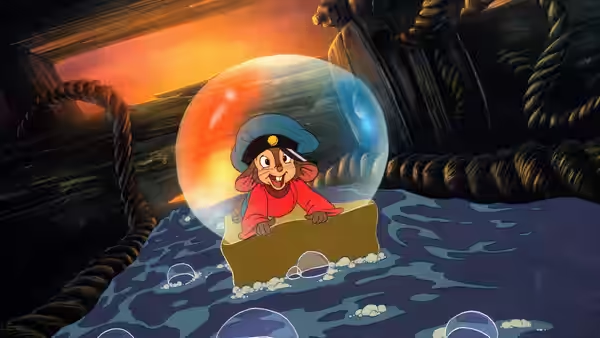
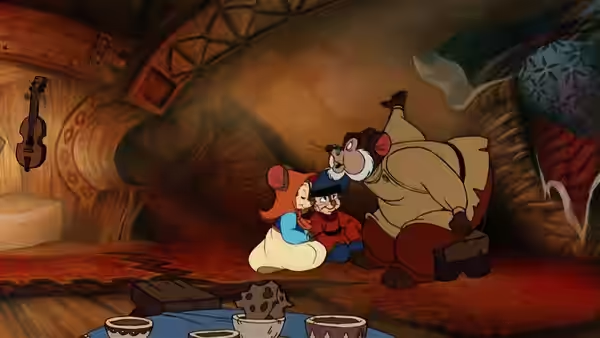
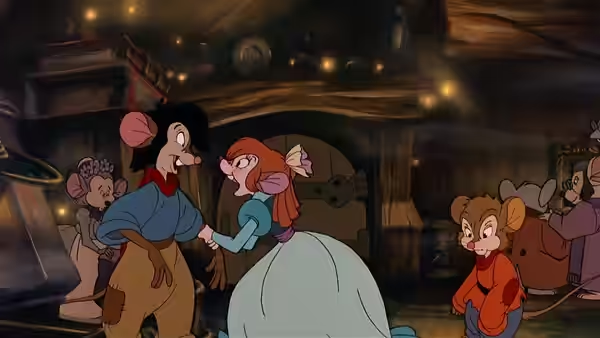
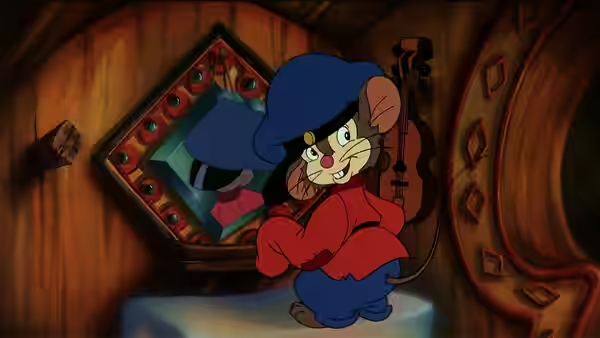
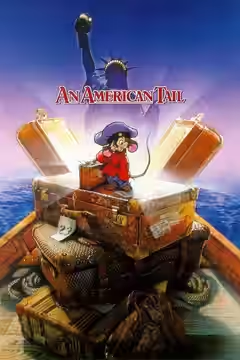
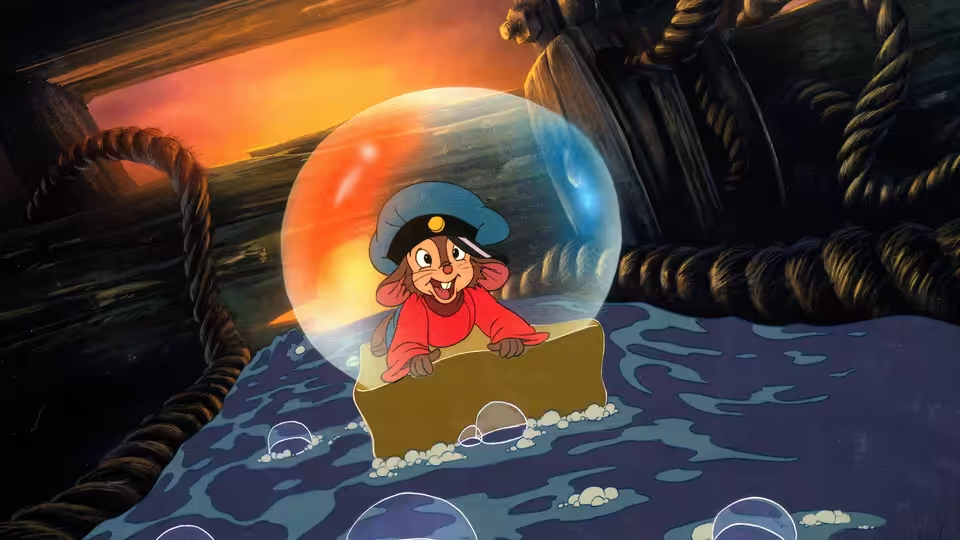
Fievel Mousekewitz (Phillip Glasser) rides a cardboard box across dark water inside a ship
Film review

An American Tail

1986 · Directed by Don Bluth · 1h 20m · MPA G

In a sentenceA family film that makes us want to keep the family within arm’s reach

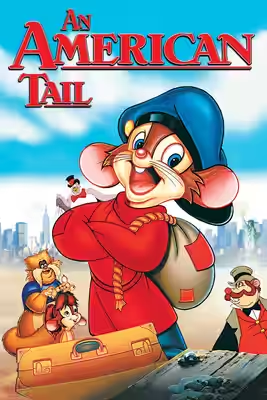
Fievel Mousekewitz (Phillip Glasser) arrives in America alone after a stormy Atlantic crossing. Separated from Mama Mousekewitz (Erica Yohn), Papa Mousekewitz (Nehemiah Persoff) and Tanya Mousekewitz (Amy Green), he sets out to find his family. The country he has reached is unfamiliar, and finding them means trying to make sense of it without their help. His search becomes his introduction to America, with the hope of being together again giving him a reason to keep going.

Plays from YouTube when you press play; nothing loads from them until then.

Fi1m review

Don Bluth’s family adventure makes separation hurt, with expressive animation and music that earns its sentiment. The wandering story tests our patience, but Fievel gives us enough reason to stay.

Don Bluth’s An American Tail is a moving family adventure whose wandering story keeps it from being as good as its animation. It asks us to take separation seriously, even when the characters involved have been drawn for a family audience. Fievel arrives in America alone and needs to find his family; that is enough to make the country seem forbiddingly large. We do not need much persuading to care about the search. At 80 minutes, however, the film still finds time to let that search stall.

Phillip Glasser gives Fievel a voice that does not sound equipped to manage this predicament, which is exactly right. We found his arrival alone more upsetting than we expected. The performance keeps the need for family immediate, without making Fievel sound as though he is explaining the film’s lesson. Nehemiah Persoff, as Papa Mousekewitz, and Erica Yohn, as Mama Mousekewitz, supply the warmth that makes the separation matter. There is something recognisable here for parents as well as children.

Don Bluth also handles the production design, and the animation earns much of our affection. The scale matters: Fievel needs to look vulnerable within his surroundings for the search to carry any weight. The Atlantic storm is the strongest example, with water that feels threatening enough to overwhelm the reassuring label of family entertainment. We were frightened by the force of it. The images make danger comprehensible without requiring a speech about it, and the U certificate should not be taken as a guarantee against distress.

James Horner’s music understands how much of this story depends on longing. It is generous with feeling, occasionally more generous than a scene needs, but it keeps us concerned about the family even when the plotting becomes distracted. The song Somewhere Out There is especially effective because the wish behind it is so uncomplicated. For a while, the film stops finding new business to occupy Fievel and lets the separation be enough. That patience would have helped elsewhere.

The screenplay by Tony Geiss and Judy Freudberg is less reliable when it broadens the adventure. Too many situations arrive with their dramatic purpose already obvious, and the villains offer little that might complicate our first impression of them. Fievel remains involving, but the surrounding story can feel assembled from familiar incidents. Dan Molina’s editing does not quite make those episodes accumulate into a steadily more urgent search. We keep being asked to care about another encounter when the original problem still has our attention.

As a family film, An American Tail has more respect for children’s capacity to feel sadness than its U certificate might suggest. A story about arriving alone in an unfamiliar country ought to allow some fear, and the film is right not to hurry past it. That gives us a reason to recommend it despite the uneven plotting. Adults may grow impatient with the detours while children remain quite properly concerned about Fievel. For children who find getting lost frightening, this is one to watch together.

Critical consensus AI synthesised

57
Positive
2
Mixed
2
Negative
2

The reviews are divided, with praise clustering around the animation rather than the storytelling. Even a strongly negative assessment finds the animation lavish, while the warmer reviews describe Fievel’s adventures as involving, tearful and enjoyable for children and adults. Radio Times singles out the song Somewhere Out There alongside the animation. There is less agreement on whether those pleasures compensate for the film’s narrative weaknesses.

The reservations range from a sprawling, wayward story to more fundamental complaints about familiar characters and confused storytelling. Empire finds enough warmth to forgive the wandering; Variety objects to recycled character concepts and villains. The Los Angeles Times praises the frightening Atlantic storm sequence but criticises the thin story and the handling of persecution and immigrant history. The available verdicts span warm approval to firm rejection, though two of the six listed reviews lack accessible critical commentary, limiting how fully that spread can be explained.

Radio Times
★★★★ · David Parkinson
80

Parkinson praises the film as a handsome, lovingly animated feature. He singles out the animation and “Somewhere Out There” as highlights.

Read the full review →
Empire
1 January 2000 · William Thomas
70*

Thomas finds the film sprawling and wayward, but ultimately heartwarming and enjoyable for children and adults. He praises the attractive animation and Fievel’s involving, sometimes tearful adventures.

Read the full review →
The New York Times
21 November 1986 · Janet Maslin
65*

The article URL identifies a New York Times review of the film, but the page content is inaccessible. I can’t verify the critic’s verdict or what the review singles out for praise or complaint.

Read the full review →
Time Out
· GA
64*

The available page does not reveal the critic’s verdict. It identifies the film’s story but provides no praise or complaint from the review.

Read the full review →
Variety
31 December 1985 · Variety Staff
35*

The review finds the film’s ambitions admirable but says its characters and situations feel overly familiar. It singles out recycled character concepts and villains as the main weakness.

Read the full review →
Los Angeles Times
22 November 1986 · CHARLES SOLOMON
30*

Solomon finds the film lavishly animated but let down by a thin, badly told story. He praises the stormy Atlantic sequence as strikingly original and frightening, while criticizing the film’s handling of persecution and immigrant history.

Read the full review →

Straight answers AI written, from our review

Is An American Tail worth watching?
An American Tail is worth watching for families who appreciate animation that takes children’s fears seriously, and we scored it 71. Fievel’s separation from his family gives the expressive animation and music real feeling, though the wandering story tests our patience; children frightened by getting lost are best watching with an adult.
How long is An American Tail, and what is it rated?
An American Tail runs 1h 20m and is rated G by the MPA in the US. It is an adventure and animation film.
Where can I watch An American Tail in the US?
An American Tail is available to rent from Amazon Prime Video and Apple TV from $3.99. Availability is checked daily; the links above go straight to each service.
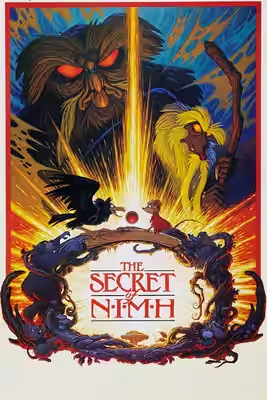
How does An American Tail compare to The Secret of NIMH?
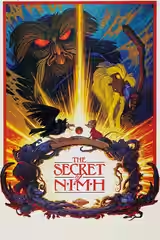
An American Tail offers more comfort than The Secret of NIMH, which we favour for animation that sustains small creatures’ fears with fewer reassuring pauses. Both have script problems: Fievel’s search wanders, while The Secret of NIMH introduces an unexplained magic amulet. We recommend An American Tail for its moving family story, and The Secret of NIMH for those comfortable with stronger scares.
What should I watch after An American Tail?
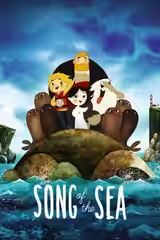
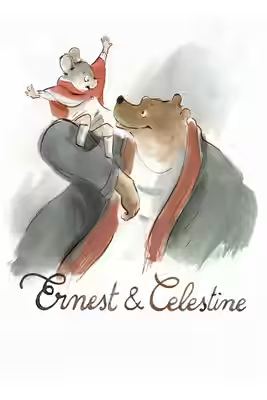
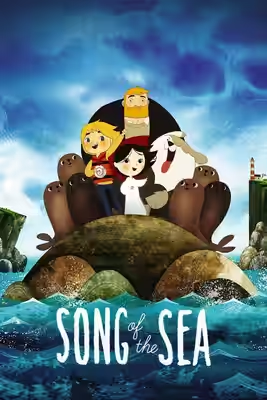
After An American Tail, try The Secret of NIMH (1982, Fi1m 74): For animation that takes small creatures’ fears seriously, with fewer comforting pauses. Then Ernest & Celestine (2012, Fi1m 84): A gentler animal friendship, drawn with warmth and a healthy distrust of prejudice; and Song of the Sea (2014, Fi1m 82): Family separation and loss given room to hurt, within richly imagined animation.

Cast

If you liked this, try…

  1. The Secret of NIMH (1982, Fi1m 74)For animation that takes small creatures’ fears seriously, with fewer comforting pauses.

  2. Ernest & Celestine (2012, Fi1m 84)A gentler animal friendship, drawn with warmth and a healthy distrust of prejudice.

  3. Song of the Sea (2014, Fi1m 82)Family separation and loss given room to hurt, within richly imagined animation.

  4. Paddington (2014, Fi1m 84)Another newcomer finds kindness and hostility, with firmer jokes and less distress.

  5. The Red Balloon (1956) · not reviewed yetA child’s loneliness made visible through colour, movement and one unlikely companion.

Free account

Know what to watch tonight

Two lists that know where things are streaming, collections you can share, your own score beside ours, and Discover that remembers what you have seen.

  • Want to see, sorted by what is streaming now
  • Seen, with your score out of ten
  • No adverts, ever