Satyajit Ray’s patient drama makes growing up feel complicated without making it mysterious. The brooding pace occasionally becomes restrictive, but the performances give us ample reason to stay, particularly Karuna Banerjee’s.
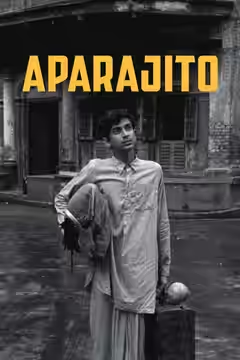
Aparajito is a moving drama that occasionally asks for more patience than it needs. Satyajit Ray gives Apu’s growth the sustained attention that films often reserve for an extraordinary achievement or a spectacular mistake. There is something generous about that choice. At 110 minutes, the film allows us to consider the people around its central character, although its brooding manner can also make the movement between childhood and adolescence feel overly solemn.
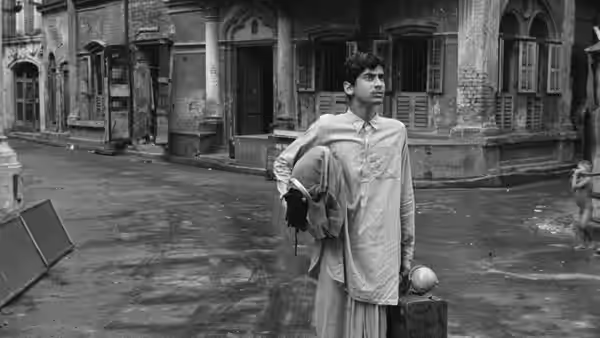
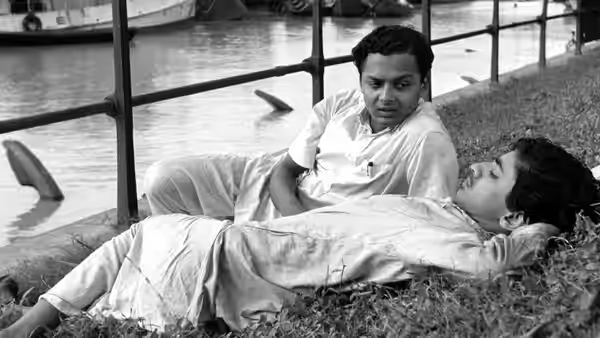
Casting Pinaki Sengupta as the young Apu and Smaran Ghosal as the teenage Apu makes that movement visible without requiring either performer to carry an implausible range of ages. Sengupta gives the younger character an appealing directness. Ghosal brings a more self-contained presence, and the difference matters: we have to adjust our expectations of Apu rather than simply recognise him. We felt an unexpected pang at that adjustment, because the younger performance has made us reluctant to surrender the boy.
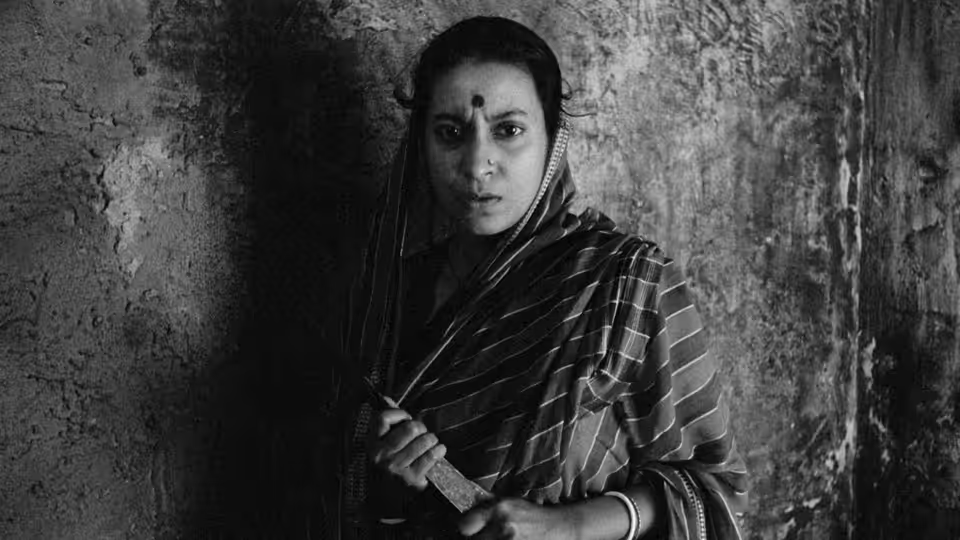
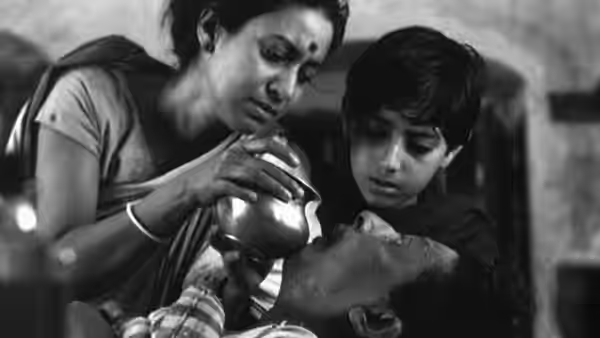
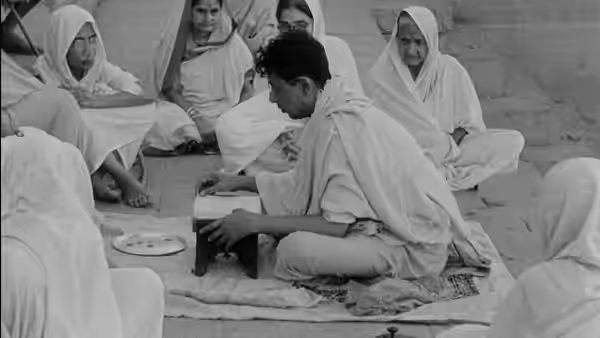
Karuna Banerjee, as Sarbajaya Roy, gives the film its strongest reason to look away from Apu. Her performance invites sustained attention without seeming to request it, and she makes the adult presence in this story matter on its own terms. Kanu Banerjee’s Harihar Roy also helps keep the surrounding characters from becoming mere illustrations in an account of growing up. Ray’s direction is particularly persuasive when he allows the actors to hold our interest without insisting on an immediate dramatic reward.
Subrata Mitra’s cinematography has a clarity that suits this approach. We are encouraged to attend to people, and the images never feel anxious to advertise their importance. Bansi Chandragupta’s production design is similarly effective in its discretion: the film feels inhabited without demanding that we admire the furnishings. Both contributions support the performances, though the restraint can make the film seem more uniform than its emotional changes warrant.
Dulal Dutta’s editing is patient, sometimes to a fault. Giving a performance room is valuable; allowing the prevailing mood to settle for too long can make distinct passages feel similar. Ravi Shankar’s music supplies welcome expressiveness, and its contribution is especially useful against that tendency towards solemnity. We would welcome more variation in the pacing, rather than more explanation from the screenplay.
Ray also writes the adaptation of Bibhutibhushan Bandyopadhyay’s novel. His confidence in an ordinary life distinguishes the film from coming-of-age dramas that hurry towards a defining incident and then explain what has been learnt. The limitation is that such sustained seriousness can narrow the emotional range. The performances have more shades than the prevailing mood sometimes permits us to appreciate.
That reservation matters, but it does not outweigh the care given to Apu and the adults around him. The film rewards attention to changes in a performer’s presence, and Karuna Banerjee makes that attention particularly worthwhile. Choose it for an evening when a quiet drama can have your full concentration; its patience is easier to value when we are not checking the clock.