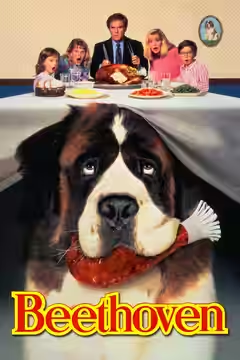
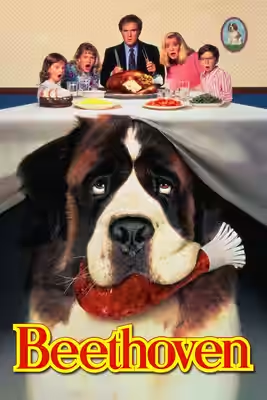
Beethoven is a serviceable family comedy, carried by an appealing St. Bernard and Charles Grodin’s exasperation. The dog supplies enough pleasure for animal lovers, though the repeated humiliation and cartoonish villains wear thin.
Brian Levant’s Beethoven offers modest amusement for dog lovers and rather more punishment than a family comedy needs. Its most dependable idea is a large St. Bernard behaving badly in a household that loves him anyway. The Newtons’ affection is easy to understand, but the film keeps assuming that affection makes any complaint about the animal unreasonable. That is a narrow basis for a comedy, even with Charles Grodin available to do the complaining.
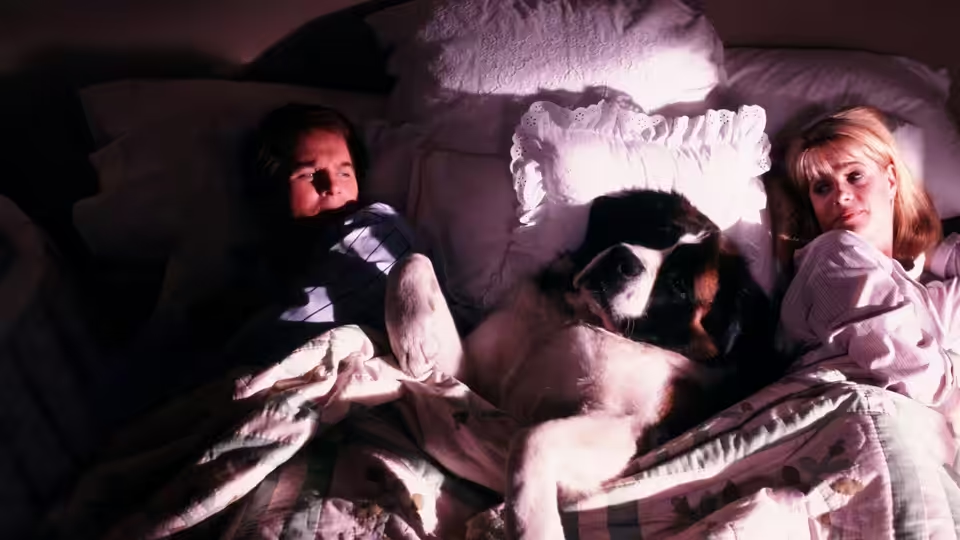
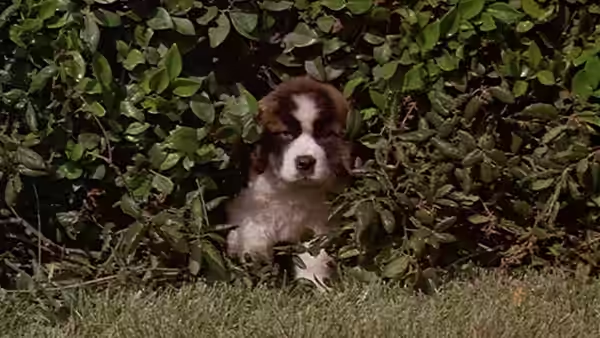
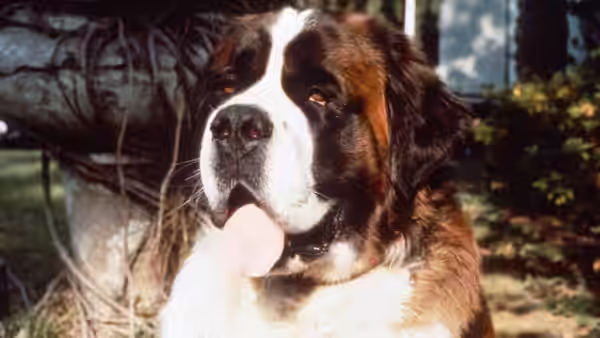
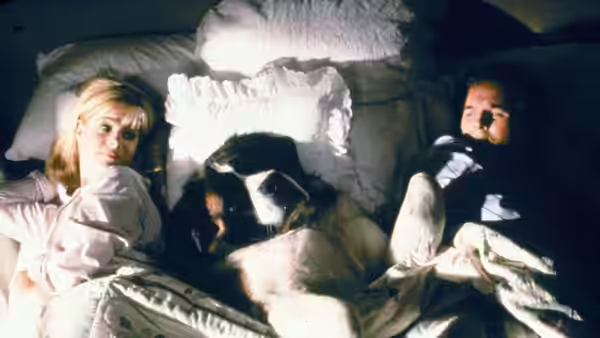
Chris the Dog, playing Beethoven, gives the film an attraction that requires little explanation. His size makes the destructive antics funny before the plot starts asking him to be implausibly capable. We can enjoy the animal without needing him to accomplish quite so much. The film is at its most agreeable when it remembers that a dog can hold our attention without being given every possible advantage.
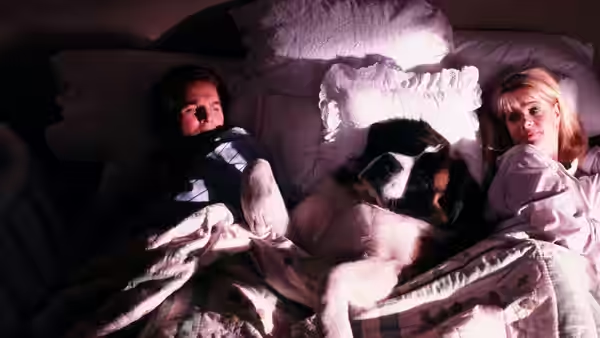
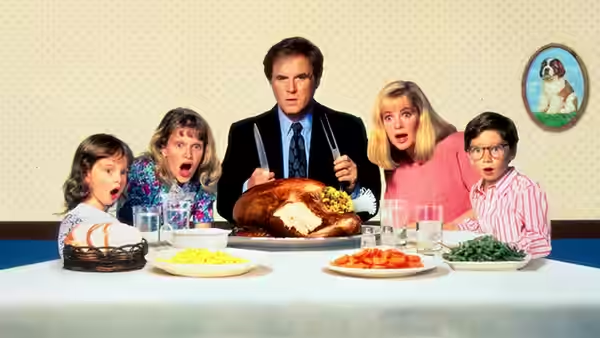
Grodin supplies the other reliable pleasure as George Newton. We laughed at his exasperation over Beethoven’s destructive behaviour, because he makes a reasonable objection sound funny without making it sound foolish. John Hughes and Amy Holden Jones keep returning to George’s humiliation, though, until the repetition starts to feel mean. Bonnie Hunt’s Alice Newton belongs to a family whose devotion to the dog keeps George outnumbered. There is room for a better domestic comedy here, one that allows the family to love Beethoven without requiring everyone else to be wrong.
Victor J. Kemper keeps the photography straightforward, letting Beethoven’s bulk do much of the visual work. Alex Tavoularis’s production design gives the domestic comedy an undistracting setting. Both choices make sense when the chief attraction is a large dog behaving badly. They also leave the repeated destruction needing stronger jokes to keep it interesting.
Editors William D. Gordean and Sheldon Kahn keep the comedy brisk, and the 87-minute running time is a sensible limit. That pace helps individual gags pass without too much fuss, although it cannot conceal how familiar the larger pattern becomes. Randy Edelman’s music adds a friendly tone that the writing does not always sustain. It supports the animal comedy well enough, without giving the Newtons much extra feeling.
The cartoonish villains are a further weakness, adding complications without much comic interest. A pet causing trouble at home offers plenty of scope for a family film; broader villainy needs to be funny or threatening enough to justify the interruption. Here it mostly makes the writing seem less confident in the dog. These stretches give the adults little to enjoy beyond waiting for the next animal joke.
At this pace, there is enough animal charm for a household already inclined to forgive a dog almost anything. It falls short of a family comedy that gives children and adults equally good reasons to stay. Grodin helps, but he cannot repair the thin writing. Consider it for children who want the dog; accompanying adults should not expect equal treatment.