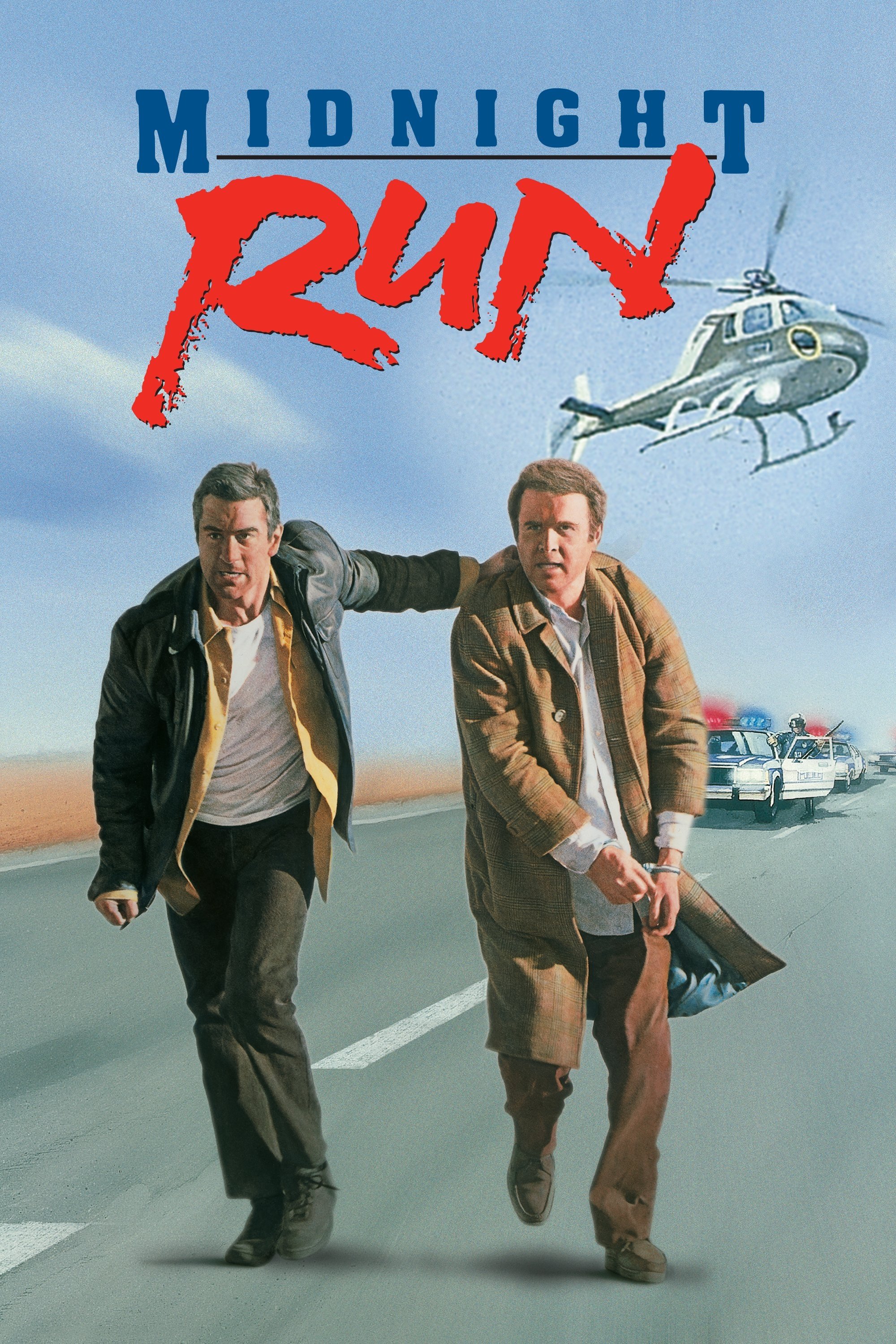
Charles Grodin could make quiet persistence funny and infuriating at once. His deadpan works best when a film lets him do more than react, and we recommend starting with his patient torment of Robert De Niro in Midnight Run.
Fi1m perspective
In Midnight Run (1988), Charles Grodin keeps answering Robert De Niro calmly when an argument would plainly be more convenient. His embezzler, Jonathan Mardukas, makes things personal with De Niro’s bounty hunter, Jack Walsh, who would prefer to get on with the job. We laughed at Grodin’s quiet persistence because he never concedes that he might be the source of the irritation. He listens, replies and leaves the other man to become more annoyed. Martin Brest gives both actors enough time for the exchange to matter.
The leading part in Elaine May’s The Heartbreak Kid (1972), as self-absorbed newlywed Lenny Cantrow, came before a long stretch of supporting comedy roles in the 1970s and 1980s. He became a familiar choice for anxious professionals and put-upon straight men, often opposite more flamboyant performers. Such casting made use of his small reactions, but risked leaving him to supply the prompts for somebody else’s jokes. Beethoven (1992) gave him a family-film lead as the exasperated father George Newton.
George Gallo’s screenplay helps by giving the two men things to disagree about without making either incapable of listening. Grodin’s calm would become a routine if De Niro merely kept shouting at it; their exchanges allow the irritation to develop. Donald E. Thorin’s cinematography lets us read Walsh’s annoyance alongside Mardukas’s composure, rather than losing either response in the pursuit. Angelo P. Graham’s production design keeps the surrounding crime-comedy business plausibly ordinary. Grodin benefits from that setting: his persistence is funny enough without making every encounter look like a comic turn.
Brest does sometimes interrupt them too readily: parts of the pursuit are less interesting than the conversations they cut short. We would happily lose some chasing from those 126 minutes. The qualification matters because Grodin’s contribution depends on being given time to listen and persist, rather than merely appear between bursts of action. Start with Midnight Run, and allow for the occasions when everyone has to stop talking and run.
Biography
Charles Grodin was an American actor, comedian, author and television host. He began his career in the 1950s with television appearances and made his film debut in an uncredited role in 20,000 Leagues Under the Sea (1954). He studied at the University of Miami and trained at the Actors Studio.
Grodin gained notice with a small role in Rosemary's Baby (1968) and a lead in The Heartbreak Kid (1972). He appeared in supporting roles in Catch-22 (1970), King Kong (1976) and Heaven Can Wait (1978). He co-starred in Midnight Run (1988) as Jonathan Mardukas and played George Newton in Beethoven (1992) and its sequel. Other credits include Dave (1993) and While We're Young (2015).
Grodin wrote and hosted television specials, winning a Primetime Emmy Award for Outstanding Writing for a Variety Special in 1978 for The Paul Simon Special. He hosted a talk show on CNBC in the 1990s and served as a political commentator. He died in 2021.