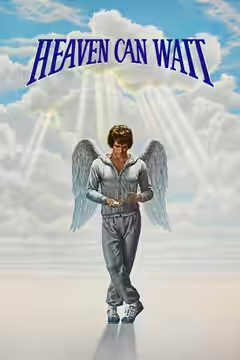
Warren Beatty and Buck Henry remake a 1941 fantasy as a soft, sunlit comedy about a quarterback who dies too early and comes back as a millionaire. It is gentle to a fault, but Charles Grodin and Dyan Cannon steal every room they whisper in.
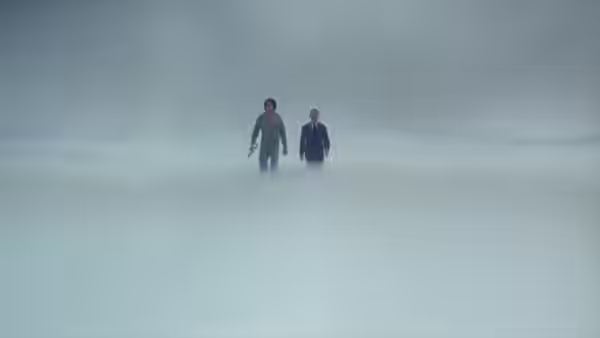
Joe Pendleton (Warren Beatty) is a quarterback with a season ahead of him and good news to celebrate. He celebrates by cycling into a road tunnel, where a celestial Escort (Buck Henry), new to the job and anxious to spare him pain, lifts him out of his body a second before a lorry arrives. The trouble is that Joe was not due to die for decades. By the time Mr. Jordan (James Mason), who runs the fog-bound way station where the newly dead queue for their flight, spots the error, the body has been cremated. The replacement on offer belongs to a rich man called Farnsworth, whose wife Julia (Dyan Cannon) and secretary Tony Abbott (Charles Grodin) have just seen to it that he will not be needing it.
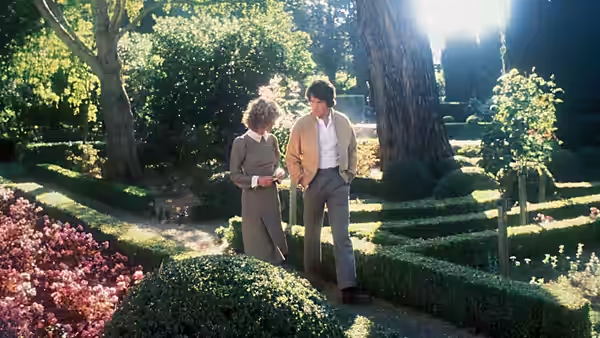
Beatty and Henry, co-directing, are remaking Here Comes Mr. Jordan (1941), and the screenplay Beatty wrote with Elaine May keeps that film’s gentleness and adds a thin coat of malice about money. Betty Logan (Julie Christie) arrives at the house with a complaint against Farnsworth’s company, and Joe takes the body largely because he would like to see her again. It is a soft, sunny 101 minutes that sets out to be liked and mostly is. We liked it. We also spent stretches of it waiting for it to get on.
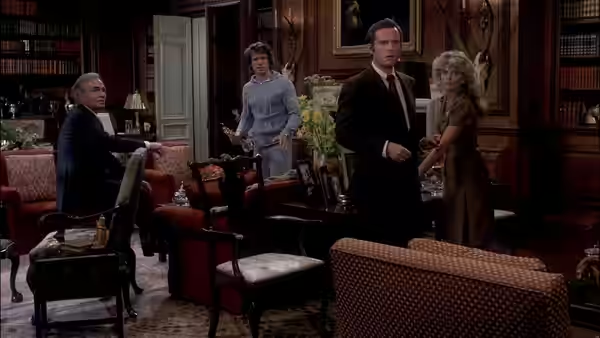
The film belongs to its criminals. Grodin plays Abbott as a man who has done one bold thing in his life and is now discovering he has no idea how to follow it; every time the dead man strolls in, cheerful and hungry, Grodin has to rearrange his face, and he finds a new arrangement each time. Cannon’s Julia is silk and panic, given to sudden screams and sudden sweetness, and she is funniest when trying to be calm. Their whispered conferences in doorways are the best-written scenes in the picture. Mason plays Mr. Jordan with the patience of a good headmaster and lends the daft cosmology a dignity it would not have on its own.
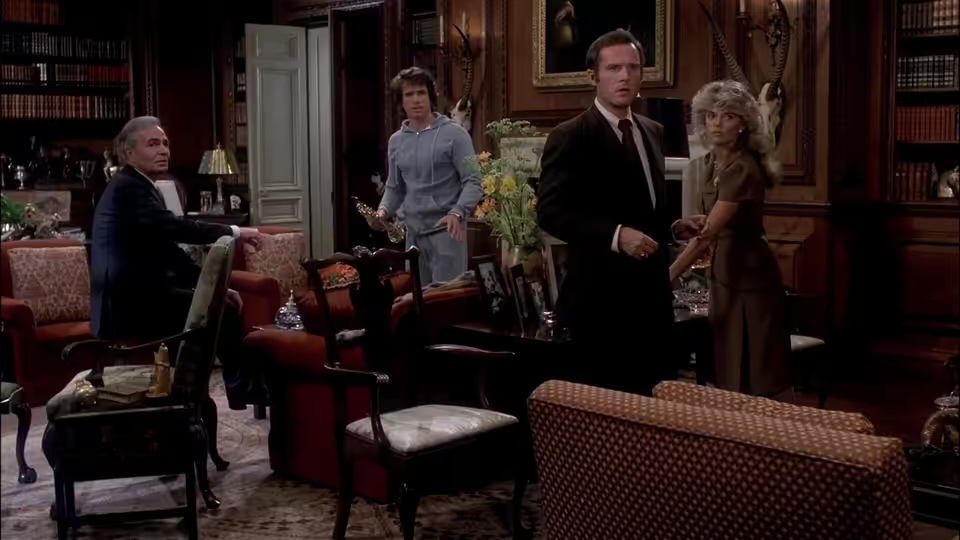
William A. Fraker shoots Los Angeles in a warm late-afternoon light, so that even the mansion’s marble looks lived in, and gives the way station a white haze that hides its edges. Paul Sylbert designs the Farnsworth house as long corridors and oversized rooms, which is the joke: Joe jogs through them in a tracksuit as if the house were a stadium, and Jack Warden, as his old trainer Max Corkle, follows with a stopwatch. Dave Grusin’s score is a light, wandering thing, mostly piano, that suits the mood and now and then sinks into it. Don Zimmerman and Robert C. Jones cut the training scenes briskly and let the romance amble, so the love story never gathers pace.
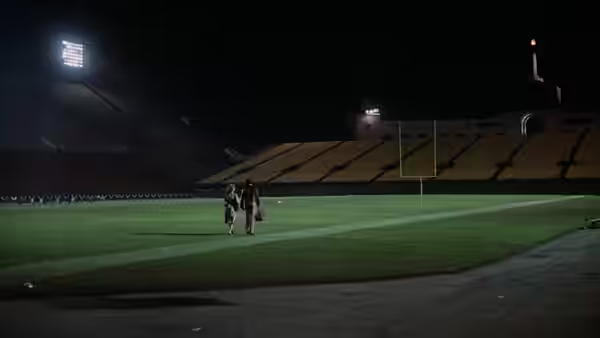
That love story is the weakness. Christie has almost nothing to play: Betty arrives angry, is won over, and thereafter looks worried in nice coats, and the film never gives her a scene of her own. Beatty, directing himself, is kind to everyone else and lenient with his own performance, which consists mostly of looking bewildered and decent. He is good at that, but a hero who is bewildered for an hour and a half becomes a passenger in his own film. The football that fills the last act runs long, and we found it hard to care who won.
Here is what got us. We laughed most at Grodin, and at Cannon’s face when she opens a door and finds the husband she thought she had disposed of standing in the hall. And the final minutes, which we will not describe, moved us more than the preceding ninety had prepared us for. They are done with two people, a corridor and Grusin’s theme, and they are the one time Beatty the director trusts silence.
Against Beatty’s own run as a director this sits in the middle. It has none of the ambition of Reds (1981) or the nerve of Bulworth (1998); it is the film in which he found out he could do the job. Watch it on a Sunday afternoon with someone who will not mind if you doze through the training montage. Stay awake for Grodin.