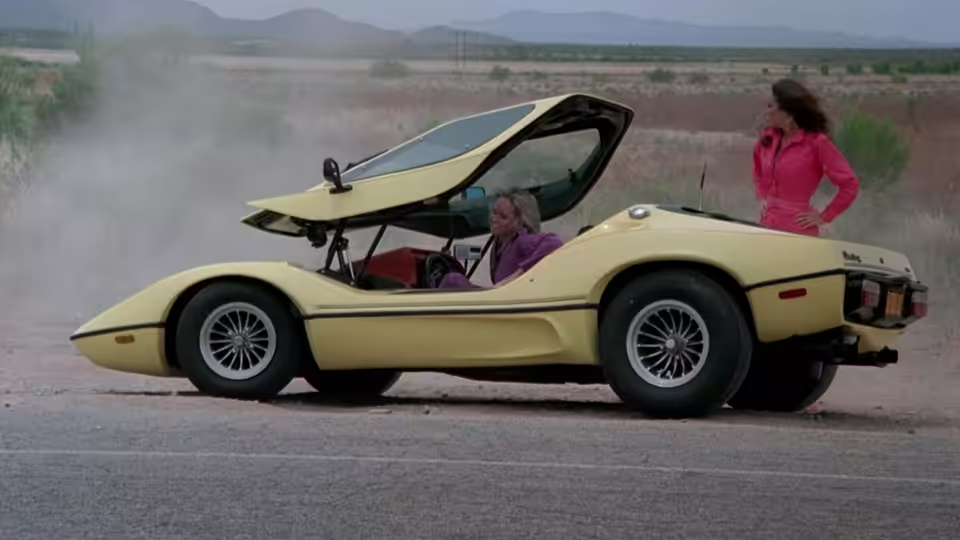
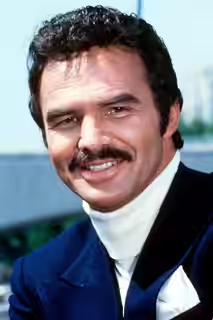
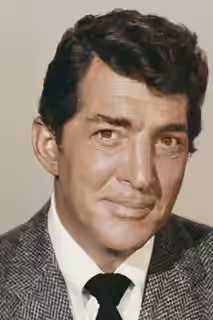
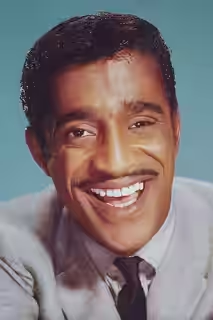
Burt Reynolds and Dom DeLuise remain likeable in a comedy with too few laughs to justify 108 minutes. Hal Needham gives his cast weak dialogue and far too much time to struggle with it.
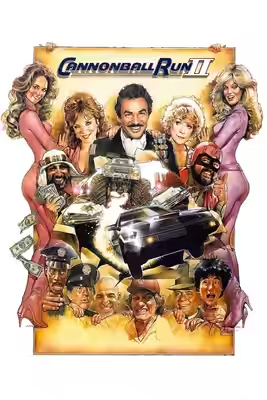
Cannonball Run II is a poor comedy with a cast that makes its shortage of laughs particularly disappointing. Hal Needham directs Burt Reynolds, Dom DeLuise, Dean Martin and Sammy Davis Jr., but the pleasure of seeing those names together does not last through 108 minutes. An undemanding entertainment would be welcome, and we are hardly asking this company to provide anything solemn. We would, however, like them to have something funny to say.
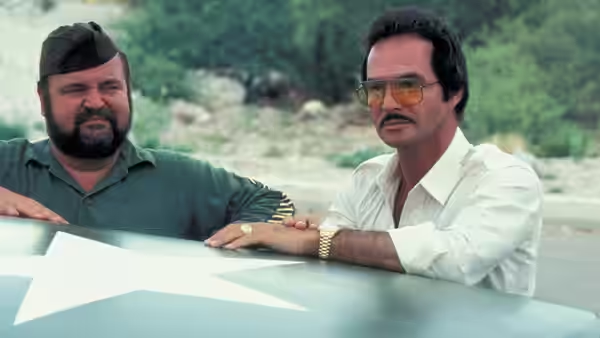
Burt Reynolds, as J.J. McClure, supplies some of the film’s limited pleasure. His amiability survives the weak material, although it cannot improve a thin joke simply by being present. Dom DeLuise brings an agreeable willingness to look foolish to Victor Prinzim, Captain Chaos and Don Canneloni. There is effort here, and an absence of vanity that deserves better writing; the extra roles do not produce a corresponding increase in amusement.
The dialogue is the clearest problem, with too many lines delivered so awkwardly that the joke has little chance. We were bored by those strained line readings. Harvey Miller, Albert S. Ruddy and Hal Needham share the screenplay credit, and their material gives the performers too little help. A loose comedy can survive several missed laughs, but this one makes waiting for the next successful joke feel like a substantial part of the evening.
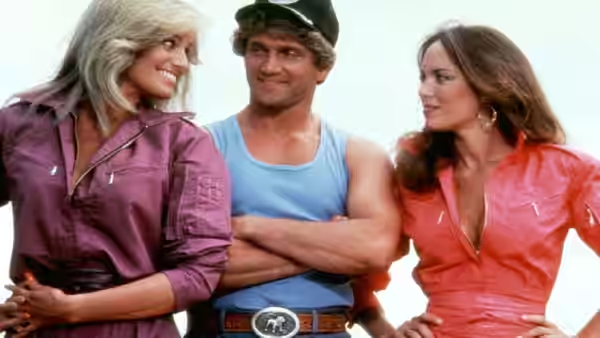
Dean Martin’s Jamie Blake and Sammy Davis Jr.’s Fenderbaum add to the attraction of the cast without solving the difficulty. Shirley MacLaine, as Veronica, is another welcome presence whom the writing leaves poorly served. Recognising a performer is a small pleasure, and there is nothing wrong with a comedy taking advantage of it. Here, that pleasure is asked to cover too much indifferent dialogue, with the actors receiving the blame that properly belongs to the material.
Nick McLean’s cinematography offers little compensation for the comic problems. Nor does the editing by Carl Kress and William D. Gordean make the unsuccessful dialogue easier to sit through; a tighter cut might at least have made the missed laughs less conspicuous. The music by Al Capps cannot supply the ease missing from the performances. These contributions leave the central difficulty untouched: the film needs its jokes to work more often than they do.
For this sort of action comedy, we ask for enough momentum to carry us past a dud line without making us dwell on it. Hal Needham puts too much confidence in the appeal of the assembled performers and too little in the preparation and delivery of a joke. The looseness becomes wearing because there is so little reward for accepting it. At 108 minutes, even a modest demand for our attention needs a better return.
There is something likeable about gathering this many performers without making heavy demands on an audience. We do not need every comedy to be disciplined, tasteful or clever, and occasional clumsiness can be part of the pleasure. Here, the clumsiness makes the evening feel longer. Try it only if affection for the cast can carry an evening with few laughs.