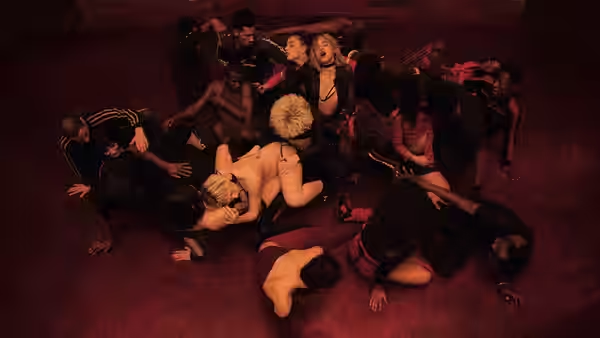
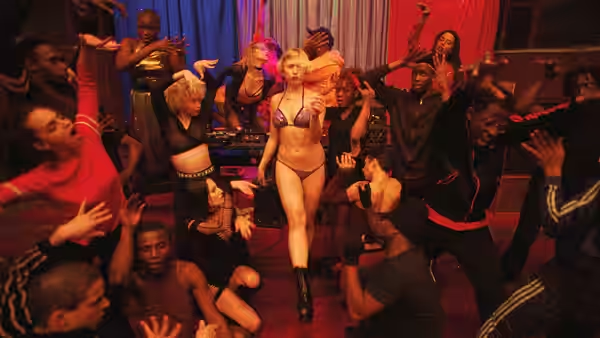
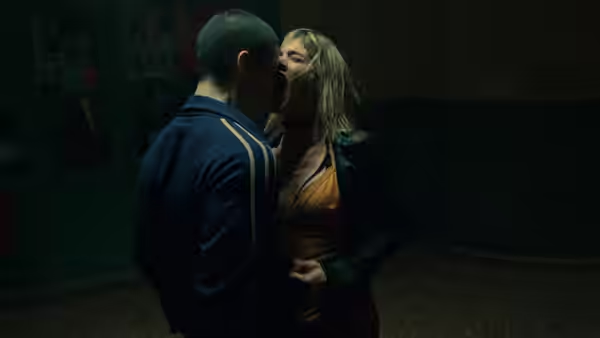
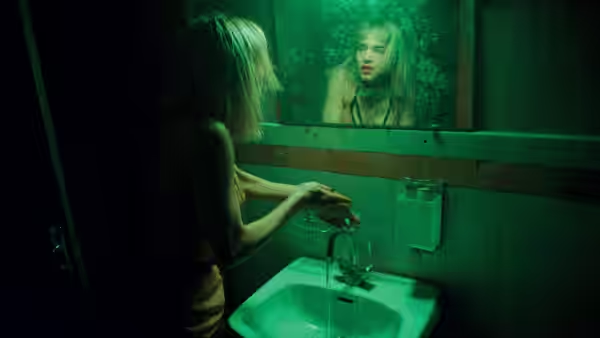
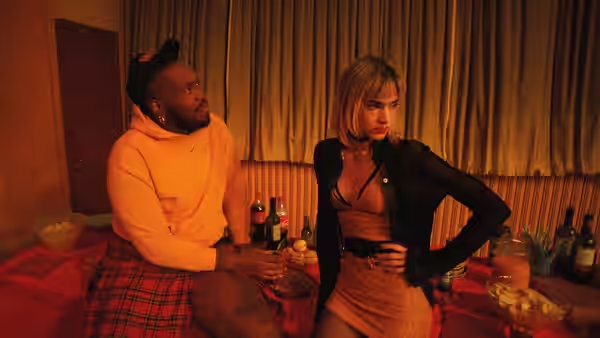
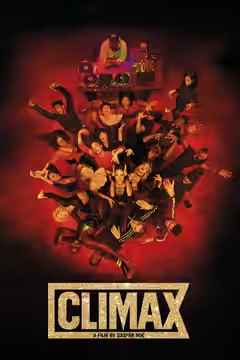
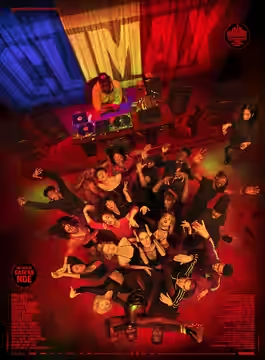
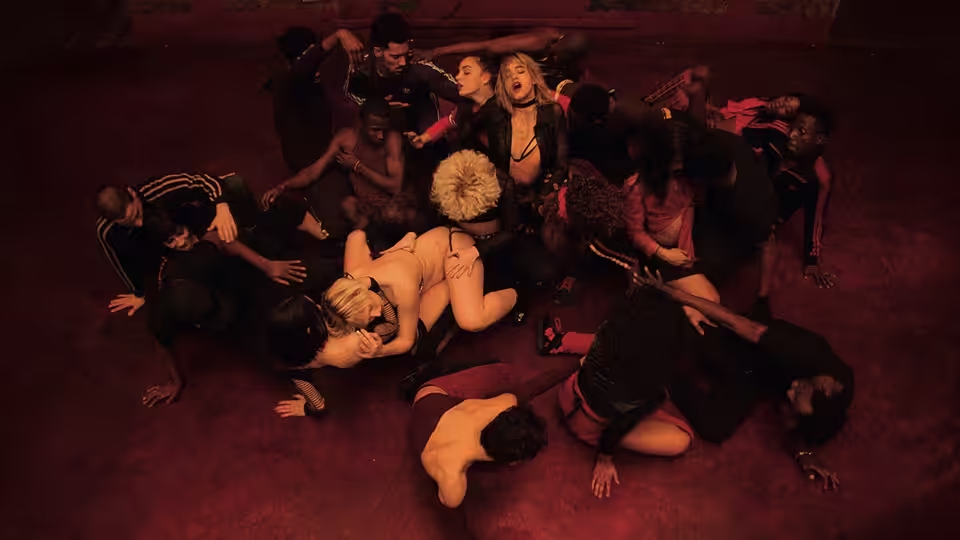
A crowd of people lies entangled on a red-lit floor
Film review

Climax

2018 · Directed by Gaspar Noé · 1h 37m · IMDA R21

In a sentenceThe dancing is so good we briefly forget to worry about being trapped with Gaspar Noé

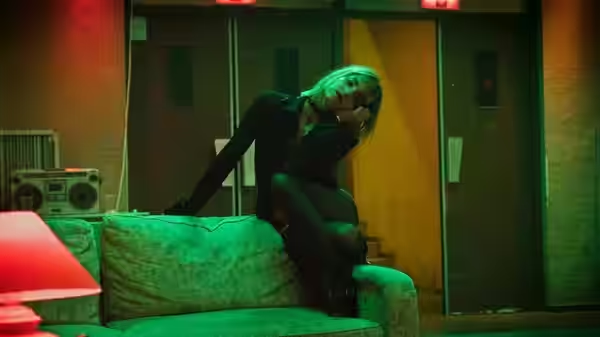
A group of dancers gather to perform, with Selva (Sofia Boutella), David (Romain Guillermic) and Lou (Souheila Yacoub) among them. Their shared routine gives way to less controlled movement as intoxication begins to change the atmosphere. Selva needs to keep her bearings among people whose behaviour is growing unpredictable. With the dancers close together and the music continuing, there is little chance to step back from the confusion. Suspicion starts to replace the cooperation of the opening dance, and keeping control becomes the group’s immediate problem.

Plays from YouTube when you press play; nothing loads from them until then.

Fi1m review

Gaspar Noé makes dance exhilarating and collective panic hard to escape. Climax is worth the ordeal for its choreography and camerawork, though the people remain frustratingly thin beneath the distress.

Gaspar Noé’s Climax is a gripping dance-horror film with thin characters and a weakness for prolonging its cruelty. The opening group routine gives it a considerable advantage: we have enjoyed watching these people together before we have to watch them become frightened. Noé wants that change to be felt physically, and his camera and soundtrack do much of the work. The trouble comes when the film expects mounting distress to tell us more about people than the screenplay has.

We were exhilarated by the opening routine, because the sustained shot lets us see the performers’ coordination without breaking their work into fragments. Benoît Debie follows the group with enough freedom to make the camera feel involved in the movement, while leaving the dancing legible. Individual performers catch our attention without the sequence losing its sense of a whole group at work. It is a pleasure to be allowed to look for ourselves rather than have each impressive movement isolated for inspection.

Editors Denis Bedlow and Gaspar Noé let that pleasure last, which matters when the film begins to turn unpleasant. We have been given time to watch the dancers before their behaviour becomes alarming. Thomas Bangalter’s music contributes to a soundtrack whose force is essential to this change: its volume keeps us involved even when we might prefer to step back. The sound can be punishing, but it does a clear job. It makes calm observation of the dancers’ distress difficult.

Jean Rabasse’s production design is effective chiefly because it gives Debie space to keep moving around the performers. As that movement grows disorientating, the surroundings begin to feel harder to escape, even without a cut telling us to be afraid. We were unsettled by how little relief the long takes allowed. The same uninterrupted attention that made the dancing pleasurable makes the panic difficult to put aside.

Noé’s screenplay is less persuasive when it asks us to distinguish the people from their reactions. Sofia Boutella gives Selva a physical presence we can hold on to, and the ensemble’s commitment keeps the distress from feeling merely decorative. But physical effort cannot supply every missing piece of character. Too often we understand what a person is feeling without having much sense of who they are, which limits how far the horror can develop.

A horror film can manage with a slight story if it keeps finding new ways to frighten us. Here, the escalating shocks become repetitive, and some of the later insistence feels unnecessary. The performers have already made the loss of control convincing; keeping them at that pitch for longer does not automatically make it more disturbing. We still wanted them to be all right, but we also wanted Noé to find another way of sustaining our concern.

At 97 minutes, this is short enough to tempt the curious, but its intensity needs taking seriously. We would save it for an evening when a punishing horror film sounds appealing, rather than use it to settle a disagreement over what to watch. Anyone hoping for the dance to provide a little relief should know that Noé has other plans.
Critical consensus AI synthesised

65
Positive
12
Mixed
4
Negative
7

The consensus leans positive, with praise clustering around the opening dance sequence, the ensemble’s physical commitment and the choreography. Most critics admire the energy of these passages, including several who dislike the film that follows. The more enthusiastic reviews also praise the fluid, disorienting camerawork and forceful use of music and sound, finding that Gaspar Noé makes the dancers’ mounting panic claustrophobic and convincing.

The spread is wide, however, and the chief disagreement concerns whether that sensory assault gives sufficient reason to care about the people caught in it. Paste finds greater warmth and care for the characters, making their suffering affecting. Variety argues that escalating shock tactics lose the human drama that initially makes the film compelling. Other reservations centre on thin characterisation, repetitive images and excessive length: even some favourable reviews find the film difficult to care about once the dancing gives way to distress.

Radio Times
★★★★★ · Alan Jones
100

Jones describes the film as a demented, tripped-out descent from musical frenzy into a destructive comedown. He praises its brilliantly choreographed dance routines, which shift from hypnotic delight to chilling shock.

Read the full review →
The AV Club
14 May 2018 · A- · A.A. Dowd
90

Dowd praises Climax as a brilliantly deranged, topical horror film and an exceptionally immersive experience. He singles out Noé’s disorienting camera work and choreography for making the bad-trip panic feel claustrophobic and convincing.

Read the full review →
Vulture
13 May 2018 · festival review · Emily Yoshida
90*

Yoshida finds the film exhilarating, humane, and a small miracle in Gaspar Noé’s recent work. She particularly praises the vibrant ensemble and the joyful, expertly choreographed dance sequence.

Read the full review →
Sight and Sound
21 May 2018 · Ella Kemp
85*

Kemp finds the film an overwhelming, electric and compellingly visceral experience. She particularly praises the dancers’ honest portrayal of intoxication and the dizzying single-shot sequence.

Read the full review →
The Hollywood Reporter
13 May 2018 · festival review · Todd McCarthy
82*

McCarthy praises the film as a rousing, visually bold return for Gaspar Noé. He singles out the fluid camerawork and musical choices that make the dancers’ exhilarating first half and harrowing descent compelling.

Read the full review →
Little White Lies
20 September 2018 · 3/4/3 · Adam Woodward
80

Woodward finds the film entertaining but ultimately hard to care about. He praises the exhilarating opening dance routine, while faulting the film for prioritising immersive long takes over developed characters.

Read the full review →

Straight answers AI written, from our review

Is Climax worth watching?
Climax is worth watching for its exhilarating choreography and disorientating camerawork if punishing horror appeals to us; we score it 73. The opening dance gives us a reason to care about the group, but thin characters and repetitive shocks make the prolonged distress less rewarding than the performers’ commitment deserves.
How long is Climax, and what is it rated?
Climax runs 1h 37m and is rated R21 by the IMDA in Singapore. It is a drama and horror film.
Where can I watch Climax in Singapore?
Climax is not on any streaming or rental service in Singapore at the moment. It is available in 23 other countries; change your country at the top of the page to see where. Availability is checked daily.
How violent or frightening is Climax, and is it suitable for children?
Climax has a UK 18 certificate and is not suitable for children: its intoxication, collective panic and prolonged distress make it a punishing adult horror film. We find the long takes and forceful soundtrack unsettling because they allow little relief, so we would steer anyone sensitive to sustained fear towards something gentler.
How does Climax compare to The Red Shoes?
Climax offers a harsher dance-horror experience than The Red Shoes, which we recommend more broadly for making a dancer’s ambition feel urgent and dangerous. Both film dance with conviction and make the performers’ dedication frightening, but we favour The Red Shoes for its dramatic pull; Climax suits those seeking physical intensity despite thin characterisation.

Cast

Awards

IFFR audience award, 2019

Nominated
IFFR audience award

Sitges Film Festival Best Feature-Length Film award, 2018

Won
Sitges Film Festival Best Feature-Length Film award

If you liked this, try…

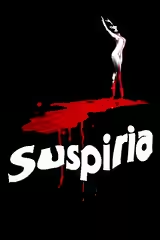
  1. Suspiria (1977) · not on Fi1m yetDance, threatening colour and punishing music, with even less interest in reassurance.

  2. The Red Shoes (1948, Fi1m 92)For dance filmed with conviction, and performers whose dedication becomes frightening.

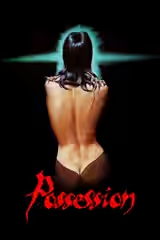
  3. Possession (1981) · not on Fi1m yetAnother physically punishing descent into hysteria, with performances that refuse a safe distance.

  4. House (1977) · not on Fi1m yetA more playful assault on the senses, equally willing to abandon sensible behaviour.

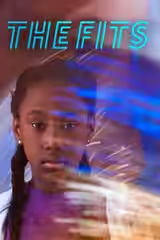
  5. The Fits (2015) · not on Fi1m yetGroup choreography and bodily unease, handled with the quiet that Noé rarely permits.