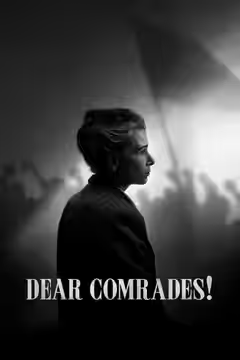
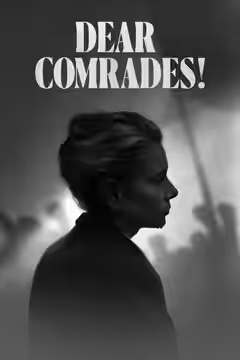
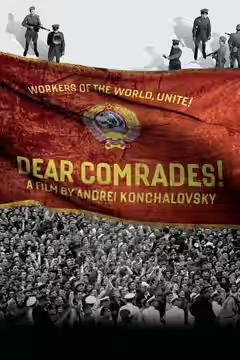
Andrei Konchalovsky makes state violence frightening through the officials who excuse it, with Yuliya Vysotskaya giving political loyalty a painfully human cost. The later drama wanders, but the cruelty of the bureaucracy stays with us.
Andrei Konchalovsky approaches a workers’ protest from the uncomfortable position of a woman who believes in the authorities confronting it. Lyuda is a devoted Communist, and the film asks us to stay close to her without agreeing with her. We recommend this severe, absorbing drama for the way it makes that loyalty intelligible, although its later passages are less sharply organised. There is humour here too, directed at officials who seem more disturbed by disagreement than by what has caused it.
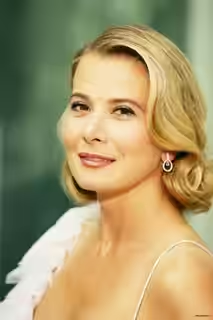
Yuliya Vysotskaya gives Lyuda an obstinacy that prevents her becoming an easy object of sympathy. Political allegiance matters to this woman, even when it asks something appalling of her, and Vysotskaya does not soften that awkwardness. Her restraint is essential: the conflict between Communist conviction and maternal love has force because neither attachment looks disposable. We can disagree with Lyuda and still believe that she has spent a life trying to be right.
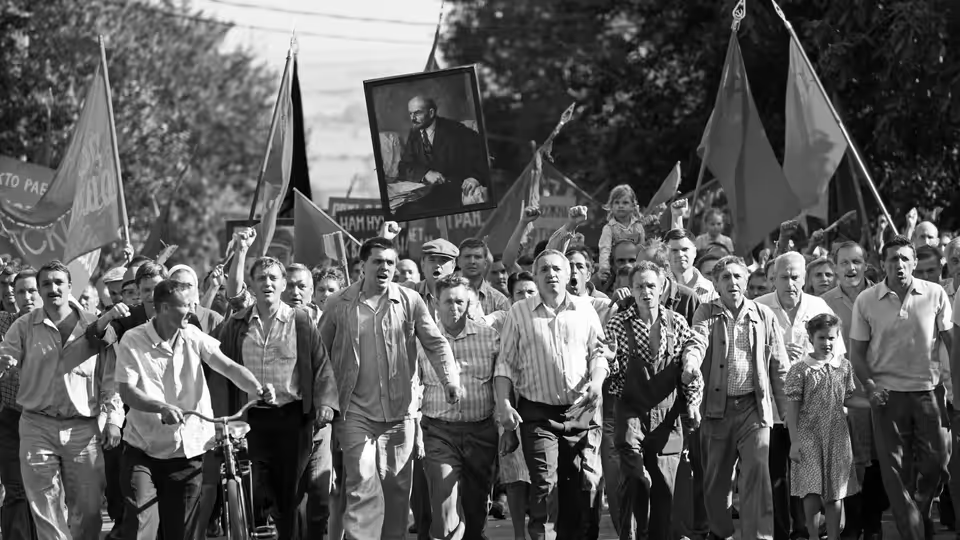
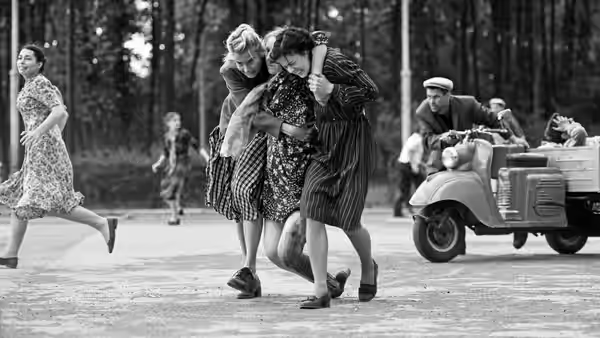
Andrey Naydenov shoots in black and white within the narrow Academy frame, with carefully arranged compositions that let us examine the people exercising power. The formality suits officials accustomed to being obeyed, and it makes their response to resistance harder to dismiss as a moment of chaos. Irina Ochina’s production design helps make that official world feel established, giving the bureaucracy a credible setting without competing for our attention. The period detail never seems more important than the people occupying the frame.
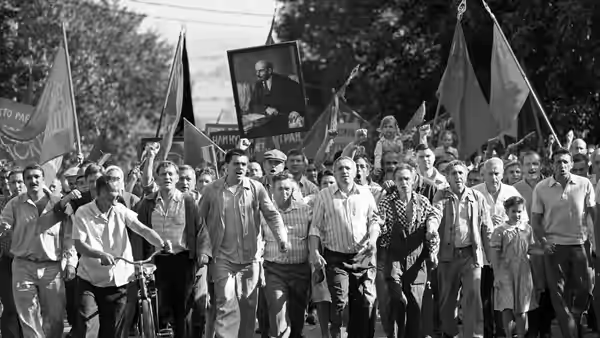
We were horrified by the crackdown on the workers, particularly by the composure with which the film presents the state’s violence. Konchalovsky does not need frantic direction to make the danger felt. The calmness leaves us looking at what is being done instead of waiting for the next visual shock. It is an effective use of historical drama, allowing the authorities’ behaviour to frighten us without a running explanation of how we ought to feel.
The screenplay, by Elena Kiseleva and Andrei Konchalovsky, is shrewd about the distance between professed concern for workers and the treatment of actual workers. Its humour helps, allowing official certainty to become ridiculous before it becomes terrifying. There are speeches, though, where the position is clear well before the speaking stops. They flatten the officials into spokespeople, leaving Vysotskaya to supply much of the film’s uncertainty through a performance that does not settle for illustrating the dialogue.
Editors Sergey Taraskin and Karolina Maciejewska preserve the early tension without making every scene hurry towards an outburst. Later, that patience becomes less productive, and some passages linger after their emotional purpose is clear. At 121 minutes, the film has room to test Lyuda’s loyalties from several angles, but it sometimes repeats the test. The repetition matters because the performance has already made her divided feelings comprehensible; further insistence does not always deepen our understanding of them.
Historical dramas can make righteousness too comfortable, particularly when the audience knows it is watching an atrocity. Konchalovsky avoids that comfort by asking us to take Lyuda’s allegiance seriously, and by not treating our disapproval as a sufficient response. The film is strongest when her stubbornness makes sympathy difficult. Watch it for Vysotskaya, and allow for stretches where the writing cannot quite match the performance.