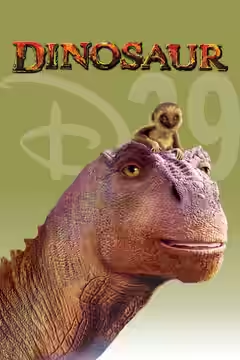
Dinosaur makes its prehistoric creatures convincing, then gives them a routine family adventure to talk through. The animation rewards a close look; the thin characters make the modest running time feel less modest.
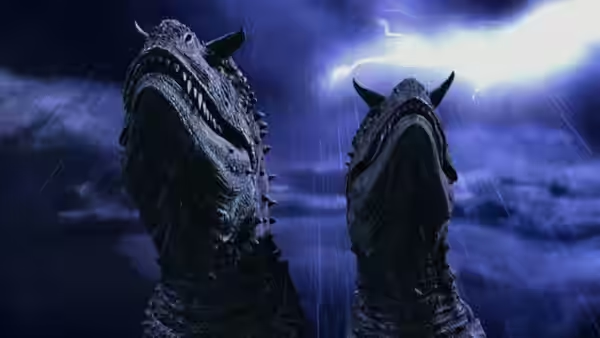
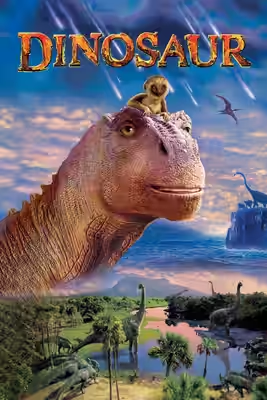
Dinosaur is an impressive exercise in making prehistoric creatures look solid, attached to a story that gives them too little worth saying. Directors Ralph Zondag and Eric Leighton have made a family adventure whose scenery promises more than the script delivers. There is enough to reward an interest in animation, but not enough to make a satisfying evening for everyone else. At 82 minutes, at least it keeps the disappointment reasonably brief.
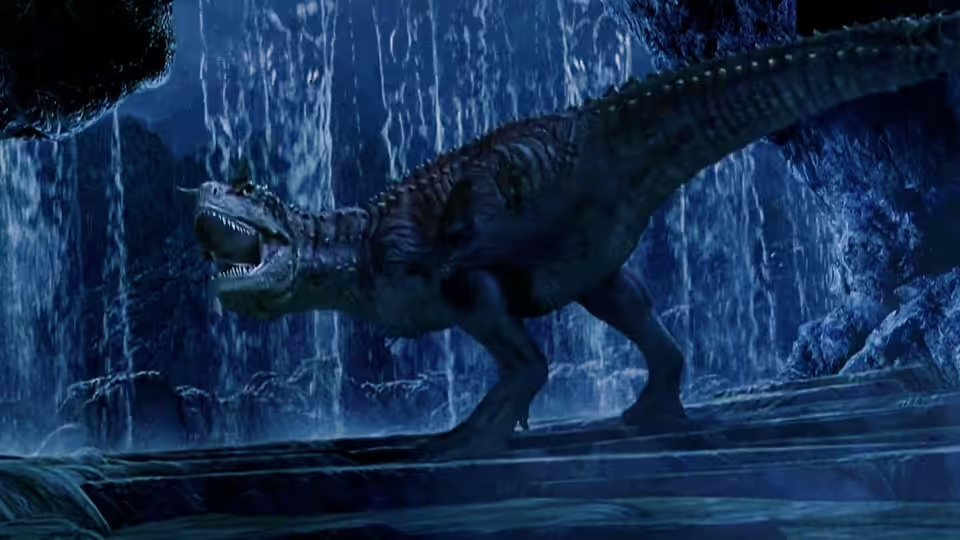
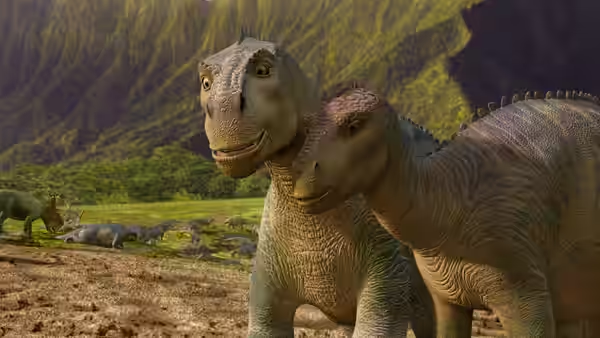
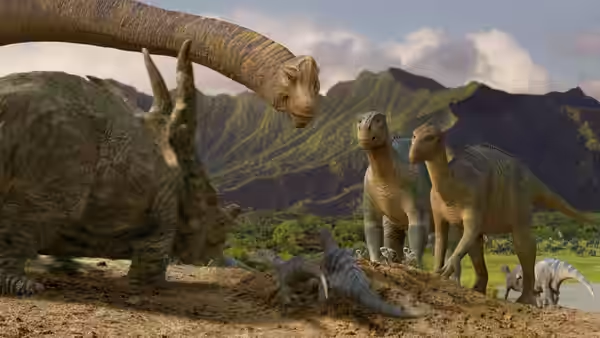
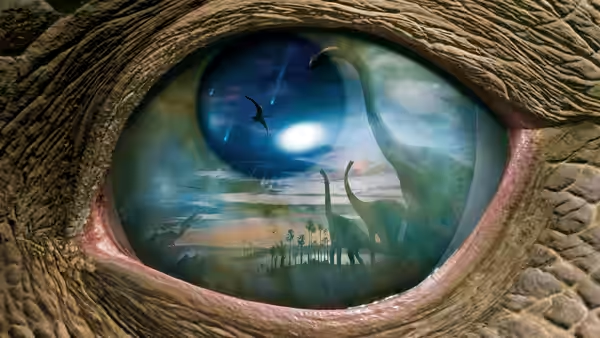
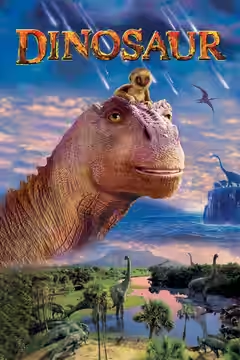
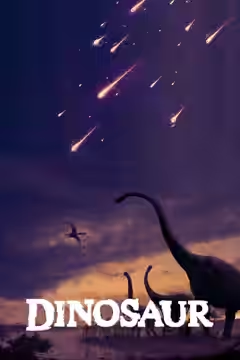
The opening views are the strongest reason to bother. Cinematographers Steven Douglas Smith and David R. Hardberger provide photographed landscapes against which the computer-generated creatures can appear to have real weight and a place to stand. We were absorbed by those early prehistoric views, because the animals seemed to belong on the ground beneath them. The joins between photography and animation are persuasive enough to let us look at the creatures without continually inspecting how they have been put there.
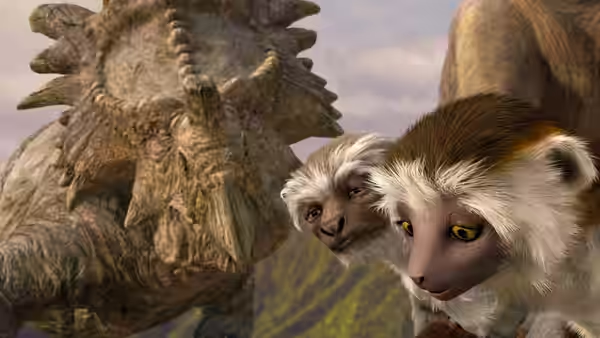
Walter P. Martishius’s production design helps that illusion by keeping the creatures and their surroundings visually compatible. The detail is often absorbing: lemur hair and the movement in the dinosaurs’ cheeks invite a close look. Yet the faces also suggest familiar cartoon expressions, which become harder to ignore once the dialogue takes charge. Their conversations soon become tiresome.
John Harrison and Robert Nelson Jacobs’s screenplay settles for familiar plotting and a simple message, with little room for surprise in the characters. The contemporary sound of the dialogue is particularly unhelpful: it makes the prehistoric setting feel incidental whenever anyone starts talking. D. B. Sweeney voices Aladar with an amiability that suits a family lead, though the part gives that friendliness little to develop into. Alfre Woodard’s Plio has warmth, but a reassuring voice cannot make these thinly written characters more involving.
H. Lee Peterson’s editing keeps the visual passages moving, although briskness cannot disguise how little the story develops. The running time is modest, and the characters still feel short of things to do. James Newton Howard’s music supplies a sense of scale that the dialogue repeatedly reduces. The music encourages us to take the landscape seriously. The thin drama remains difficult to care about.
Family animation does not need complicated plotting, but it does need characters whose company survives a second look. Here, the broad characterisation leaves little to discover once the novelty of the images has settled. The gentle approach also costs the adventure tension, because the writing rarely makes its situations feel emotionally urgent. That matters in a genre built on asking us to worry about creatures we know have been drawn or assembled inside a computer.
There is care here, particularly in the detail of the animals, and it deserves more than a dismissal of the technology as a distraction. The problem is how quickly the film exhausts the pleasure of looking. Anyone interested in the combination of animation and photographed scenery will find passages worth examining. For a family evening, there are more engaging creatures to spend time with.