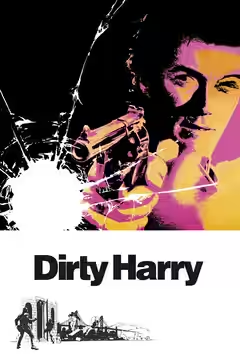
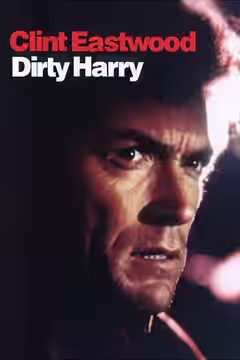
Don Siegel’s police thriller is gripping enough to recommend, though its excuses for brutality are too convenient. Clint Eastwood gives Harry an authority that the screenplay seems reluctant to question.
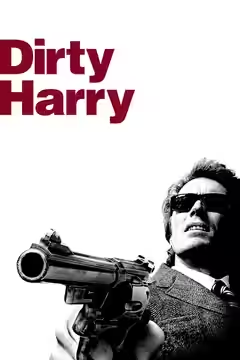
Don Siegel’s Dirty Harry is a tense, well-controlled police thriller with a serious weakness in its treatment of justice. It asks us to enjoy Harry’s freedom to use force, and gives Clint Eastwood enough authority to make that invitation difficult to resist. We recommend it for the command of the action and the central performance, with a substantial reservation about how readily it excuses brutality. It runs a brisk 102 minutes.
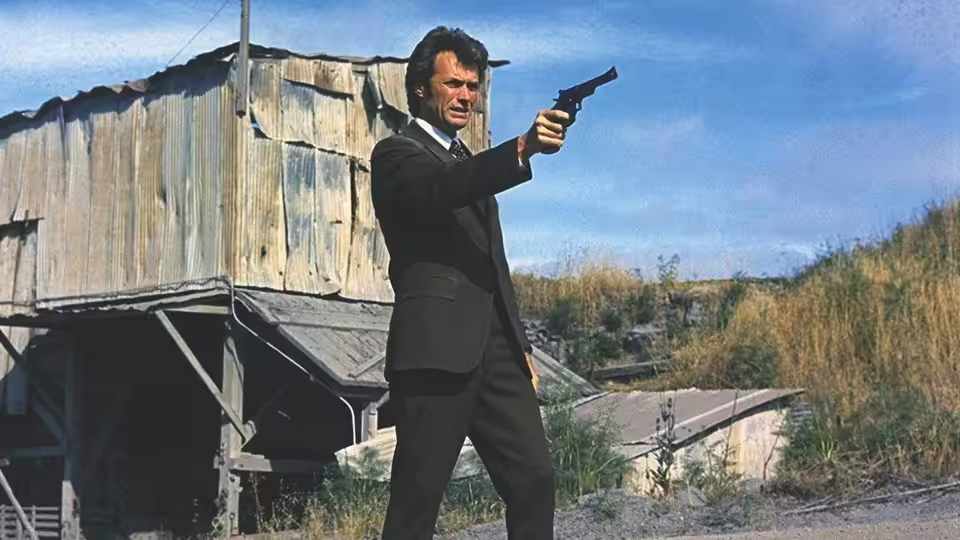
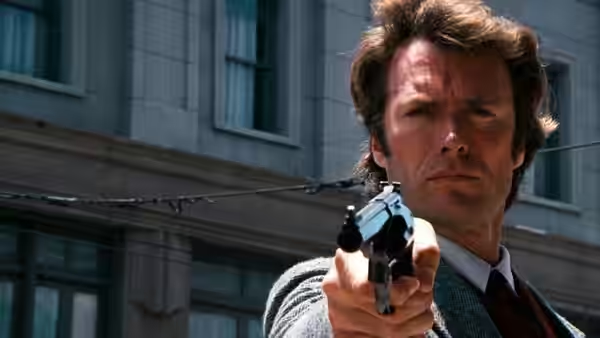
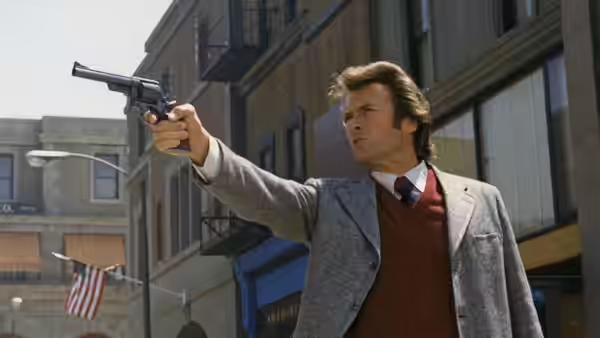
Clint Eastwood understands how little Harry needs to do to hold our attention. His delivery makes the question about luck feel protracted and nasty, with the confidence of a man who expects everyone else to wait for him. We were tense during that challenge because his composure makes the threat feel horribly casual. The performance has humour, but the joke depends on Harry being able to intimidate someone without needing to raise his voice.
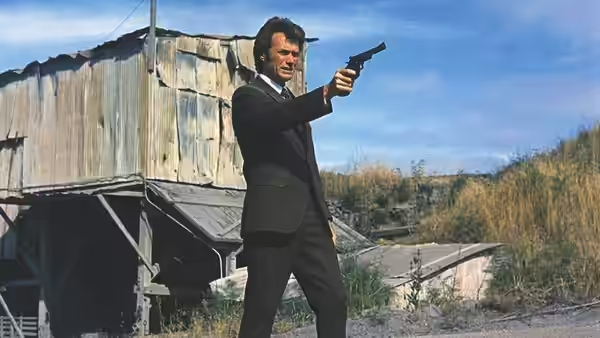
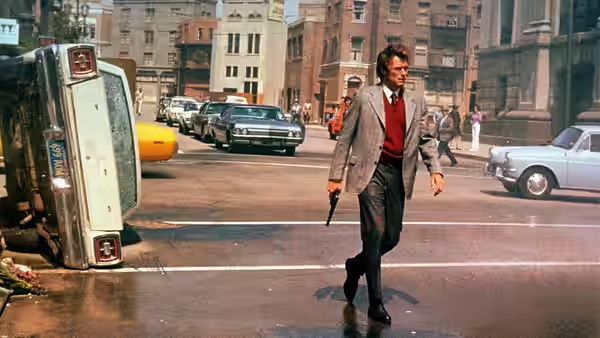
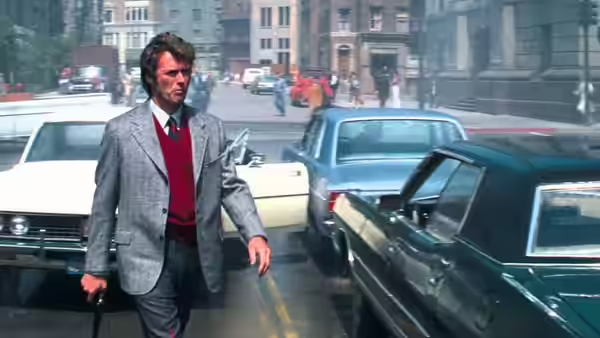
Bruce Surtees’s shadowy cinematography makes the violence feel grubby, which is useful when the leading man is so commanding. It is harder to take Harry as a reassuring figure when the images are this severe. Carl Pingitore’s editing keeps the action clear and allows the leading actor’s stillness to register without making the pace drag. Don Siegel retains control of the action rather than letting Harry’s personality overwhelm it.
Lalo Schifrin’s music adds unease rather than letting the action settle into a comfortable rhythm. It helps sustain the sense that Harry’s world is unpleasant even when the film is enjoying his command of it. Andrew Robinson, credited as the Killer, supplies a more overt disturbance, and his performance prevents the leading man’s reserve from making their confrontations monotonous. He is effective, although the extremity of the opposition also makes Harry’s position too easy to defend.
The screenplay by Harry Julian Fink, Rita M. Fink and Dean Riesner is much less convincing about justice. It repeatedly encourages us to treat restraint as a nuisance, with too little curiosity about why police powers might need limits. That complaint matters because the excitement is so closely tied to Harry being allowed to do what he wants. The writing gives objections to his methods insufficient weight, then lets his certainty do the persuading. We can enjoy an unpleasant central character without requiring the film to make everybody who questions him seem mistaken.
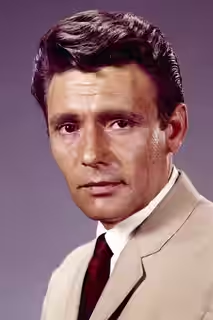
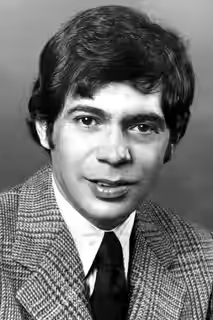
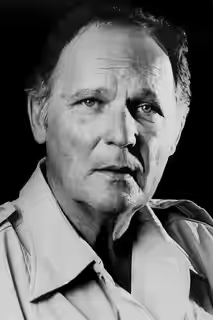
Reni Santoni, as Chico, and Harry Guardino, as Bressler, have to work within a film built to keep returning to Harry. Their comparatively ordinary presence is welcome, giving us a break from his severity. But the screenplay seldom makes the people around him seem as interesting as the trouble he can cause. That narrowness limits the drama, even while it helps keep the pursuit moving.
Within the police thriller, this is a persuasive example of how much a director and a leading actor can achieve through timing. The action holds our attention without requiring us to approve of the man at its centre. That is enough to make it worth an evening, provided its treatment of justice does not need to withstand much questioning. Watch it for Clint Eastwood and Don Siegel, but bring your own objections to Harry.